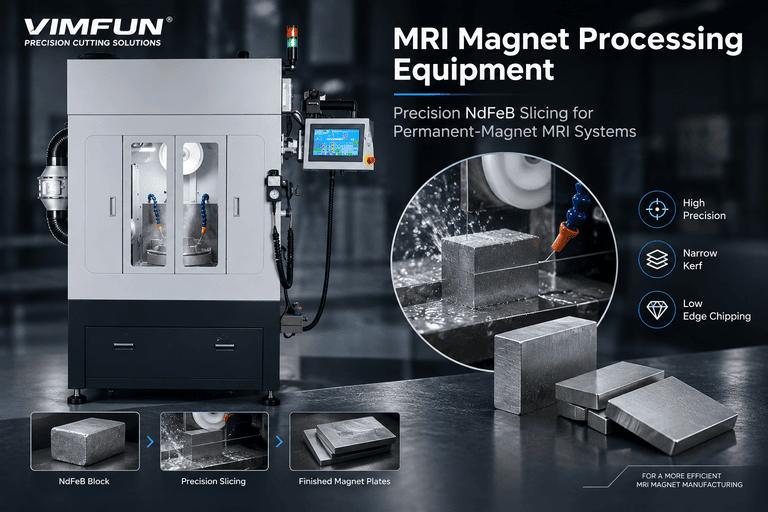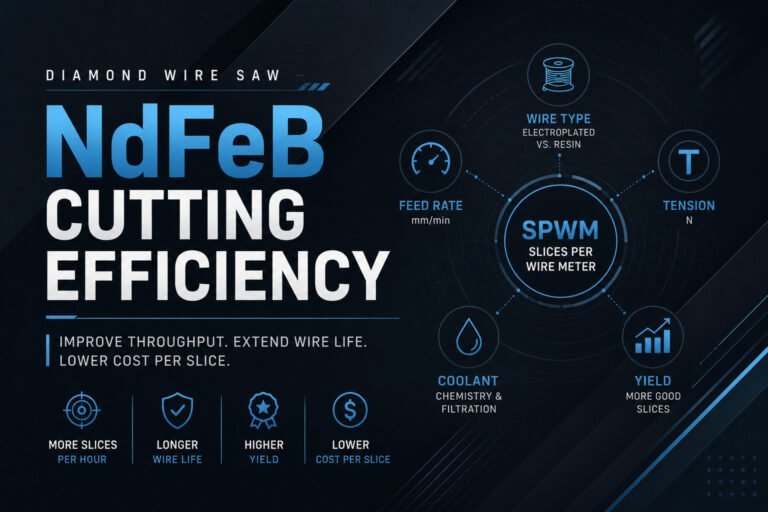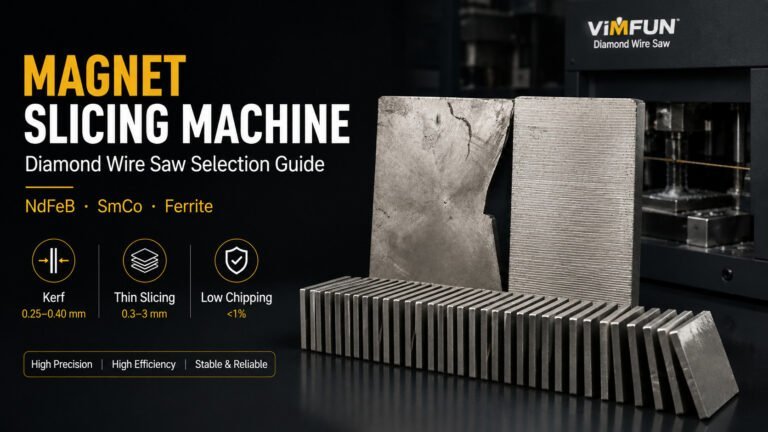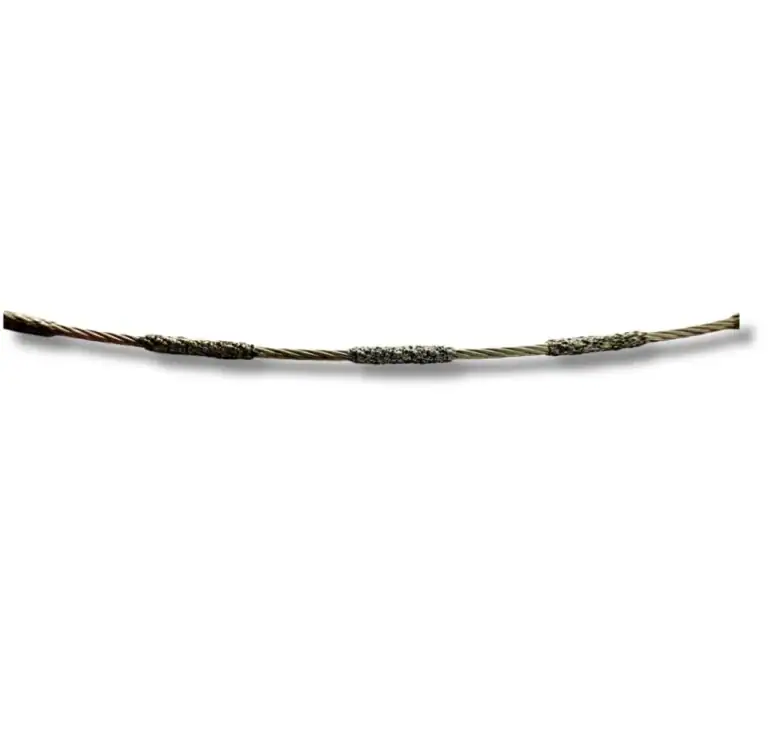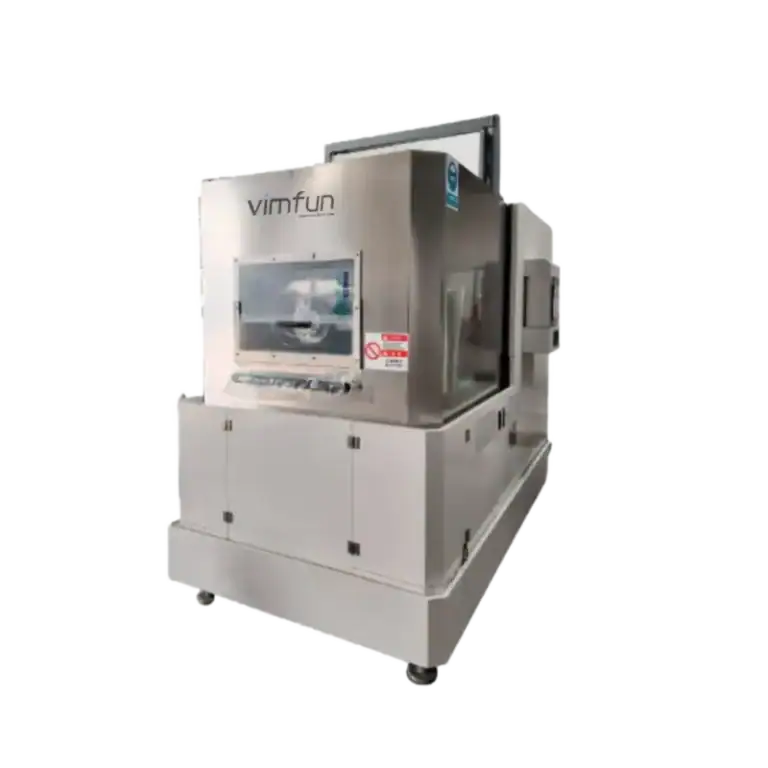
An NdFeB cutting machine is specialized equipment designed to slice sintered neodymium-iron-boron magnets into precise dimensions for motors, sensors, and actuators. NdFeB is one of the hardest and most brittle permanent magnet materials — standard metalworking saws cannot cut it without cracking, overheating, or destroying the magnetic properties. Selecting the right NdFeB cutting machine determines your yield rate, dimensional accuracy, and production throughput.
What Is an NdFeB Cutting Machine?
An NdFeB cutting machine is a precision cutting system that uses diamond-coated wire or blades to slice sintered neodymium-iron-boron magnet blocks into finished shapes — typically thin slices, arcs, or custom profiles. Unlike general-purpose saws, an NdFeB cutting machine must handle the unique challenges of rare earth magnets: extreme hardness (Vickers HV 570–650), high brittleness, sensitivity to thermal demagnetization above 80–150°C (depending on grade), and conductive metallic structure that generates fine reactive swarf.
The three main types of NdFeB cutting machines are:
- Multi-wire diamond wire saw — cuts dozens to hundreds of slices simultaneously from a single block
- Single-wire diamond wire saw — for custom profiles, contour cuts, and small-batch production
- ID (inner diameter) saw — traditional single-blade cutting for individual slices
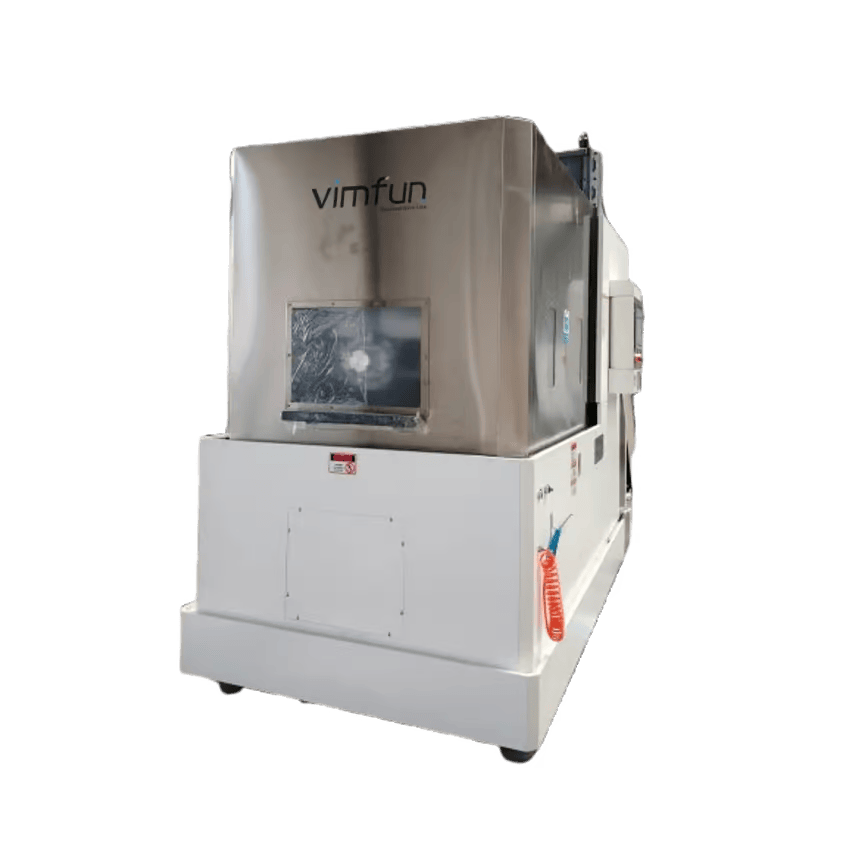
NdFeB Cutting Machine Key Parameters
| Parameter | Multi-Wire Saw | Single-Wire Saw | ID Saw |
|---|---|---|---|
| Kerf width | 0.15–0.30 mm | 0.20–0.35 mm | 0.3–0.8 mm |
| Cutting accuracy (TTV) | ±0.01–0.03 mm | ±0.02–0.05 mm | ±0.01–0.02 mm |
| Min. slice thickness | 0.3 mm | 0.5 mm | 0.5 mm |
| Throughput | 100–500+ slices/run | 1 slice/run | 1 slice/run |
| Max workpiece size | 200+ mm block | Varies by model | Limited by blade ID |
| Coolant type | Water-based | Water-based | Oil or water-based |
| Best for | High-volume production | Custom shapes, prototypes | Single-piece precision |
These parameters vary by manufacturer and model. When evaluating an NdFeB cutting machine, request cutting test results on your specific magnet grade — performance on N35 differs significantly from N52 or high-temperature grades like N35SH.
How to Select the Right NdFeB Cutting Machine
Step 1: Define Your Magnet Geometry and Volume Requirements
Start with what you need to produce:
- Slice thickness range — if you regularly cut below 0.5 mm, only multi-wire saws can reliably produce these dimensions without excessive breakage
- Block size — large blocks (150–200+ mm) require machines with sufficient travel and wire span
- Profile complexity — arc segments and contour shapes require single-wire or contour cutting machines with multi-axis capability
- Daily/monthly volume — high volume (thousands of slices/day) points to multi-wire saw machines; low volume or mixed geometries favor single-wire systems
Step 2: Match the Cutting Method to Your Material Grade
NdFeB magnet grades vary significantly in hardness and thermal sensitivity:
- Standard grades (N35–N52): Maximum operating temperature 80°C. Require aggressive coolant to prevent thermal demagnetization during cutting. Multi-wire and single-wire diamond saws both work well.
- High-temperature grades (N35SH, N42UH, N38EH): Tolerate higher cutting temperatures but are typically harder. Feed rate may need reduction to avoid microcracking.
- Large grain sintered NdFeB: More prone to intergranular cracking. Finer diamond grit and slower feed rates produce cleaner cuts.
For all grades, the cutting machine must maintain workpiece temperature well below the grade’s maximum operating temperature. This is why coolant system design is as important as the cutting mechanism itself.
Step 3: Evaluate Kerf Loss and Material Yield
NdFeB raw material represents a major cost factor in magnet production. The rare earth magnet cutting equipment you choose directly impacts how much material becomes product vs. swarf.
Kerf loss comparison for a typical 50 mm NdFeB block cut into 1 mm slices:
| Machine Type | Kerf Width | Slices per Block | Material Yield |
|---|---|---|---|
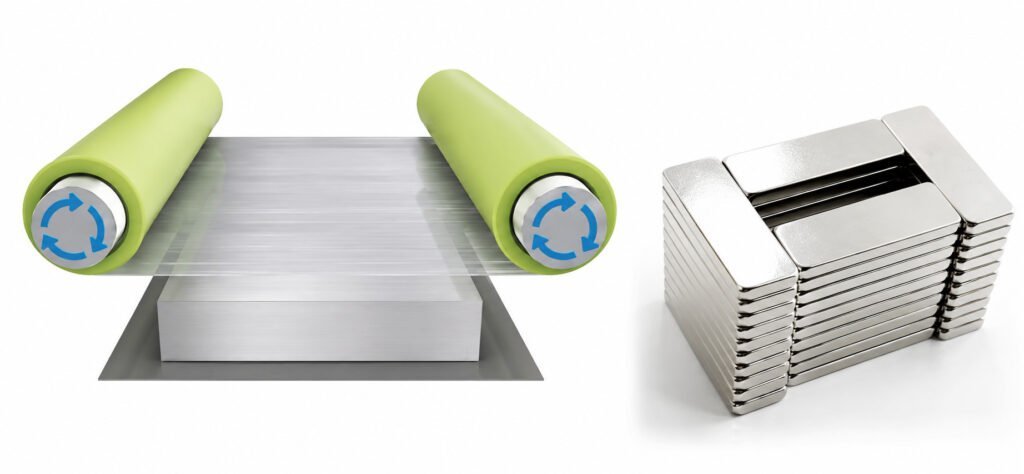
| Multi-wire saw (0.20 mm wire) | 0.22 mm | ~41 | ~82% |
| ID saw (0.5 mm blade) | 0.55 mm | ~32 | ~64% |
| Difference | — | +9 slices | +18% |
For operations processing hundreds of blocks per month, this yield difference translates directly to significant raw material savings.
Step 4: Check the Coolant and Swarf Management System
NdFeB cutting produces metallic swarf that is:
- Pyrophoric — fine NdFeB particles can ignite spontaneously in air when dry
- Corrosive — NdFeB oxidizes rapidly; swarf contaminates coolant if not filtered
- Abrasive — recirculated swarf accelerates wire and component wear
A properly designed NdFeB cutting machine includes:
- Continuous coolant flow with filtration (magnetic separator + paper filter)
- Swarf collection system that keeps particles wet at all times
- Fire-suppression provisions for the swarf collection area
- Coolant temperature control to prevent thermal damage to magnets
According to Arnold Magnetic Technologies’ NdFeB handling guidelines, sintered NdFeB swarf must be kept submerged in coolant or water until proper disposal — never allowed to dry in open containers.
NdFeB Cutting Machine Common Problems and Solutions
Magnets Cracking During Cutting — What to Do?
Reduce feed rate immediately — cracking is almost always caused by excessive cutting force relative to the magnet’s fracture toughness. NdFeB has very low fracture toughness (K_IC ≈ 1–1.5 MPa·√m), comparable to ceramic. If reducing feed rate doesn’t eliminate cracking, check:
- Wire tension (too high causes localized stress concentration)
- Billet mounting (uneven adhesive or excessive clamping pressure)
- Diamond grit condition (worn grit increases cutting force)
- Coolant reaching the cut zone (dry cutting causes thermal shock)
Cut Surface Shows Burn Marks or Discoloration?
Thermal damage from insufficient coolant or excessive feed rate. The magnet surface has been locally heated above its oxidation threshold. Check coolant flow rate and nozzle alignment. For high-temperature grades, the cutting zone temperature should stay below 60°C to maintain magnetic properties. Consider switching to a finer diamond grit — it generates less friction heat per pass.
Thickness Variation (TTV) Exceeding Specification?
Wire deflection is the most common cause. Check wire tension against specification, inspect guide rollers for wear, and verify the billet is mounted with uniform adhesive thickness. For multi-wire saws, also check wire pitch accuracy — uneven spacing between wires produces inconsistent slice thickness. The precision slicing machine with closed-loop tension control maintains tighter TTV across long cutting runs.
Magnet Slices Sticking Together After Cutting?
Residual magnetism causes cut slices to attract each other. This is normal for NdFeB. Use a non-magnetic fixture or demagnetization step after cutting. Some NdFeB cutting machines include an integrated demagnetization coil that partially demagnetizes slices before removal, making handling easier.
NdFeB Cutting Machine vs Ferrite Cutting Machine: How to Choose?
| Feature | NdFeB Cutting Machine | Ferrite Cutting Machine |
|---|---|---|
| Material hardness | HV 570–650 (very hard) | HV 400–600 (hard) |
| Brittleness | Extremely brittle | Brittle |
| Thermal sensitivity | High (demagnetization risk) | Low |
| Swarf hazard | Pyrophoric (fire risk) | Non-flammable |
| Coolant requirement | Mandatory, with fire-safe swarf system | Mandatory, standard system |
| Typical cutting method | Diamond wire saw | Diamond wire saw or abrasive blade |
| Material cost | High (rare earth content) | Low |
| Kerf loss priority | Critical (expensive material) | Important but less critical |
When to choose an NdFeB machine: Your application requires high magnetic performance (BHmax > 30 MGOe) — EV motors, servo motors, MRI systems, or consumer electronics. The higher raw material cost makes kerf loss reduction essential.
When ferrite is sufficient: Your application tolerates lower magnetic performance but requires large volumes at low cost — small DC motors, speakers, magnetic separators. Ferrite is 10–20× cheaper per kg than NdFeB, so kerf loss is less impactful on economics.
How Our NdFeB Cutting Machine Solves These Challenges
We engineer NdFeB cutting machines specifically for rare earth magnet production lines, addressing the challenges outlined above:
Kerf loss minimization. Our multi-wire saw systems use 0.20–0.25 mm diamond wire, achieving kerf widths of 0.22–0.28 mm — 50–65% narrower than ID saw blades. For a typical magnet factory processing NdFeB blocks, this translates to 20–30% more finished slices per block.
Thermal control. Closed-loop coolant temperature management keeps the cutting zone below the critical demagnetization threshold. Multi-point temperature monitoring automatically adjusts feed rate if workpiece temperature approaches the limit.
Safety-integrated swarf system. Magnetic separator + wet collection + sealed disposal containers. The system keeps NdFeB swarf submerged from cutting to disposal, eliminating pyrophoric ignition risk.
Flexible configuration. From single-wire contour cutting for prototypes and arc segments, to large-scale multi-wire systems for high-volume production — we match the machine configuration to your specific magnet geometry and volume requirements.
Contact our engineering team with your magnet grade, target dimensions, and monthly volume. We provide cutting test data on your material before you commit to a machine specification.