The global EV market is expected to reach 40 million vehicles per year by 2030. Every one of those vehicles contains 2–5 kg of NdFeB permanent magnets in its traction motor. That’s 80,000–200,000 tons of precision-cut rare earth magnets per year — and every kilogram needs to be sliced, ground, and finished to tolerances that most machine shops have never dealt with.
If you manufacture motor magnets for the EV industry — or plan to — your cutting equipment determines three things: how much raw material you waste per magnet, how many pieces you reject at inspection, and how fast your production line runs. This guide covers the EV motor magnet manufacturing equipment that handles the cutting and slicing stage: what it needs to do, what parameters work, and how to select the right setup for your production volume.
Why EV Motor Magnets Are Different from Standard Magnets
Not all NdFeB magnets are created equal. EV traction motor magnets have specific requirements that make them harder to manufacture than typical industrial magnets:
Tight Dimensional Tolerances
An EV motor’s performance depends on the air gap between the rotor magnets and the stator — typically 0.5–1.0 mm. The magnet segments that sit in the rotor slots must hold dimensional tolerances of ±0.05 mm or tighter. A magnet that’s 0.1 mm oversized won’t fit the slot. One that’s 0.1 mm undersized creates an uneven air gap that reduces motor efficiency and causes vibration.
This means your cutting equipment needs to deliver consistent thickness across every piece, every batch, every shift. Not “close enough” — exactly right.
Complex Shapes
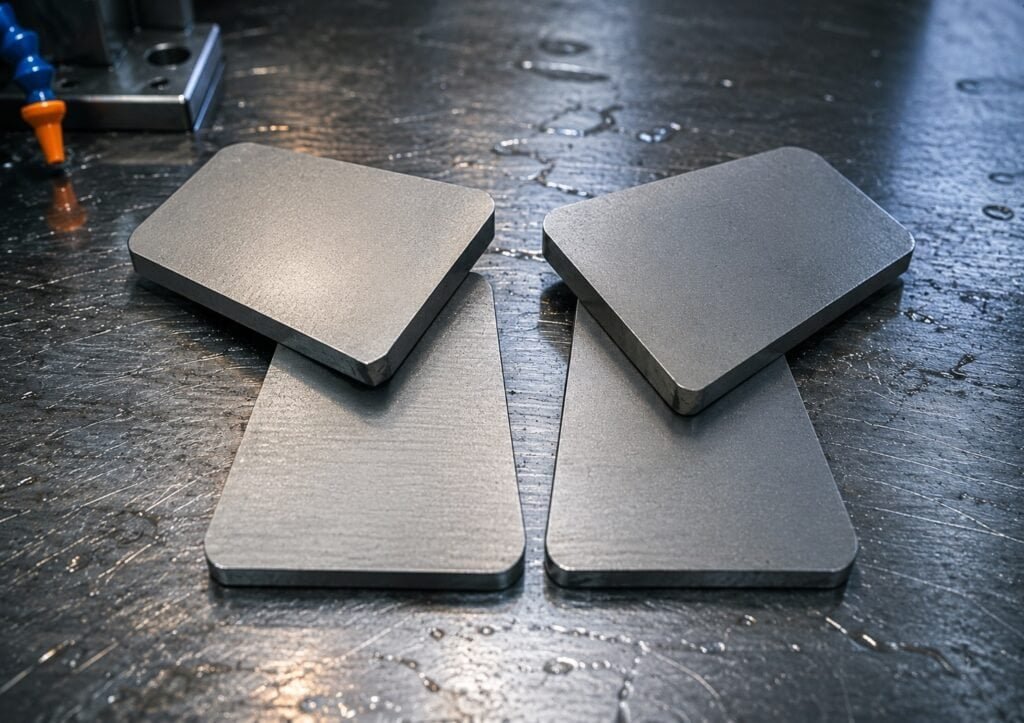
EV motor magnets aren’t simple rectangles. Depending on the motor topology (IPM, SPM, or spoke), magnets come in:
- Arc segments (curved to match rotor OD)
- Bread-loaf shapes (flat bottom, curved top)
- V-shaped pairs (for IPM motors with two magnets per pole)
- Trapezoidal cross-sections (for spoke-type motors)
Traditional blade saws can only cut straight lines. To produce these shapes, you either need expensive multi-axis grinding — or a wire cutting system that follows CNC-programmed contour paths.
Volume Requirements
An automotive OEM might order 500,000–2,000,000 magnet pieces per year from a single supplier. Your manufacturing equipment needs to sustain that throughput with minimal downtime and consistent quality. A machine that works well for 50 pieces per day but can’t hold tolerances at 5,000 pieces per day is useless for EV production.
Grade Requirements
EV motors typically use high-coercivity NdFeB grades — N42SH, N45UH, N48SH, or similar — that maintain magnetic properties at operating temperatures up to 150–200°C. These grades contain more dysprosium or terbium than standard grades, making them more expensive ($80–$150/kg) and more critical to cut without waste.
The Cutting Challenge: Sintered NdFeB for EV Motors
Sintered NdFeB — the material used in virtually all EV traction motors — is one of the most difficult materials to cut:
| Property | Value | Impact on Cutting |
|---|---|---|
| Vickers hardness | HV 550–650 | Extreme tool wear |
| Fracture toughness | ~1.0 MPa·m^0.5 | Brittle, cracks easily |
| Thermal sensitivity | Curie temp ~310°C | Heat damages magnetic properties |
| Oxidation tendency | Very high (rare earth) | Requires oil-based coolant |
| Magnetic debris | Strongly magnetic | Sticks to everything |
Traditional cutting methods — abrasive wheels, ID saws, and reciprocating wire saws — each have significant limitations for EV-grade NdFeB:
Abrasive wheels produce wide kerf (1.0–2.0 mm), generate heat that degrades coercivity, and cause edge chipping on brittle NdFeB. They work for rough cutting but can’t deliver the tolerances EV motors demand.
ID (inner diameter) saws offer better precision but are limited to straight cuts, have relatively high blade cost, and generate vibration that causes micro-cracking in the exit edge of the cut. Blade wear also changes kerf width progressively, making batch consistency difficult.
Reciprocating wire saws can follow contour paths, but the wire reversal at each stroke creates directional marks on the cut surface and generates impact loading that NdFeB’s brittle structure doesn’t tolerate well.
Diamond Wire Cutting: The Equipment That Works for EV Motor Magnets
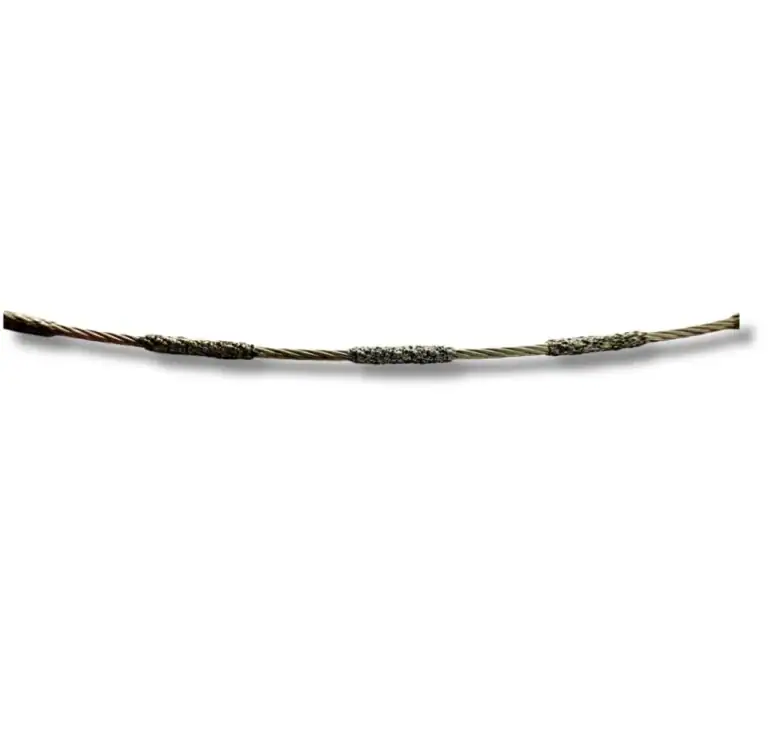
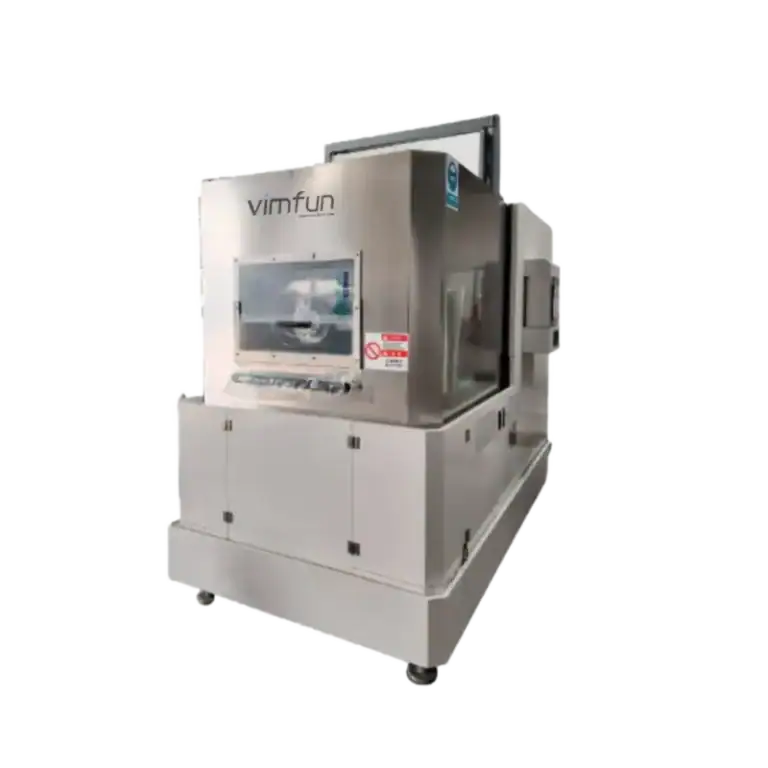
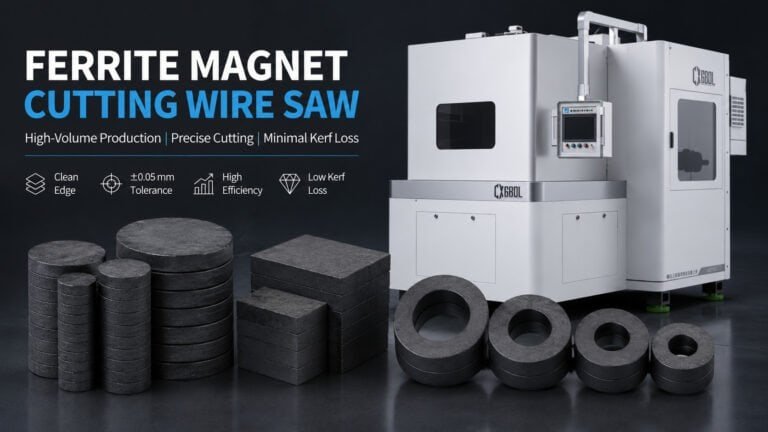
Endless-loop diamond wire cutting machines solve the core challenges of EV motor magnet production. Here’s why this technology has become the standard for high-volume NdFeB magnet cutting:
Ultra-Narrow Kerf = Maximum Material Yield
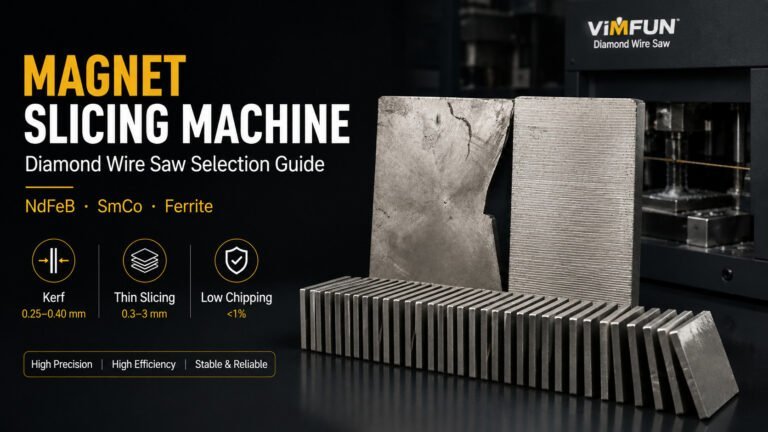
With wire diameters of 0.30–0.35 mm, the kerf width is approximately 0.35–0.40 mm — compared to 1.0–2.0 mm for abrasive blades. On a typical NdFeB block being sliced into 3 mm motor magnet segments:
| Cutting Method | Kerf Width | Magnets per 100 mm Block | Material Utilization |
|---|---|---|---|
| Abrasive wheel | 1.5 mm | 22 pieces | 66% |
| ID saw | 0.5 mm | 28 pieces | 84% |
| Diamond wire saw | 0.38 mm | 29 pieces | 87% |
At $100/kg for N45SH grade material, the wire saw’s narrower kerf saves approximately $3–$5 per block cut. Across 1,000 blocks per month, that’s $3,000–$5,000 in recovered material — enough to pay for the cutting wire many times over.
Contour Cutting Capability
The endless diamond wire follows CNC-programmed paths, enabling direct cutting of arc segments, bread-loaf profiles, and other complex geometries without secondary machining. This eliminates the grinding step that traditional methods require to achieve curved surfaces — saving both time and material.
For IPM motor designs with V-shaped magnet slots, the wire saw can cut the angled faces in a single operation, producing finished-geometry magnets that only need surface grinding for final tolerance.
Cold Cutting = No Thermal Damage
The diamond wire contacts only a narrow line of material at any point, and mineral oil coolant (2–4 L/min) carries heat away continuously. The NdFeB workpiece stays below 50°C throughout the cutting process — far below the temperature where magnetic properties begin degrading.
This matters because NdFeB’s coercivity drops irreversibly if the material is heated above 200°C. A cutting process that generates localized hotspots can create “dead zones” in the magnet where coercivity is permanently reduced, leading to demagnetization risk in the motor.
Unidirectional Wire Motion = No Reversal Marks
Unlike reciprocating saws that change direction at each stroke end, endless-loop wire runs continuously in one direction at 70–80 m/s. This produces a uniform surface finish (Ra 0.3–0.5 μm) with no directional switching marks. The result: a cleaner surface that requires less post-cut grinding, and lower stress loading on the brittle NdFeB material.
Cutting Parameters for EV Motor NdFeB Magnets
These parameters are optimized for sintered NdFeB grades commonly used in EV traction motors (N42SH through N50SH):
| Parameter | Recommended Range | Notes |
|---|---|---|
| Wire diameter | 0.30–0.35 mm | 0.30 mm standard for ≤ 3 mm slices |
| Wire speed | 70–80 m/s | Unidirectional, closed loop |
| Wire tension | 80–100 N | Lower than germanium; NdFeB is more fragile |
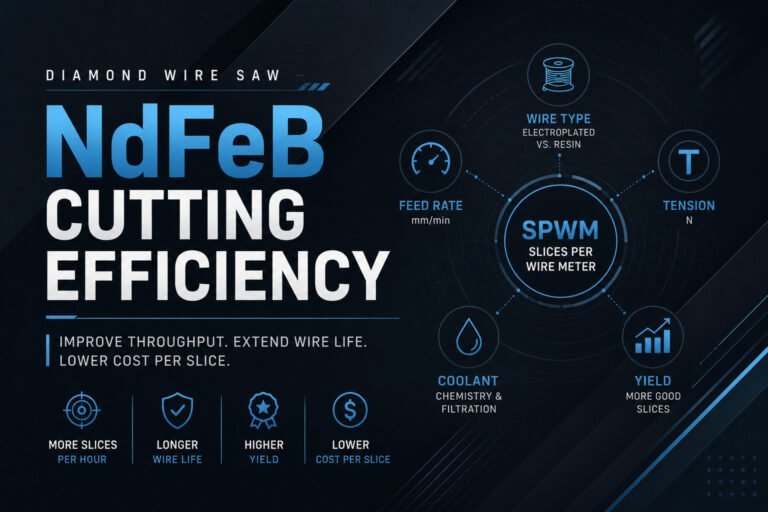
| Feed rate | 1.5–2.5 mm/min | Adjust by cross-section area |
| Coolant type | Oil-based (mineral oil) | Prevents rare earth oxidation |
| Coolant flow | 2–4 L/min | Must cover entry and exit points |
| Surface roughness | Ra 0.3–0.5 μm | Typically no post-cut polishing needed |
| Dimensional accuracy | ±0.02 mm | Across full cutting length |
| Edge chipping | < 0.05 mm | Zero visible chipping under 10x |
Feed rate guidance by magnet size:
| Magnet Cross-Section | Feed Rate |
|---|---|
| < 20 mm | 2.0–2.5 mm/min |
| 20–40 mm | 1.5–2.0 mm/min |
| 40–60 mm | 1.2–1.5 mm/min |
| > 60 mm (large blocks) | 0.8–1.2 mm/min |
Critical note on coolant: Always use oil-based coolant for NdFeB. Water-based coolants cause rapid surface oxidation of the rare earth elements, creating a rust-colored oxide layer that compromises coating adhesion and long-term corrosion resistance. The oil also provides better lubrication at the wire-material interface, extending wire life by 20–30% compared to water-based alternatives.
Production Line Configuration for EV Motor Magnets
A complete EV motor magnet production line (from sintered NdFeB block to coated, magnetized piece) includes:
| Stage | Equipment | Function |
|---|---|---|
| 1 | Diamond wire saw (contour) | Extract magnet preforms from block |
| 2 | Diamond wire saw (slicing) | Slice preforms into individual magnets |
| 3 | Surface grinder | Grind to final thickness tolerance |
| 4 | Double-sided lapping machine | Achieve parallelism and TTV spec |
| 5 | Chamfering / edge rounding | Remove sharp edges (vibration tumbler) |
| 6 | Cleaning line | Remove oil, debris, oxide |
| 7 | Coating (NiCuNi or epoxy) | Corrosion protection |
| 8 | Magnetization | Pulse magnetizer, 3–5 T field |
| 9 | Inspection | Dimensions, flux, coating |
For EV-scale production (500,000+ pieces/year), a typical cutting cell uses multiple diamond wire saws running in parallel, feeding a shared grinding and coating line. The number of machines depends on magnet geometry, size, and your daily output target.
Multi-Wire vs. Single-Wire for EV Volume
For very high volumes (2M+ pieces/year), multi-wire diamond saws cut multiple slices simultaneously — 10 to 50+ wires in parallel. This increases throughput by 10–50x per machine but requires higher capital investment ($150,000–$400,000 per machine vs. $15,000–$40,000 for single-wire).
The decision depends on your production volume and product mix:
- Mixed geometries, moderate volume → Single-wire machines with CNC contour capability
- Single geometry, high volume → Multi-wire saws for maximum throughput
- Startup or pilot line → Start with 1–2 single-wire machines, scale to multi-wire when volume justifies it
Quality Control for EV Motor Magnets
EV motor magnets face stricter quality requirements than most industrial magnet applications. Your cutting equipment needs to support these inspection points:
Dimensional inspection (100% check):
- Thickness: ±0.05 mm (after grinding: ±0.02 mm)
- Width/length: ±0.10 mm
- Arc radius (for curved magnets): ±0.05 mm
- Parallelism: ≤ 0.03 mm
Surface quality (sampling):
- Surface roughness: Ra ≤ 0.8 μm (as-cut), Ra ≤ 0.4 μm (after grinding)
- Edge chipping: ≤ 0.05 mm
- No visible cracks under 20x magnification
Magnetic properties (sampling):
- Br (remanence): per grade spec ± 3%
- Hcj (coercivity): per grade spec ± 5%
- No thermal demagnetization from cutting process
A diamond wire saw’s cold cutting characteristic ensures that magnetic properties are preserved through the cutting stage — one fewer variable to worry about in your quality system.
Selecting Equipment for Your EV Magnet Production
Step 1: Define your volume target. Under 100,000 pieces/year → 1–2 single-wire machines. 100,000–500,000 → 3–5 single-wire machines. Over 500,000 → evaluate multi-wire.
Step 2: Define your geometry complexity. Simple rectangles → any cutting method works. Arcs, curves, V-shapes → CNC contour-capable wire saw is essential.
Step 3: Calculate total cost of ownership. Include wire consumables, coolant, maintenance labor, and scrap rate. The machine with the lowest purchase price isn’t always the most economical — a machine that wastes 20% more material per cut costs you far more over its lifetime.
Step 4: Test with your actual material. NdFeB grades vary in hardness and brittleness. Parameters optimized for N35 won’t work for N50SH. Request sample cuts on your specific grade before committing to equipment.
The EV magnet market is growing faster than almost any other permanent magnet application. Whether you’re an established magnet manufacturer expanding into automotive, or a new entrant building a greenfield production line, your cutting equipment choice is the foundation of your production capability. Get it right first, then optimize everything downstream.