Es wird erwartet, dass der globale Elektrofahrzeugmarkt bis 2030 40 Millionen Fahrzeuge pro Jahr erreichen wird. Jedes dieser Fahrzeuge enthält 2–5 kg NdFeB-Permanentmagnete in seinem Antriebsmotor. Das sind 80.000–200.000 Tonnen präzisionsgeschnittene Seltenerdmagnete pro Jahr – und jedes Kilogramm muss mit Toleranzen geschnitten, geschliffen und fertiggestellt werden, mit denen die meisten Maschinenwerkstätten noch nie zu tun hatten.
Wenn Sie Motormagnete für die EV-Industrie herstellen – oder dies planen –, bestimmt Ihre Schneidausrüstung drei Dinge: wie viel Rohmaterial Sie pro Magnet verschwenden, wie viele Teile Sie bei der Inspektion ablehnen und wie schnell Ihre Produktionslinie läuft. Dieser Leitfaden behandelt die Fertigungsanlagen für EV-Motormagnete, die die Schneid- und Trennstufe abdecken: Was sie leisten müssen, welche Parameter funktionieren und wie Sie die richtige Einrichtung für Ihr Produktionsvolumen auswählen.
Warum EV-Motormagnete sich von Standardmagneten unterscheiden
Nicht alle NdFeB-Magnete sind gleich. EV-Antriebsmagnete haben spezifische Anforderungen, die ihre Herstellung schwieriger machen als die von typischen Industriemagneten:
Enge Maßtoleranzen
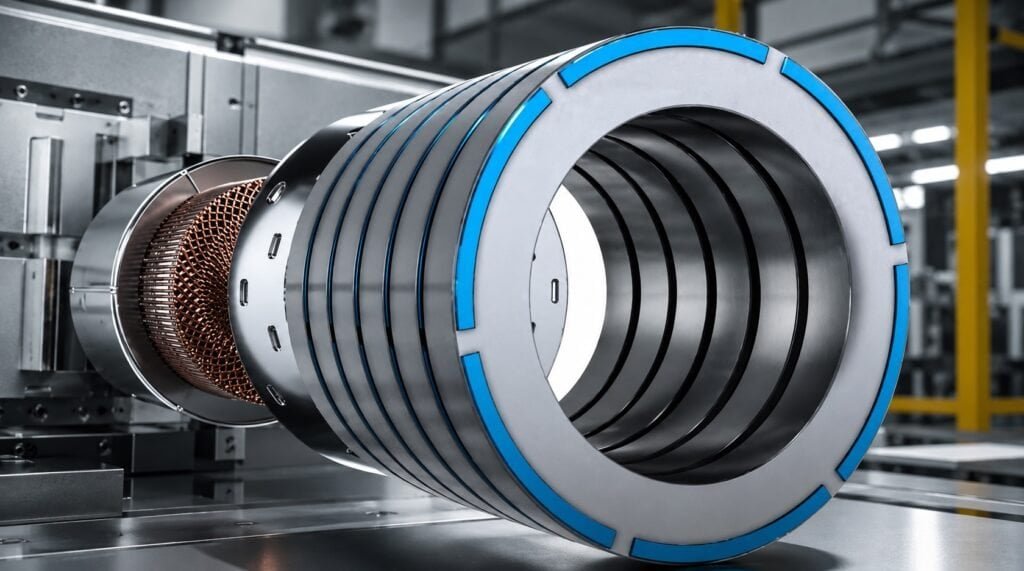
Die Leistung eines EV-Motors hängt vom Luftspalt zwischen den Rotor- und Stator-Magneten ab – typischerweise 0,5–1,0 mm. Die Magnetsegmente, die in den Rotorschlitzen sitzen, müssen Maßtoleranzen von ±0,05 mm oder enger einhalten. Ein Magnet, der 0,1 mm zu groß ist, passt nicht in den Schlitz. Einer, der 0,1 mm zu klein ist, erzeugt einen ungleichmäßigen Luftspalt, der die Motoreffizienz verringert und Vibrationen verursacht.
Das bedeutet, dass Ihre Schneidausrüstung eine gleichbleibende Dicke für jedes Teil, jede Charge und jede Schicht liefern muss. Nicht “nahe genug” – genau richtig.
Komplexe Formen
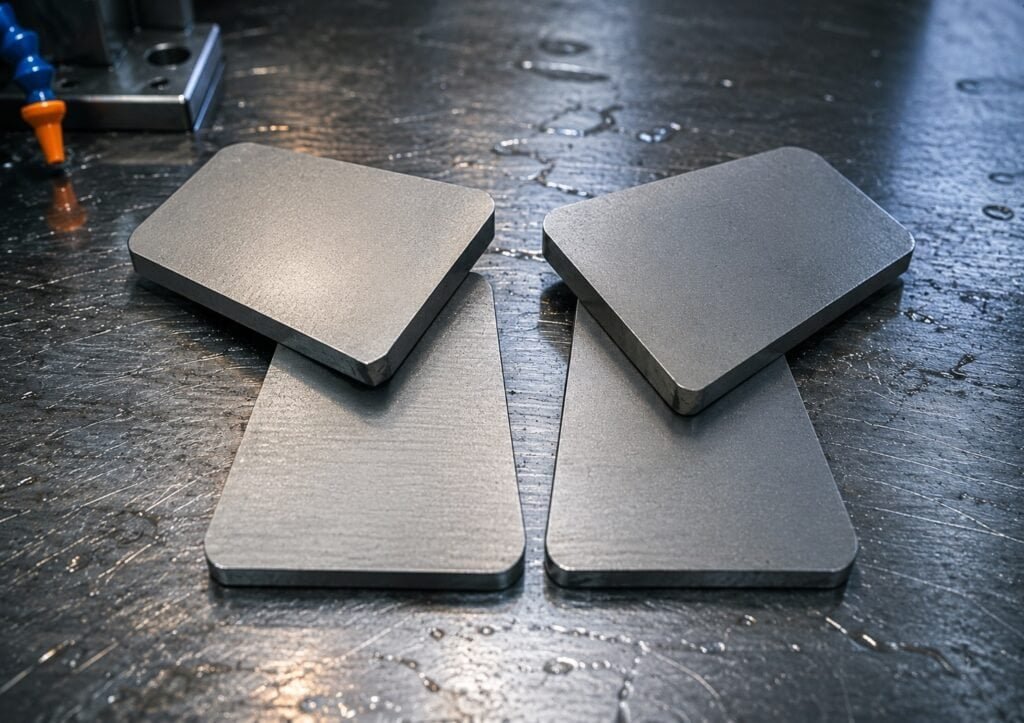
EV-Motormagnete sind keine einfachen Rechtecke. Abhängig von der Motortopologie (IPM, SPM oder Speiche) gibt es Magnete in folgenden Formen:
- Bogensegmente (gebogen, um dem Rotor-Außendurchmesser zu entsprechen)
- Brotlaib-Formen (flacher Boden, gekrümmte Oberseite)
- V-förmige Paare (für IPM-Motoren mit zwei Magneten pro Pol)
- Trapezförmige Querschnitte (für Speichenmotoren)
Herkömmliche Sägeblätter können nur gerade Linien schneiden. Um diese Formen herzustellen, benötigen Sie entweder teures Mehrachsen-Schleifen – oder ein Drahtschneidesystem, das CNC-programmierten Konturpfaden folgt.
Volumenanforderungen
Ein Automobil-OEM könnte 500.000–2.000.000 Magnetteile pro Jahr von einem einzigen Lieferanten bestellen. Ihre Fertigungsanlagen müssen diesen Durchsatz mit minimaler Ausfallzeit und gleichbleibender Qualität aufrechterhalten. Eine Maschine, die für 50 Teile pro Tag gut funktioniert, aber bei 5.000 Teilen pro Tag keine Toleranzen einhalten kann, ist für die EV-Produktion nutzlos.
Güteanforderungen
EV-Motoren verwenden typischerweise NdFeB-Güten mit hoher Koerzitivfeldstärke – N42SH, N45UH, N48SH oder ähnliche –, die magnetische Eigenschaften bei Betriebstemperaturen von bis zu 150–200 °C beibehalten. Diese Güten enthalten mehr Dysprosium oder Terbium als Standardgüten, was sie teurer ($80–$150/kg) und kritischer für den verschnittfreien Schnitt macht.
Die Schneideherausforderung: Gesintertes NdFeB für EV-Motoren
Gesintertes NdFeB – das Material, das in praktisch allen EV-Traktionsmotoren verwendet wird – ist eines der am schwierigsten zu schneidenden Materialien:
| Eigenschaft | Wert | Auswirkung auf den Schnitt |
|---|---|---|
| Vickers-Härte | HV 550–650 | Extremes Werkzeugverschleiß |
| Bruchzähigkeit | ~1,0 MPa·m^0,5 | Spröde, bricht leicht |
| Thermische Empfindlichkeit | Curie-Temperatur ~310°C | Hitze beschädigt magnetische Eigenschaften |
| Oxidationsneigung | Sehr hoch (seltene Erden) | Benötigt kühlmittel auf Ölbasis |
| Magnetischer Abrieb | Stark magnetisch | Haftet an allem |
Traditionelle Schneidmethoden – Schleifscheiben, Innendurchmesser-Sägen und Hubdrahtsägen – haben jeweils erhebliche Einschränkungen für EV-Qualität NdFeB:
Schleifscheiben erzeugen einen breiten Schnittspalt (1,0–2,0 mm), erzeugen Wärme, die die Koerzitivkraft verschlechtert, und verursachen Kantenabsplitterungen bei sprödem NdFeB. Sie eignen sich zum Grobschneiden, können aber nicht die Toleranzen liefern, die EV-Motoren erfordern.
Innendurchmesser-Sägen (ID) bieten eine bessere Präzision, sind aber auf gerade Schnitte beschränkt, haben relativ hohe Blattkosten und erzeugen Vibrationen, die Mikrorisse an der Austrittskante des Schnitts verursachen. Der Blattverschleiß verändert auch den Schnittspalt fortschreitend, was die Chargenkonsistenz erschwert.
Hubdrahtsägen können Konturpfaden folgen, aber die Drahtumkehrung bei jedem Hub erzeugt gerichtete Spuren auf der Schnittfläche und erzeugt Stoßbelastungen, die die spröde Struktur von NdFeB nicht gut verträgt.
Diamantdrahtschneiden: Die Ausrüstung, die für EV-Motormagnete funktioniert
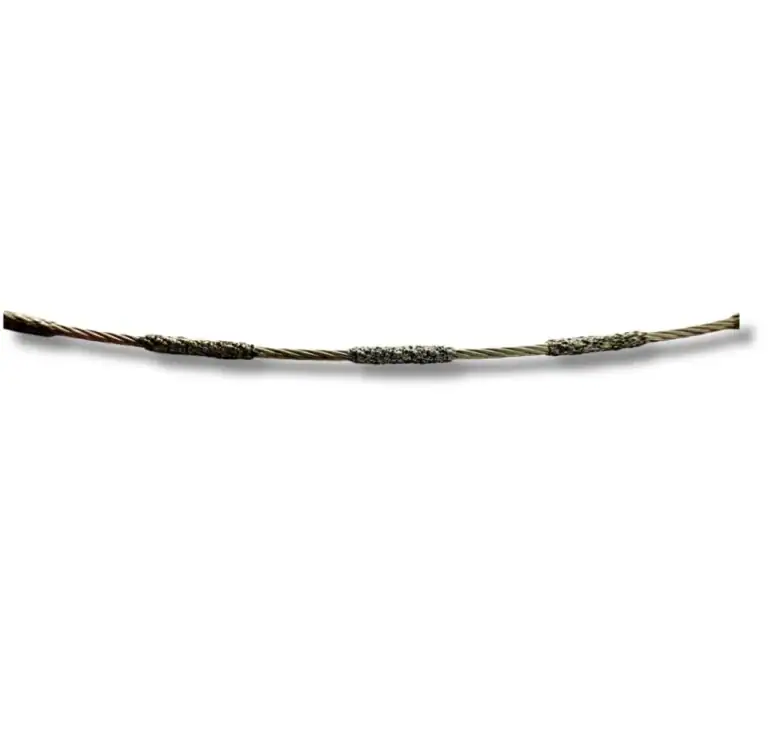
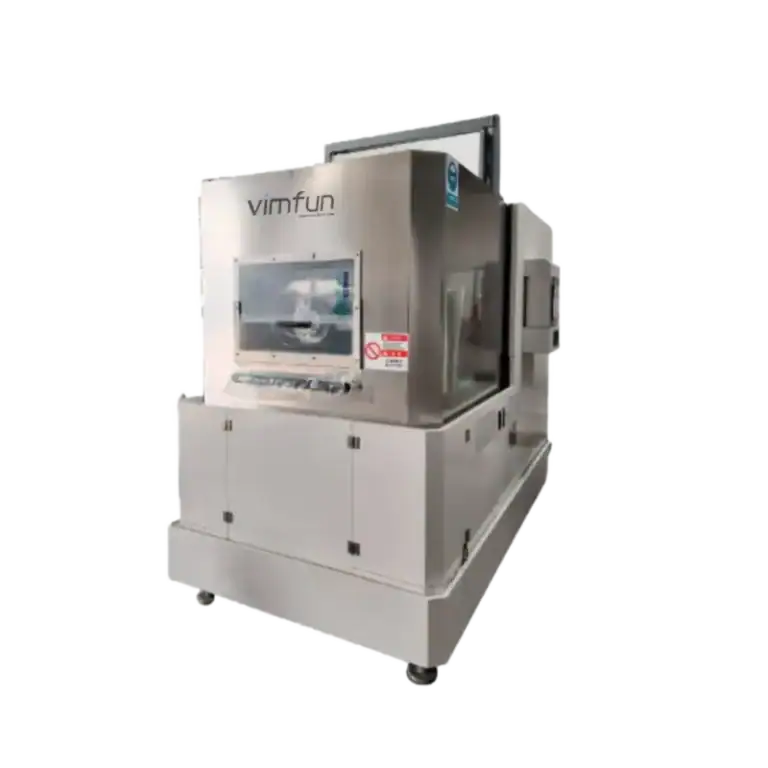
Endlosschleifende Diamantdrahtschneidemaschinen lösen die Kernherausforderungen der EV-Motormagnetproduktion. Hier erfahren Sie, warum diese Technologie zum Standard für das Schneiden von NdFeB-Magneten in großen Mengen geworden ist:
Ultra-schmale Schnittfuge = Maximale Materialausbeute
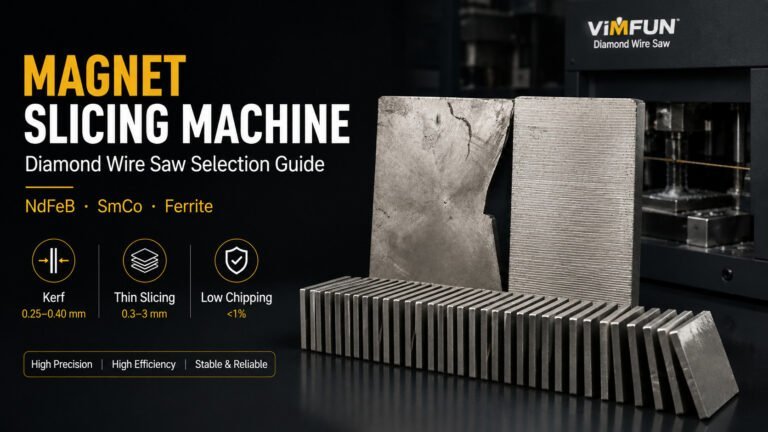
Bei Drahtdurchmessern von 0,30–0,35 mm beträgt die Schnittfugenbreite etwa 0,35–0,40 mm – verglichen mit 1,0–2,0 mm bei Schleifscheiben. Bei einem typischen NdFeB-Block, der in 3-mm-Motormagnetsegmente geschnitten wird:
| Schnittmethode | Schnittfugenbreite | Magnete pro 100-mm-Block | Materialausnutzung |
|---|---|---|---|
| Schleifscheibe | 1,5 mm | 22 Stück | 66% |
| ID-Säge | 0,5 mm | 28 Stück | 84% |
| Diamantseilsäge | 0,38 mm | 29 Stück | 87% |
Bei $100/kg für Material der Güteklasse N45SH spart die schmalere Schnittfuge der Drahtsäge etwa $3–$5 pro geschnittenem Block. Bei 1.000 Blöcken pro Monat sind das $3.000–$5.000 an zurückgewonnenem Material – genug, um den Schneidedraht viele Male zu bezahlen.
Konturschneidefähigkeit
Der endlose Diamantdraht folgt CNC-programmierten Bahnen und ermöglicht das direkte Schneiden von Bogensegmenten, Brotlaibprofilen und anderen komplexen Geometrien ohne Nachbearbeitung. Dies eliminiert den Schleifschritt, den herkömmliche Methoden zur Erzielung gekrümmter Oberflächen erfordern – und spart sowohl Zeit als auch Material.
Für IPM-Motordesigns mit V-förmigen Magnetnuten kann die Drahtsäge die abgeschrägten Flächen in einem einzigen Arbeitsgang schneiden und so Magnete mit fertiger Geometrie produzieren, die nur noch geschliffen werden müssen, um die endgültige Toleranz zu erreichen.
Kaltschneiden = Keine thermische Beschädigung
Der Diamantdraht berührt zu jedem Zeitpunkt nur eine schmale Materiallinie, und ein Mineralölkühler (2–4 L/min) führt die Wärme kontinuierlich ab. Das NdFeB-Werkstück bleibt während des gesamten Schneidvorgangs unter 50 °C – weit unter der Temperatur, bei der die magnetischen Eigenschaften zu degradieren beginnen.
Das ist wichtig, weil die Koerzitivkraft von NdFeB irreversibel abfällt, wenn das Material über 200 °C erhitzt wird. Ein Schneidprozess, der lokalisierte Hotspots erzeugt, kann “tote Zonen” im Magneten erzeugen, in denen die Koerzitivkraft dauerhaft reduziert ist, was zu einem Entmagnetisierungsrisiko im Motor führt.
Unidirektionale Drahtbewegung = Keine Umkehrspuren
Im Gegensatz zu Sägen mit Hin- und Herbewegung, die an jedem Hubende die Richtung ändern, läuft der Drahtschleifdraht kontinuierlich in einer Richtung mit 70–80 m/s. Dies erzeugt eine gleichmäßige Oberflächengüte (Ra 0,3–0,5 μm) ohne richtungsabhängige Umschaltspuren. Das Ergebnis: eine sauberere Oberfläche, die weniger Nachschleifen erfordert, und eine geringere Spannungsbelastung des spröden NdFeB-Materials.
Schnittparameter für EV-Motor-NdFeB-Magnete
Diese Parameter sind für gesinterte NdFeB-Güten optimiert, die üblicherweise in EV-Traktionsmotoren verwendet werden (N42SH bis N50SH):
| Parameter | Empfohlener Bereich | Hinweise |
|---|---|---|
| Drahtdurchmesser | 0,30–0,35 mm | 0,30 mm Standard für ≤ 3 mm Scheiben |
| Drahtgeschwindigkeit | 70–80 m/s | Unidirektional, geschlossene Schleife |
| Drahtspannung | 80–100 N | Geringer als bei Germanium; NdFeB ist zerbrechlicher |
| Vorschubgeschwindigkeit | 1,5–2,5 mm/min | Anpassen nach Querschnittsfläche |
| Kühlmitteltyp | Ölbasis (Mineralöl) | Verhindert Oxidation von Seltenerdmetallen |
| Kühlmittelstrom | 2–4 L/min | Muss Ein- und Austrittspunkte abdecken |
| Oberflächenrauheit | Ra 0,3–0,5 μm | Typischerweise keine Nachbearbeitung nach dem Schnitt erforderlich |
| Maßgenauigkeit | ±0,02 mm | Über die gesamte Schnittlänge |
| Kantenabsplitterungen | < 0,05 mm | Keine sichtbaren Abplatzungen unter 10-facher Vergrößerung |
Vorschubrichtlinie nach Magnetgröße:
| Magnetquerschnitt | Vorschubgeschwindigkeit |
|---|---|
| < 20 mm | 2,0–2,5 mm/min |
| 20–40 mm | 1,5–2,0 mm/min |
| 40–60 mm | 1,2–1,5 mm/min |
| > 60 mm (große Blöcke) | 0,8–1,2 mm/min |
Wichtiger Hinweis zu Kühlmittel: Verwenden Sie für NdFeB immer auf Öl basierendes Kühlmittel. Auf Wasser basierende Kühlmittel verursachen eine schnelle Oberflächenoxidation der Seltenerdelemente, wodurch eine rostfarbene Oxidschicht entsteht, die die Haftung der Beschichtung und die langfristige Korrosionsbeständigkeit beeinträchtigt. Das Öl bietet auch eine bessere Schmierung an der Draht-Material-Schnittstelle und verlängert die Drahtlebensdauer um 20–30 % im Vergleich zu wasserbasierten Alternativen.
Produktionslinienkonfiguration für EV-Motormagnete
Eine komplette Produktionslinie für EV-Motormagnete (vom gesinterten NdFeB-Block bis zum beschichteten, magnetisierten Teil) umfasst:
| Stufe | Ausrüstung | Funktion |
|---|---|---|
| 1 | Diamantdrahtsäge (Kontur) | Magnetrohlinge aus dem Block extrahieren |
| 2 | Diamantdrahtsäge (Schneiden) | Rohlinge in einzelne Magnete schneiden |
| 3 | Oberflächenschleifmaschine | Auf Enddicken-Toleranz schleifen |
| 4 | Doppelseitige Läppmaschine | Parallelität und TTV-Spezifikation erreichen |
| 5 | Anfasen / Kantenverrundung | Scharfe Kanten entfernen (Vibrationsschleifmaschine) |
| 6 | Reinigungsanlage | Öl, Schmutz, Oxid entfernen |
| 7 | Beschichtung (NiCuNi oder Epoxid) | Korrosionsschutz |
| 8 | Magnetisierung | Puls-Magnetisierer, 3–5 T Feld |
| 9 | Inspektion | Abmessungen, Fluss, Beschichtung |
Für die Produktion im EV-Maßstab (500.000+ Stück/Jahr) verwendet eine typische Schneidezelle mehrere Diamantdrahtsägen, die parallel laufen und eine gemeinsame Schleif- und Beschichtungslinie versorgen. Die Anzahl der Maschinen hängt von der Magnetgeometrie, der Größe und Ihrem täglichen Produktionsziel ab.
Mehrdraht- vs. Einzeldraht für EV-Volumen
Für sehr hohe Volumina (2 Mio.+ Stück/Jahr) schneiden Mehrdraht-Diamantsägen mehrere Scheiben gleichzeitig – 10 bis 50+ Drähte parallel. Dies erhöht den Durchsatz pro Maschine um das 10- bis 50-fache, erfordert jedoch höhere Investitionskosten ($150.000–$400.000 pro Maschine gegenüber $15.000–$40.000 für Einzeldraht).
Die Entscheidung hängt von Ihrem Produktionsvolumen und Ihrer Produktmischung ab:
- Gemischte Geometrien, moderates Volumen → Einzeldrahtmaschinen mit CNC-Konturfähigkeit
- Einzelgeometrie, hohes Volumen → Mehrdrahtsägen für maximalen Durchsatz
- Start-up oder Pilotlinie → Beginnen Sie mit 1–2 Einzeldrahtmaschinen, skalieren Sie auf Mehrdrahtmaschinen, wenn das Volumen dies rechtfertigt
Qualitätskontrolle für EV-Motormagnete
EV-Motormagnete unterliegen strengeren Qualitätsanforderungen als die meisten industriellen Magnetanwendungen. Ihre Schneidanlagen müssen diese Prüfpunkte unterstützen:
Maßhaltigkeitsprüfung (100%-Prüfung):
- Dicke: ±0,05 mm (nach dem Schleifen: ±0,02 mm)
- Breite/Länge: ±0,10 mm
- Bogennradius (für gebogene Magnete): ±0,05 mm
- Parallelität: ≤ 0,03 mm
Oberflächenqualität (Stichprobe):
- Oberflächenrauheit: Ra ≤ 0,8 μm (als geschnitten), Ra ≤ 0,4 μm (nach dem Schleifen)
- Kantensplitter: ≤ 0,05 mm
- Keine sichtbaren Risse unter 20-facher Vergrößerung
Magnetische Eigenschaften (Stichprobe):
- Br (Remanenz): pro Gütespezifikation ± 3%
- Hcj (Koerzitivfeldstärke): pro Gütespezifikation ± 5%
- Keine thermische Entmagnetisierung durch den Schneidprozess
Die Kaltbearbeitungscharakteristik einer Diamantdrahtsäge stellt sicher, dass die magnetischen Eigenschaften während der Schneidphase erhalten bleiben – eine Variable weniger, um die Sie sich in Ihrem Qualitätssystem sorgen müssen.
Auswahl der Ausrüstung für Ihre EV-Magnetproduktion
Schritt 1: Definieren Sie Ihr Volumenziel. Unter 100.000 Stück/Jahr → 1–2 Einzeldrahtmaschinen. 100.000–500.000 → 3–5 Einzeldrahtmaschinen. Über 500.000 → Mehrdrahtmaschinen evaluieren.
Schritt 2: Definieren Sie Ihre Geometriekomplexität. Einfache Rechtecke → jede Schneidmethode funktioniert. Bögen, Kurven, V-Formen → CNC-konturfähige Drahtsäge ist unerlässlich.
Schritt 3: Berechnen Sie die Gesamtkosten des Eigentums. Berücksichtigen Sie Drahtverbrauchsmaterialien, Kühlmittel, Wartungsaufwand und Ausschussrate. Die Maschine mit dem niedrigsten Anschaffungspreis ist nicht immer die wirtschaftlichste – eine Maschine, die pro Schnitt 20% mehr Material verschwendet, kostet Sie über ihre Lebensdauer weitaus mehr.
Schritt 4: Testen Sie mit Ihrem tatsächlichen Material. NdFeB-Güten variieren in Härte und Sprödigkeit. Für N35 optimierte Parameter funktionieren nicht für N50SH. Fordern Sie Musterschnitte auf Ihrer spezifischen Güte an, bevor Sie sich für eine Ausrüstung entscheiden.
Der EV-Magnetmarkt wächst schneller als fast jede andere Anwendung für Permanentmagnete. Egal, ob Sie ein etablierter Magnethersteller sind, der in die Automobilindustrie expandiert, oder ein neuer Marktteilnehmer, der eine Greenfield-Produktionslinie aufbaut, Ihre Schneidausrüstung Wahl ist die Grundlage Ihrer Produktionskapazität. Machen Sie es von Anfang an richtig und optimieren Sie dann alles nachgelagert.