“Why does one batch of ceramic blocks come out perfectly smooth? What is the following batch with scratch marks? I have asked this question a lot. For the last 9 years, I have been working in precision-surfacing. The underlying explanation is frequently pad choice. The proper pad works well with any industrial double sided polishing machine.
This article will discuss the best pads for industrial double sided polishing machines. I will discuss the polyurethane, felt, and grooved pads. You will discover how each pad impacts pace, finish and part life.
What is an industrial double sided polishing machine?
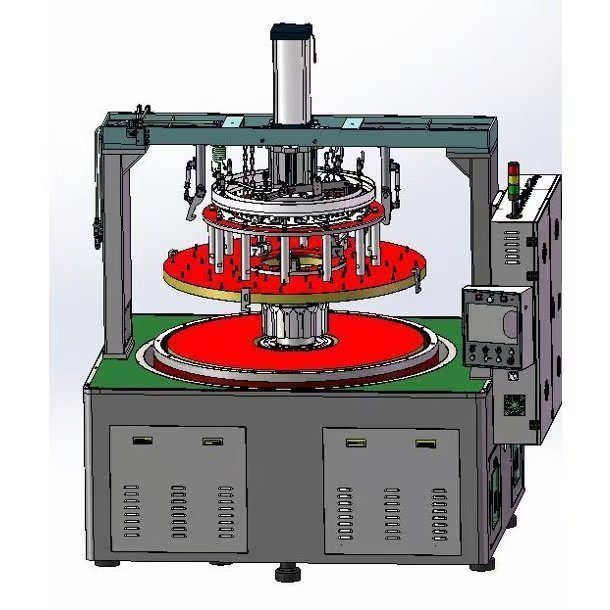
An industrial double sided polishing machine polishes both sides of a part. At the same time, it accomplishes this. It has two spinning plates. Between them is the share. It’s time-saving. You don’t need to turn the part over. It is used in factories producing ceramics, glass and silicon wafers.
One such example is Semiconductor wafer polishing machine. Many facilities also employ a large format polishing machine for huge panels. The pad comes in contact with the substance. So the pad type affects the ultimate output.
Pad Type Comparison At A Glance
| Feature | Polyurethane Pad | Felt Pad | Grooved Pad |
| Surface finish | Very fine, mirror-like | Soft, medium-fine | Smooth with fast cutting |
| Best material | Glass, ceramics, wafers | Delicate stones, lenses | Metals, hard ceramics |
| Slurry flow | Moderate | Low | High |
| Lifespan | Long | Medium | Long |
| Typical use | Ceramic polishing machine, wafer lines | Optical and soft parts | Heavy stock removal |
Which pad gives the smoothest finish?
Want a glossy finish? Select a polyurethane pad. It has a thick, closed surface. It retains the slurry in a thin even film. This results in low scratch rates. It cuts nicely on heavy stuff. The initial choice of many wafer and lens producers. The pad also remains flat with repeated usage.
This allows pieces to finish uniformly throughout the whole surface. Doesn’t wear out quickly, even after lengthy shifts. This is a pad operators prefer, since the results are the same batch to batch. That kind of constant production is especially important in large volume ceramic and glass lines. An industrial double sided polishing machine polishes two sides at once.
Where Polyurethane Pads Work Best
These are the ideal pads for when flatness counts the most. Suitable for the semiconductor and optical operations. They are good for exquisite ceramic work also. These pads are often used in the last run of a Ceramic block polishing machine.
The pad does not deform under stress. It’s hard to rip. This is a suitable match for a 9000N polishing force machine . You need a solid pad for high pressure. Every industrial Double Sided Polishing Machine needs the right pad.
Common uses for polyurethane pads:
- Sapphire and silicon wafer finishing
- Optical lens & mirror polishing
- High-end tile and block finishes in ceramics
- Metal component precision lapping
Polyurethane Pad Types At A Glance
| Pad Sub-Type | Hardness | Finish Level | Common Industry |
| Soft polyurethane | Low | Very fine | Optics, wafers |
| Medium polyurethane | Medium | Fine to medium | Ceramics, glass |
| Hard polyurethane | High | Fast cutting | Metal parts |
| Foam-backed polyurethane | Very low | Ultra-fine | Lens polishing |
Why Choose A Felt Pad For Delicate Parts?
The soft option is a felt pad. It is created from compressed fibres. This gives it soft and pliable consistency. Use it on thin or fragile pieces. It distributes pressure evenly. Weak regions don’t form cracks. It also feels a little springy against the surface of the portion.
This lets it follow tiny dips or curves without any extra strain. Many workers believe that one portion can’t endure rigorous treatment. It won’t cut quickly yet it keeps parts safe. Its safety makes it an intelligent choice for delicate, high-value materials. A good industrial Double Sided Polishing Machine saves time and effort.
When Felt Pads Are The Right Fit
Felt pads shine on lenses and on thin wafers. They are also good for soft stone pieces. They don’t cut quickly. But they leave a pristine low defect surface. Many establishments utilise the felt exclusively for the final finish. Pad type changes how the industrial Double Sided Polishing Machine performs.
This pad is also great for lightweight machines. No entire 4 axis force is required. Felt is good for slower, cautious manufacturing runs when quality checks are more important than speed. It is widely used everyday in small optical businesses.
Reasons workshops choose felt pads:
- Minimal danger of breaking for thin or fragile parts
- Even, soft pressure on the surface
- Good for last polish without harsh grinding
- Decrease slurry waste from slow, consistent cutting
Felt Pad vs Polyurethane Pad – Quick Comparison
| Point of Comparison | Felt Pad | Polyurethane Pad |
| Cutting speed | Slow | Medium to fast |
| Part fragility handling | Excellent | Good |
| Finish shine | High | Very high |
| Best process stage | Final polish | Mid to final polish |
Simply put, felt cushions protect delicate areas. They offer a lovely clean gloss. Polyurethane pads cut quicker. They offer a crisper, mirror-like finish. Pick felt sections could fracture. If speed and flatness are both important, use polyurethane. A strong industrial Double Sided Polishing Machine cuts fast and clean.
Advantages of felt pads: gentle on brittle parts, low risk of scratches, smooth final texture.
Disadvantages of felt pads: slower cutting, faster wear under load, and weak on hard metals.
Is A Grooved Pad Better For Heavy Material Removal?
Yeah. The top choice for quick removal is a grooved pad. The grooves allow the slurry to flow freely. They also clear up debris. This helps keep the pad cool. It also prevents congestion on extended works. The grooves also provide a path for the pad to lose material as it wears.
This maintains the surface clean rather than gritty. Fresh contact implies the pad maintains cutting at the same pace, run after run. The constant rate of cut also makes it easier for firms to manage their production since fewer tasks need pad inspections along the run.
How Grooved Pads Improve Heavy Duty Work
In metal lapping, grooved pads are often used. Also good for hard ceramic removal. The open passages take well heavy pressure. They don’t allow the portion become too hot.
This makes grooved pads an ideal fit for a high torque double-sided polisher. They also install a 4-axis variable speed polisher. Both devices provide excellent speed and power.
Why grooved pads suit heavy-duty jobs:
- Better slurry flow, fewer pad stoppages
- Long cycle, lower operating temperature
- Faster material removal on hard surfaces;
- Steady hard pressure in longer life pad
Real-World Pad Performance Results
| Case Study | Material | Pad Used | Result Summary |
| Ceramic block factory | Alumina ceramic | Grooved pad | Cut cycle time by almost a third |
| Wafer fab line | Silicon wafer | Polyurethane pad | Reached sub-micron flatness |
| Optics workshop | Glass lens blanks | Felt pad | Cut scratch defects sharply |
| Metal parts shop | Stainless steel plates | Grooved pad | Better slurry flow, less clogging |
Each scenario illustrates the impact of the pad choice on the outcome. Grooved pads drove speed higher. Polyurethane pads provided improved flatness. Felt pads decrease scratching. The proper pad is always with the material requirements.
How Does Pad Choice Affect a Double Sided Lapping System?
Pad choice is important beyond polishing. It also make a Double sided lapping method. The objective there is stock clearance, quick and even. This is before the last polish. A heavy-duty lapping machine usually has a harder pad. Lapping requires more vigorous cutting than delicate polishing.
A firmer pad will cope better with tough sections. It also resists continual grinding pressure. This first phase provides a smooth, flat foundation. That foundation accelerates the following polishing phase and makes it more uniform.
Matching Pads To Machine Type
Not all machines need the same pad. A big duty polisher maker will often have a lot of pad selections. One factory may make polished glass. Another may do metal. Using the incorrect pad might impede productivity.
It may also harm parts. So tailor the pad to the material and the machine. This little step may save hours of rework and discarded parts down the road.
Tips for matching pads correctly:
- Choose pad after testing material hardness
- Match pad type to your machine’s force setting
- Test small batches prior to big production runs
- Check the kind of slurry and the pad selection
Frequently Asked Questions
What pad type is best for glass polishing?
The best for glass is poly pads. They offer a clean, smooth finish. They spread the sludge uniformly. They also hold up on extended runs.
- Gives a smooth, mirror-like finish
- Keeps its form under constant pressure
- Common in the manufacturing of optical glass
Can felt pads handle hard metals?
No, the felt pads don’t work. They cut too slow. They also become tired easily under pressure. Metal works well with grooved or firm polyurethane pads.
- Felt is too soft for rapid metal removal
- Wears fast on hard surfaces
- Better for fragile, sensitive materials
Do grooved pads work with all machines?
Grooved pads fit most double sided machines. But best used for high force set ups Grooved pads work well on a 4 axis variable speed polisher.
- Best with powerful force machines
- Improved slurry flow in heavy workloads
- Less required for light, fine-polish work
What is the difference between lapping pads and polishing pads?
Lapping pads are meant for quick removal. Polishing pads are used for gloss and finish. A heavy duty lapping machine frequently employs harder surfaces than a delicate polisher.
- Lapping pads are more forceful and harder
- Polishing pads. Softer for a finer finish
- Often both stages are executed sequentially
Which pad suits semiconductor wafer work?
Polyurethane pads are typical. They are suitable for a Semiconductor wafer polishing equipment. They provide the flat, low-defect surface wafers required.
- Provides sub-micron flatness
- Low defect and scratch rate
- Trusted in most wafer fabs
Can one machine use different pads for different jobs?
Yes, most high-torque double sided polishers are set up to replace pads. One machine can do ceramics in a day.” Then it can process metal parts.
- Pads may switch between manufacturing runs
- Reduces cost compared to separate machinery
- Good cleaning between pad replacements needed
Conclusion
The optimum pad will depend on your material. The smoothest finish comes from polyurethane pads. Felt cushions protect delicate areas. Grooved pads cut faster and remove more material. The correct pad makes every industrial double sided polishing machine perform at its best.
That’s where Vimfun comes in. Vimfun Heavy Duty Polisher Manufacturer: Factory-grade equipment for polyurethane, felt and grooved pads of premium quality. They are good for ceramic, glass, wafer and metal tasks. Vimfun is a good choice of polishing partner.