Why do some wafers break while cutting? I have over 15 years experience in the wafer slicing wire saw industry, and I have seen how the improper coolant can damage a whole batch.
In this article we will explore what coolant to use, why DI water and cutting fluid matter, and how pH control makes your operation safe and clean.
What Is a Wafer Slicing Wire Saw and How Does It Work?
A wafer slicing wire saw is a kind of cutting machine. It cuts hard materials like silicon, SiC and sapphire into thin wafers. It employs a thin diamond-coated wire. The wire zips swiftly across the fabric. Groove wheels to keep the wire on the track. This means minimal kerf loss – very little material is lost.
To slice the silicon wafer you need both speed and precision. Coolant is sprayed onto the cutting zone. It cools the wire and eliminates chopped pieces. Without cooling, wire and wafer might become too hot. This leads to cracks and damages.
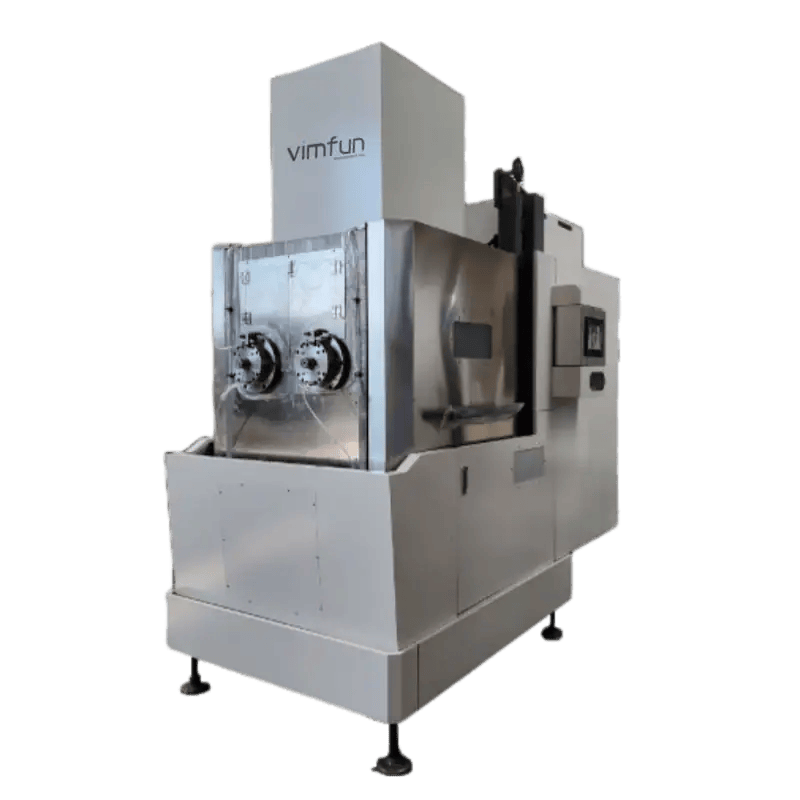
Technical Overview: Wafer Slicing Wire Saw Key Parameters
| Parameter | Details |
| Wire Type | Diamond-coated steel wire |
| Wire Speed | 10–30 m/s |
| Coolant Type | DI water / cutting fluid |
| Material Cut | Silicon, SiC, Sapphire |
| Kerf Loss | 100–200 µm |
| Surface Finish | Ra < 1 µm |
| Groove Wheel Role | Wire tension and path control |
Why Does Coolant Choice Matter in a High Speed Multi Wire Saw Machine?
Using the improper coolant poses major complications. It may snap a wire. It may harm the wafer surface. It might reduce your yield. In a high speed multi wire saw machine coolant does more than just cool. It cleans away debris. It reduces drag. If the coolant is excessively acid or alkaline, it will eat the wire.
It might also fracture the wafer from behind. That’s why we need to adjust the kind of coolant and pH. This is a must for all precision wire saw cutting systems. It is the secret to high precision wafer slicing and longer machine life.
What Is DI Water and Why Is It Used?
DI water stands for de-ionized water. It contains very few minerals. It is the primary coolant for most wafer slicing wire saw systems. It does not deposit on the wire, nor on the wafer.
- DI water has an extremely low conductivity. Protects the wafer surface.
- It cleans the cutting area. No Pollution.
- And it can easily be filtered and reused in a closed-loop system.
- It is compatible with cutting fluid additives.
DI Water Properties in Wire Saw Cooling
| Property | Value / Description |
| Conductivity | < 1 µS/cm |
| pH Range | 6.5 – 7.5 (neutral) |
| Particle Filtration | 0.2 – 1 µm filter size |
| Recycling Rate | Up to 90% in closed systems |
How Does Cutting Fluid Help in the Silicon Wafer Slicing Wire Saw Process?
Cutting fluid mixed with DI water. It enhances lubrication and cooling. It reduces the heat at the wire-wafer contact point. It also helps to remove small chopped particles.
- It reduces the surface tension. The coolant is distributed more evenly.
- Protects the wire coating on extended cuts.
- It decreases the danger of small subsurface damage cutting.
- It is useful to maintain the groove wheel wire control steady.
How Does pH Control Protect Your SiC Wafer Cutting Equipment?
pH regulation is commonly forgotten. But that is really crucial. “If the pH gets too high or too low, bad things will happen.” It may etch on the wafer surface. It may eat through the wire covering. pH changes induce pitting in SiC wafer cutting equipment, sapphire wafer slicing machine configurations. They also result in loss of flatness.
Sometimes the wiring breaks down. Maintaining pH between 8 and 9.5 is the norm. This guideline applies to most of the modern wafer slicing technology systems. Stable pH signifies stable findings run after run.
What Happens When pH Goes Out of Range?
Comparison Table: pH Effects on Wafer and Wire
| pH Level | Effect on Wafer | Effect on Wire | Risk Level |
| Below 6 | Surface etching | Wire corrosion | High |
| 6 – 7.5 | Neutral, safe | Low wear | Low |
| 8 – 9.5 | Optimal zone | Minimal wear | Very Low |
| Above 10 | Alkaline damage | Coating breakdown | High |
Keep pH between 6 and 9.5. The optimum zone for most thin wafer fabrication solution settings is approximately pH 8.5. It is slightly alkaline and quite harmless.
Advantages and Disadvantages of pH-Controlled Coolant Systems
Advantages:
- Wires last longer. Replacement cost lowers.
- Wafer surface improvement Less of the cracking.
- Lower risk wire cutting procedures with less kerf loss.
- The same quality of output, batch after batch.
Disadvantages:
- You require pH monitoring instruments. It costs money.
- Your setup cost is increased by chemical dosing systems.
- Operators need to be trained to handle it appropriately.
Which Industries Use pH-Controlled Coolant in Wire Saws?
- Production of solar cells (mono- and polycrystalline silicon)
- Power Electronics (SiC and GaN wafer manufacturing)
- LED and optical components (sapphire wafer slicing)
- Semiconductor fabs using ultra thin wafer cutting technologies
What Are Real-World Examples of Coolant Use in Wire Saw Cutting?
The usage of coolant on a wafer slicing wire saw varies for each material. Every business has its own flow, mix and pH requirements. Getting them properly will increase production and save waste.
High precision wafer slicing wire saw companies commonly employ auto coolant systems. This reduces human mistake. Below are some real-world examples from various sectors.
Case Studies: Coolant Use by Industry Sector
| Industry | Material | Coolant Type | pH Range | Key Benefit |
| Solar PV | Monocrystalline Si | DI water + PEG fluid | 8.0 – 9.0 | Lower kerf loss |
| Power Electronics | SiC | Diamond wire + DI water | 8.5 – 9.5 | Less subsurface damage |
| LED Manufacturing | Sapphire | DI water + surfactant | 7.5 – 8.5 | Clean surface finish |
| Semiconductor Fab | Silicon | Closed-loop DI system | 6.5 – 8.0 | High purity output |
How Vimfun Supports Advanced Coolant-Ready Wire Saw Systems
Searching for a quality wire saw cutting system you can rely on? Vimfun is a good pick. Their devices operate with SiC wafer cutting equipment, sapphire wafer slicing machine configurations and more.
Vimfun systems have included a groove wheel wire control system. They provide coolant flow control as well. Check out Vimfun’s entire line of innovative wafer slice technology machines.
What Are the Best Practices for Coolant Management in Wire Saw Systems?
Excellent coolant care keeps your wafer slicing wire saw working smoothly. It also cuts down on waste. It protects the machine and the wafer. The following are the main practices employed in current high speed multi wire saw machine operations.
Key Best Practices
- Test pH daily using a sensor or test kit
- 0.2-1 µm filter for particle removal of coolant
- – Use closed-loop system to reduce waste, recycle DI water
- Check coolant mix weekly.. Too dilute less protection
- Change the cutting fluid according your machine maker’s schedule
- Flush system for changing material, such as silicon to SiC.
- Log coolant data to detect issues early
Coolant Flow Rate Guidelines
| Machine Type | Flow Rate | Coolant Mix Ratio |
| Single wire saw | 5 – 10 L/min | 3–5% fluid in DI water |
| Multi wire saw (small) | 15 – 30 L/min | 3–5% fluid in DI water |
| High speed multi wire saw | 40 – 80 L/min | 5–8% fluid in DI water |
| SiC / Sapphire wire saw | 20 – 50 L/min | 5–10% fluid in DI water |
FAQs
What is the best coolant for a wafer slicing wire saw?
The finest coolant is DI water with a cutting fluid added in. Surface cleaned with DI water. It leaves no mineral build-up. The cutting fluid acts as a lubricant and to manage heat. They function well together for the silicon wafer slicing process and ultra thin wafer cutting technology.
- DI water quality should be less than 1 microS/cm
- The amount of cutting fluid should be 3 to 8 percent of the total volume of
- Ensure the fluid is compatible with your wire type
Why is pH control important in SiC wafer cutting?
pH regulation keeps the wafer surface and wire coating in a safe condition. SiC is quite hard. Cutting it creates heat and chemical stress. Wrong pH creates micro fractures. It also etches the surface. This reduces wafer quality.
- pH 8.5 – 9.5 is the best pH for SiC cutting
- In-line pH sensor for real-time monitoring
- Adjust pH to increase with dilute NaOH, or decrease with citric acid
Can I reuse coolant in a wire saw machine?
Yes. Coolant recycling is supported by most current precision wire saw cutting system equipment. Used coolant is filtered and pH corrected. And then in the tank again. This may reduce DI water usage by up to 90%. It also reduces running expenses.
- Multi-stage filters provide optimal results
- Watch the conductivity so you know when to change the DI water
- Change cutting fluid at regular intervals, not just when it looks awful
How does coolant affect kerf loss in wire cutting?
A good coolant reduces friction and heat The wire makes a cleaner cut. Less heat = less chipping at the edge of the cut. This provides low kerf loss wire cutting and thinner, more uniform wafers.
- Good coolant reduces the kerf loss 5-15%
- Constant flow rate ensures a consistent cut zone
- Dirty coolant increases kerf loss greater and damages the wire quicker
What coolant is used for sapphire wafer slicing?
Sapphire Wafer Slicing Machine Uses Low Foam Surfactant in DI Water. Sapphire is exceedingly hard – 9 on the Mohs scale. The abrasive particles must be immediately washed away by the coolant. For optimal results keep pH between 7.5 – 8.5.
- Do not use high foam fluids. They stop the clearance of debris.
- Sapphire particle elimination using 0.2um filters
- Increased flow rates assist to cleanse the cut zone quicker
Conclusion
Proper coolant is the most important factor in an effective wafer slicing wire saw operation. DI water, cutting fluid, and pH control work together to safeguard your wire, your wafer and your yield. Bad coolant costs you money. A good coolant will preserve it.
If you want a machine designed for advanced wafer slicing technology and with complete coolant support, Vimfun is your best option. Their machines meet the slicing requirements of silicon, SiC and sapphire. Come to Vimfun now and find out which wire saw is appropriate for your production.