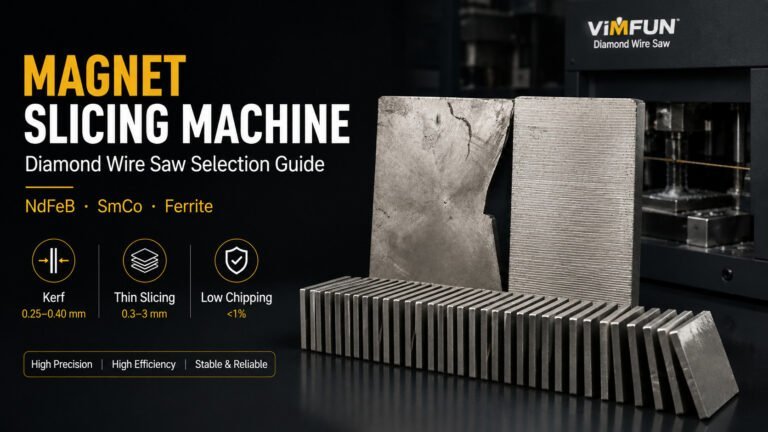
Если вы все еще нарезаете блоки NdFeB с помощью пилы с внутренним диаметром, вы теряете 0,6–1,0 мм магнита за рез и получаете скорость сколов выше 3% на тонких срезах. Правильного размера обзор станков для резки магнитов использование алмазной проволоки снижает ширину реза до 0,25–0,40 мм и снижает сколы до 1% — это само по себе позволяет получить на 20–30% больше срезов с буля на типичном блоке размером 200–600 мм.
Эта страница является центром оборудования для нарезки магнитов. Она подробно описывает, как алмазно-проволочные пилы работают на спеченных магнитах, как выбрать станок в зависимости от размера заготовки и толщины среза, а также где выбор станка меняется для производственных линий SmCo, феррита и магнитов для двигателей.
Что такое станок для нарезки магнитов?
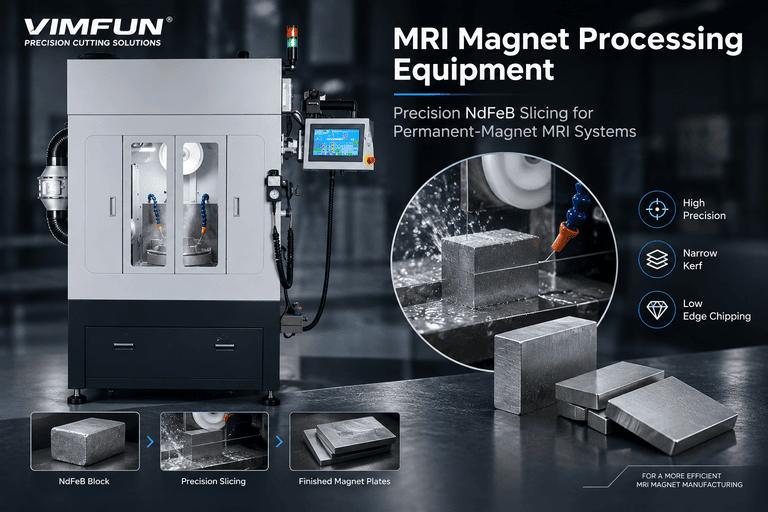
Станок для нарезки магнитов — это алмазно-проволочная пила, предназначенная для резки спеченных постоянных магнитов — NdFeB, SmCo и твердого феррита — на готовые срезы, блоки или сегменты дуги. Основным режущим элементом является проволока с алмазным покрытием или пайкой (типичный диаметр 0,18–0,35 мм), которая непрерывно движется по катушке со скоростью 1500–2400 м/мин, в то время как заготовка подается со скоростью 0,3–1,2 мм/мин.
Причина, по которой проволочные пилы заменили пилы с внутренним диаметром для резки магнитов, проста: спеченный NdFeB твердый (Hv 550–650) и хрупкий. Пилы с внутренним диаметром концентрируют режущее усилие на одном крае лезвия, поэтому сколы края и подповерхностные трещины встречаются часто. Проволока распределяет нагрузку одновременно на десятки или сотни абразивных зерен.
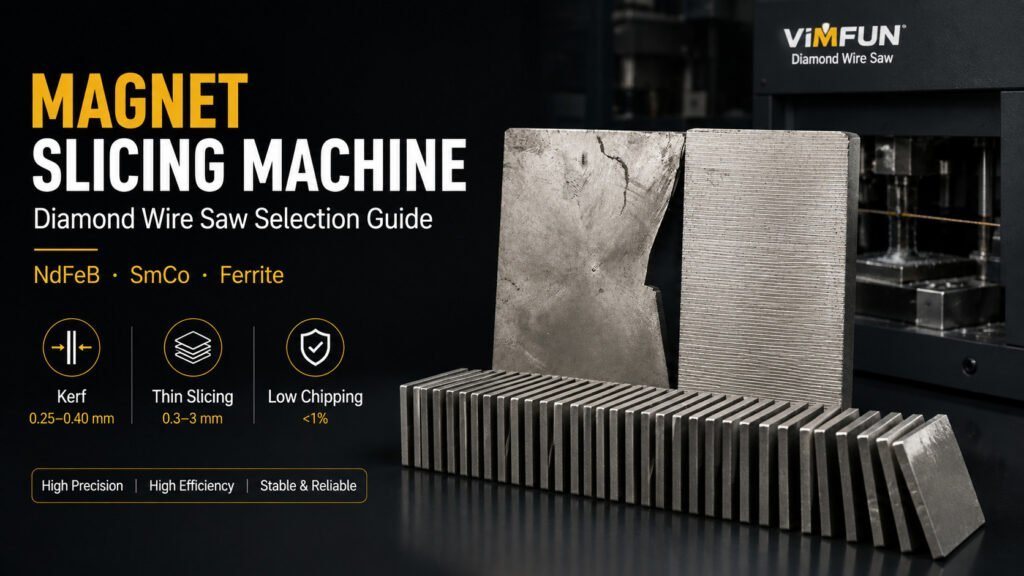
Как на самом деле работает алмазно-проволочная пила для магнитов
На линиях по производству магнитов используются два типа проволоки:
| Тип провода | Диаметр | Срок службы на NdFeB | Лучше всего для |
|---|---|---|---|
| Гальванический алмаз | 0,20–0,30 мм | 15–30 км | Высокообъемная тонкая резка |
| Алмазная пайка | 0,30–0,45 мм | 40–80 км | Толстые блоки, сегменты дуги |
Проволока с гальваническим покрытием имеет более мелкий зернистый состав и режет быстрее, но изнашивается раньше. Паяная проволока служит дольше, но оставляет немного более грубый рез. На блоке NdFeB размером 500 мм мы обычно используем проволоку с гальваническим покрытием для срезов менее 2 мм и паяную проволоку для блоков, которые будут подвергаться последующей механической обработке.
Одна загвоздка: алмазная проволока на магнитах требует охлаждающей жидкости на водной основе с ингибитором коррозии. Чистая вода вызывает ржавление свежесрезанной поверхности NdFeB в течение нескольких часов, а стандартные масляные охлаждающие жидкости оставляют остатки, которые мешают последующему шлифованию. На большинстве производственных линий используется концентрация синтетической охлаждающей жидкости 3–5%.
Если вы сравниваете проволочную пилу с пилой с внутренним диаметром на уровне процесса, см. наше сравнение многопроволочных пил и пил с внутренним диаметром для прямого сравнения ширины реза и показателей выхода.
Выбор станка для проволочной пилы NdFeB по размеру блока
Самая важная переменная при выборе — это размер блока. Слишком большой станок сжигает капитал; слишком маленький станок душит производительность. Ниже приведено, как мы подбираем оборудование для резки проволокой магнитов NdFeB по максимальному размеру блока, который вы планируете обрабатывать.
Малые блоки менее 200 мм — SOMS3-430S
Для исследований и разработок, прототипирования или производства сенсорных магнитов, где блоки имеют размеры 50–180 мм, компактная осциллирующая проволочная пила — правильный выбор. SOMS3-430S — это однопроволочная осциллирующая машина — проволока движется вперед и назад коротким ходом, а не непрерывным циклом. Осцилляция медленнее за рез, но создает очень низкое подповерхностное повреждение, что важно при резке заготовок для магнитов из неодимового сплава, которые будут идти непосредственно на покрытие без этапа шлифовки.
Стандартные блоки 200–600 мм — SOM4-630D (многопроволочная пила для блоков NdFeB)
Здесь находится большая часть производства. Многопроволочная пила разрезает целый блок на 50–200 параллельных срезов за один цикл резки, приводимый в движение одной проволокой, которая многократно оборачивается вокруг двух направляющих роликов. SOM4-630D обрабатывает блоки длиной до 630 мм и предлагает выбор шага 0,25–1,0 мм в зависимости от толщины среза. Для любого применения многопроволочной пилы для блоков NdFeB в диапазоне 200–600 мм это рабочая лошадка.
Реальные данные: на блоке размером 400×100×80 мм станок SOM4-630D, работающий со скоростью проволоки 1800 м/мин и подачей 0,6 мм/мин, производит примерно 65 срезов за 130 минут с шириной реза 0,30 мм.
Крупные блоки 600–1000 мм — SOM4-750D и SOM4-1000D
Для сегментов магнитов ветрогенераторов и крупных промышленных сердечников двигателей длина блока достигает 1 м. SOM4-750D и SOM4-1000D используют усиленные системы натяжения проволоки (35–50 Н) для контроля прогиба проволоки при длинных резах. Контроль прогиба — это разница между вариацией толщины ±10 мкм и ±40 мкм — последнее не соответствует большинству спецификаций магнитов для двигателей.
Для более широкого введения в конфигурации резки NdFeB для всех размеров блоков см. наш обзор станков для резки NdFeB.
Станок для резки тонких магнитных срезов (0,3–3 мм)
Тонкие срезы — это отдельная проблема. При толщине менее 1 мм сам срез становится достаточно гибким, чтобы режущие силы вызывали его деформацию, что проявляется в конических краях и коробление. Специальный станок для резки тонких магнитных срезов решает эту проблему двумя способами:
- Более высокая скорость проволоки — 2000–2400 м/мин вместо стандартных 1500–1800 м/мин, поэтому каждое абразивное зерно снимает меньше материала за проход
- Уменьшенная скорость подачи — 0,2–0,4 мм/мин вместо 0,5–0,8 мм/мин
- Жесткое крепление заготовки — блок приклеивается к опорной плите из графита или керамики перед резкой, и рез проходит на 0,3–0,5 мм в опору
SOM2-600S настроен для этого: высокоскоростной шпиндель, прецизионная ось подачи и держатель заготовки, предназначенный для приклеивания к опорной плите. Типичный выход — срезы NdFeB толщиной 0,3–2,0 мм с вариацией толщины ±5 мкм.
Справедливое предупреждение: выход тонких срезов на NdFeB марки N52+ значительно ниже, чем на N42 — более высокие марки более хрупкие. Если вы подбираете линию для тонких срезов N52 или N54, заложите 8–12% брака даже на хорошо настроенном станке.
Резка магнитов SmCo и феррита
SmCo (Hv 500–600) режется аналогично NdFeB, но более чувствителен к температуре. Скорость проволоки обычно снижается на 10–15%, а поток охлаждающей жидкости должен быть выше. Феррит намного мягче (Hv 480–550), но очень абразивен для проволоки — ожидайте на 40–50% меньший срок службы проволоки, чем у NdFeB.
Для специализированного инструмента и параметров резки SmCo см. страницу станков для резки магнитов SmCo.
Оборудование для резки магнитов для двигателей по применению
Конечная область применения определяет выбор машины в большей степени, чем марка материала. Ниже представлено разбиение оборудования для резки магнитов для двигателей по конечному использованию.
| Приложение | Типичный размер среза | Объем | Рекомендуемая машина |
|---|---|---|---|
| Тяговые двигатели электромобилей | Дуговые сегменты 30×20×3 мм | Высокий | SOM4-630D или SOM4-750D |
| Промышленные сервоприводы | Блоки 15×10×2 мм | Средний | SOM4-630D |
| Динамики / аудио | Кольца 50×50×5 мм | Средний | SOM4-630D |
| Ветрогенератор | Сегменты 100×30×20 мм | Низкие, толстые | SOM4-1000D |
| VCM / датчик | Тонкие срезы 5×5×0.5 мм | Высокий объем, тонкие | SOM2-600S |
Для получения подробной информации о резке магнитов для двигателей электромобилей, включая производство дуговых сегментов методом "клей и режь", см. нашу страницу "Оборудование для производства магнитов для двигателей электромобилей". Для производства сегментов для ветрогенераторов см. страницу "Станок для резки магнитов для ветрогенераторов".
Планирование производительности станка для изготовления магнитных пластин
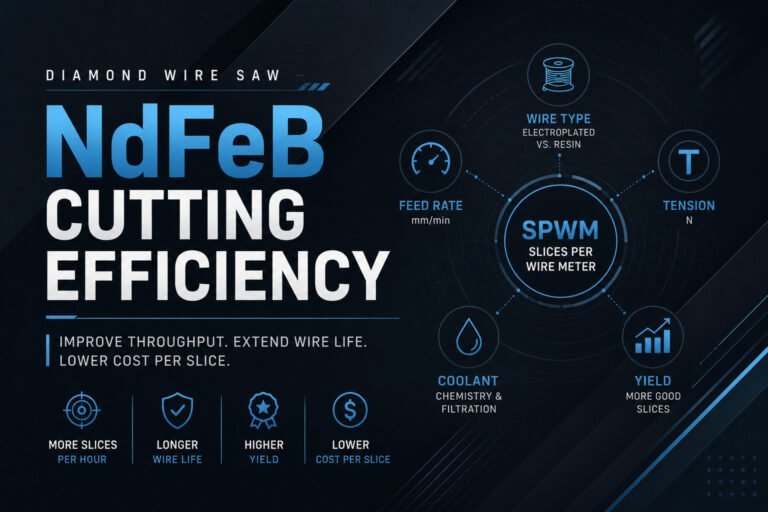
Для тех, кто планирует линию резки, математика производительности важнее характеристик отдельных машин. Вот как производительность станка для изготовления магнитных пластин масштабируется на практике:
Один SOM4-630D, блок NdFeB 400 мм, срезы 1,0 мм:
- Время цикла: ~110 мин на блок (настройка + резка + выгрузка)
- Срезов за цикл: ~380
- Эффективная производительность: ~200 срезов/час на машину
Линия из 4× SOM4-630D:
- Совокупная производительность: ~800 срезов/час
- Соотношение операторов: 1 оператор на 2 машины
- Расход проволоки: ~15 км/день на машину
Узким местом редко является сама скорость резки. На большинстве линий загрузка заготовки, замена проволоки и очистка готовых срезов занимают 30–40% рабочего времени. Если вы планируете модернизацию линии, уделите внимание автоматизации загрузки так же внимательно, как и характеристикам резки.
После резки большинство магнитных срезов проходят шлифовку и покрытие. Для последующего этапа см. нашу страницу "Шлифовка и полировка магнитов NdFeB".
Известные ограничения
Несколько вещей, которые станок для резки магнитов не исправит:
- Искривленные входные блоки. Если сам спеченный блок имеет отклонение плоскостности более 0,2 мм, тонкие срезы, полученные из него, унаследуют это искривление. Исправляйте это на этапе прессования/спекания, а не на пиле.
- Тонкие срезы марки N54+ ниже 0,5 мм. Выход годных резко снижается. Если вам это нужно, планируйте этап финишной обработки методом проволочной электроэрозионной обработки, а не только проволочной пилой.
- Полностью автоматическая замена проволоки. Большинство станков для резки магнитов по-прежнему требуют ручной загрузки проволоки каждые 15–30 км. Автоматические сменщики проволоки существуют на линиях для кремниевых пластин, но пока не получили распространения на линиях для магнитов в производственном масштабе.
Ассортимент оборудования Vimfun для резки магнитов
Краткий справочник по пяти упомянутым выше машинам:
| Модель | Диапазон резки | Диапазон срезов | Лучшее применение |
|---|---|---|---|
| SOMS3-430S | Блок ≤200 мм | 0,5–5 мм | НИОКР, магниты для датчиков |
| SOM2-600S | ≤600 mm block | 0.3–3 mm | Thin slice production |
| SOM4-630D | ≤630 mm block | 0.5–10 mm | Standard NdFeB production |
| SOM4-750D | ≤750 mm block | 1–15 mm | Large motor magnets |
| SOM4-1000D | ≤1000 mm block | 2–20 mm | Wind turbine segments |
Send us a magnet sample and target slice geometry — we cut it free and send you the finished slices plus a measured report on kerf, TTV, and surface roughness before you commit to a machine spec.
ЧАСТО ЗАДАВАЕМЫЕ ВОПРОСЫ
What is the smallest slice thickness a magnet slicing machine can produce?
0.3 mm on NdFeB grades up to N45, using a thin magnet slice cutting machine like the SOM2-600S with support-plate bonding. Below 0.3 mm requires wire-EDM.
How long does diamond wire last on NdFeB?
Electroplated wire: 15–30 km depending on grade and slice thickness. Brazed wire: 40–80 km. Ferrite wears wire 40–50% faster than NdFeB.
Can one machine handle NdFeB, SmCo, and ferrite?
Yes — a SOM4-630D handles all three with parameter changes (wire speed, feed rate, coolant flow). The machine hardware is the same.
What kerf loss should I expect vs. an ID saw?
Diamond wire saw: 0.25–0.40 mm kerf. ID saw: 0.6–1.0 mm. On a typical block, wire saw recovers 20–30% more slices.
Do you offer a free sample cut?
Yes. Send a magnet block and slice spec — we cut, measure, and return the slices with a report at no cost.