Wire Tension in Multi-Wire Sawing: Why It Decides Slice Quality
Wire saw tension interacts with bow, feed and tool condition. Learn what to record in a trial and why a setpoint alone cannot establish slice quality.
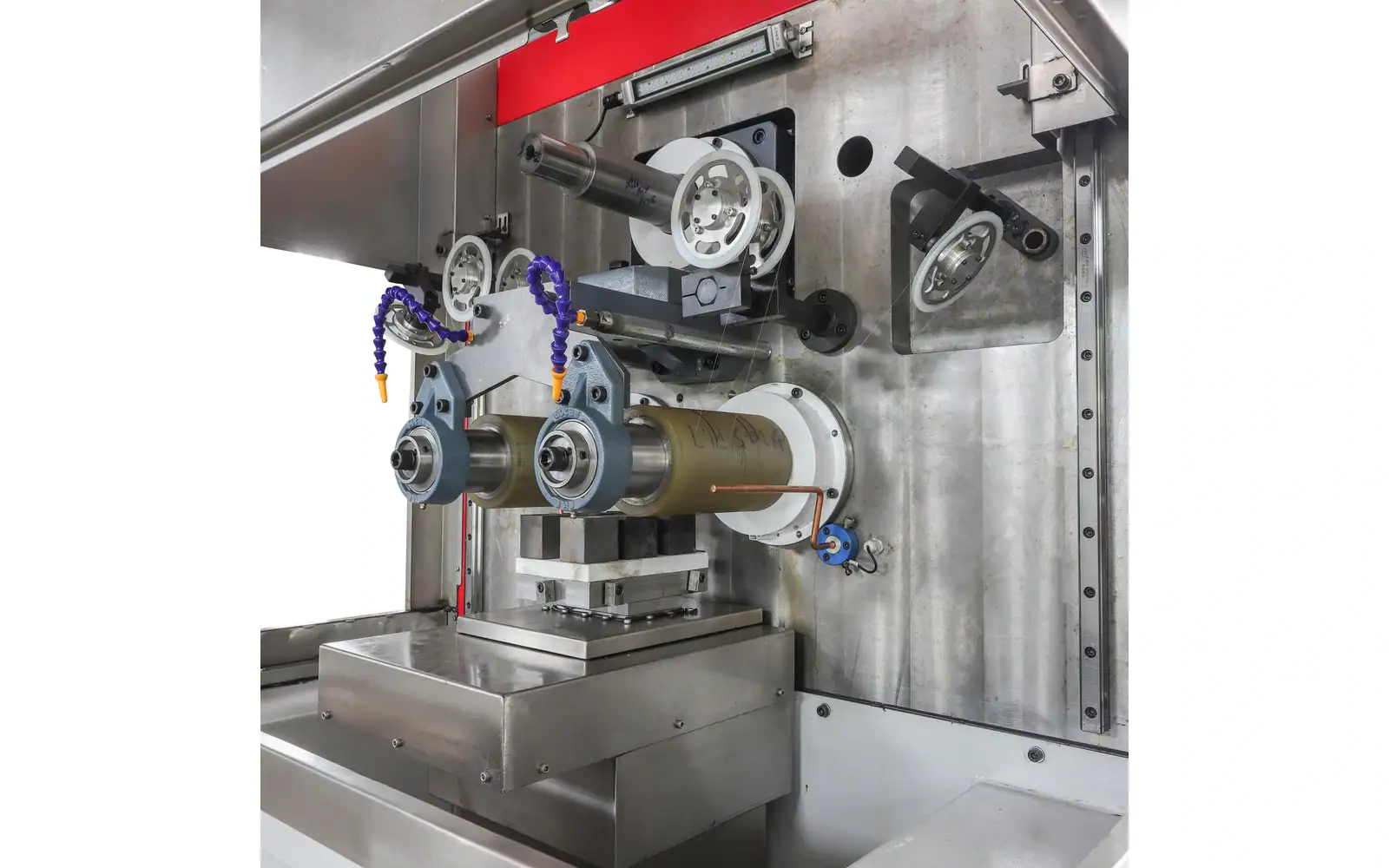
Wire saw tension should not be increased just because the wire bows. First identify what the display reports, whether feed or tool condition changed, and when the bow appears in the cycle. A setpoint is a command; it is not proof of stable loading throughout the cut.
The useful wire saw tension investigation connects process signals to ordered slice measurements. Without that connection, an apparently successful adjustment can conceal a worn consumable, tracking issue or changed support condition.
Vimfun SOM4-630D specifies closed-loop wire tension control. That identifies a control feature, not a universal wire saw tension setting or proof of stable loading; a trial must connect the reported signal to the actual cut and inspected output.
What does the wire saw tension display measure?
Tension is the tensile loading carried by the wire. It should be distinguished from workpiece feed force, motor current and a software percentage that may represent another quantity. Ask which variable an operator display actually reports and how the system obtains it.
A published wire-bow modelling study relates cutting behaviour to wire deformation and measured loading in its experimental system. It provides research context, not a tension target for another machine. Use the equipment's qualified procedure rather than transferring study values directly.
Setpoint and Actual Behaviour Are Different
A setpoint is an instruction to the control system. The actual wire condition can vary through contact, motion changes and other events during the cycle. A displayed target alone does not show how the process behaved at those moments.
Record wire saw tension using the information available from the machine, and identify whether a trace is measured, estimated or merely commanded. Preserve units and the location or basis of measurement. Two displays with the same number may not describe the same physical quantity.
If the project requires dynamic evidence, ask whether the system can retain relevant records. A photograph of the panel can show one moment, but it cannot establish stability throughout a complete cut.
Should more bow always mean more tension?
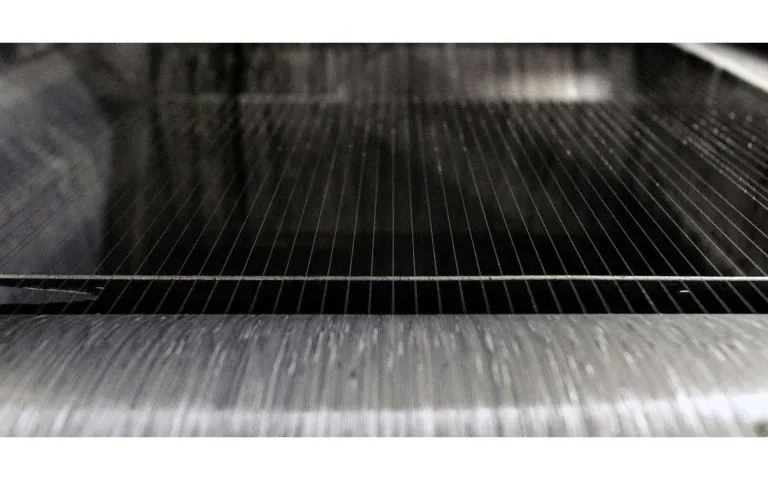
The wire can deflect under cutting load rather than remaining an ideal straight divider. This deformation is commonly discussed as wire bow. Its significance depends on the setup and process, including contact length and the relationship between feed and material removal.
Wire saw tension participates in that relationship, but increasing it is not a universal solution. The tool and guide system have approved operating limits, and an adjustment may change other risks or behaviours. Follow the machine procedure and a controlled trial.
A bow observation should be recorded with the workpiece position and process condition. An image without scale or a known reference is useful qualitatively but should not be converted into a precise deflection measurement.
Feed and Removal Must Be Considered Together
Wire tension control aims to maintain the selected loading condition while the cutting load changes. The load must be interpreted alongside feed, contact length and tool condition: increasing tension to hide bow can leave the underlying removal problem unresolved. The useful comparison is the process response and slice quality under a documented configuration, not which supplier quotes the highest tension.
Feed advances the workpiece into the cutting arrangement. The material-removal response depends on the selected tool, material and current condition. An excessive demand relative to removal can change the loading and wire behaviour, but the symptom needs investigation.
When assessing wire saw tension, record feed history, interruptions and relevant operator changes. Do not compare two runs that changed both feed and tension and then attribute every difference to tension alone.
If the machine provides other process signals, retain them with the same time or position reference. Their relationship may help explain a transient event, while none should be treated as a universal substitute for inspecting the output.
Build one timeline with feed, the reported tension variable and interruptions or reversals available from the machine record. Keep the variables' units and definitions. Motor current, a commanded percentage and a measured tensile load are different signals; they should not be placed under the same report heading.
For wire saw tension, I'd first compare an affected interval with an unaffected one from the same setup. Note contact development and any consumable or operator change. That is a more focused investigation than changing several settings and finding that the next piece looks better.
The pitfall is losing causation: a new wire and a tension adjustment made together cannot isolate the adjustment. Treat the result as a combined change. Wire saw tension should remain within the approved equipment procedure, and the output still needs its geometry and relevant defect inspection.
A setpoint is not a trace.
Span and Geometry Affect the Interpretation
The guided span and workpiece contact change how the system responds to loading. A small specimen and a large production workpiece may not present the same condition, even at an identical nominal setpoint. The mounted geometry belongs in the comparison.
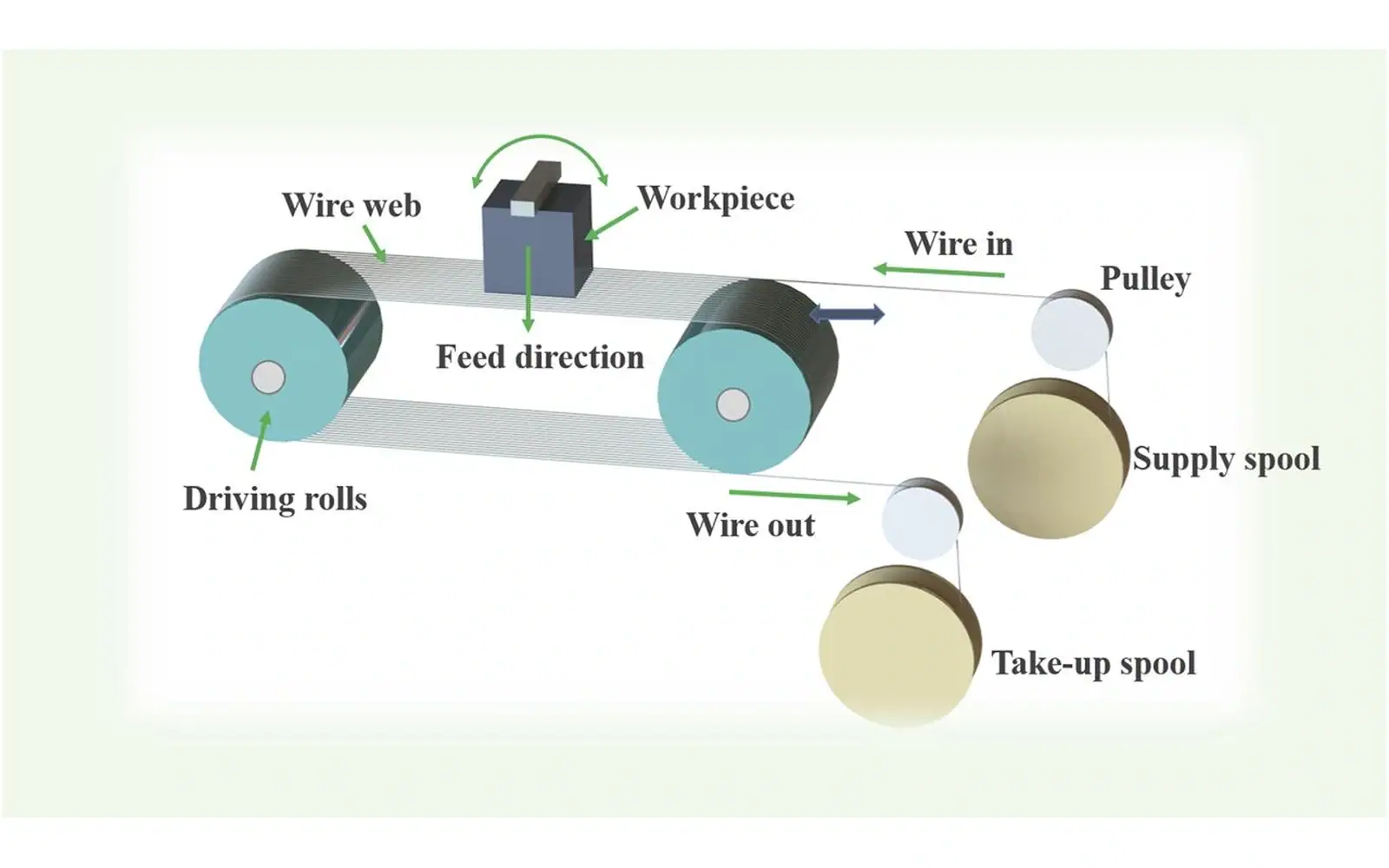
Wire saw tension trials should document input size, fixture arrangement and the cutting positions used. Confirm that the planned stock and mounted assembly are within the assessed configuration. Avoid extending a small-sample result into a full-scale capability claim without further evidence.
For the equipment concept, consult the multi wire saw overview. Its general operating arrangement does not provide the correct setpoint for a customer's material.
Did the tool change during the comparison?
A changing output can coincide with consumable wear, guide condition or alignment rather than a control setting. Record the tool's relevant history and the machine checks performed under the approved maintenance procedure.
A wire saw tension investigation should not begin by changing a number to conceal an unresolved tracking or mechanical problem. Confirm the setup and system condition first, then test an authorized adjustment with a defined objective.
Keep before-and-after inspection results tied to the same trial. If the consumable is replaced during the comparison, document it. Otherwise, an improvement may be credited to tension when the tool change also contributed.
Review the Complete Cut Cycle
Entry, the main cut and final separation can present different contact and support conditions. A stable middle section does not prove that the entire run was stable. Retain the process record and note events at the transition points.
For wire saw tension, identify whether changes are normal commanded events, measured responses or unexpected deviations. The equipment supplier should explain the control logic relevant to interpretation within the authorized operating procedure.
An interrupted cycle needs a clear record of what happened and which slices could be affected. Without that context, a batch average can hide the condition associated with a damaged region.
Tie Process Signals to Slice Inspection
Inspect thickness distribution, relevant edge defects and surface condition using the agreed method. Retain slice order where it helps connect output with process history. A panel trace is process evidence, not finished-part acceptance.
The 4 axis multi wire saw provides one configuration for project review. Its suitability depends on the actual material and setup; wire saw tension control does not by itself promise a particular thickness tolerance.
If a defect appears only after release or cleaning, investigate that stage as well. Do not use a convenient tension explanation when the evidence does not establish the timing or cause of damage.
Separate the Control Command from the Investigation
Start with the meaning of the displayed signal. Obtain the controller or machine documentation needed to identify the reported quantity, its units and its relation to the command. A display that follows its setpoint can establish one observation without proving the condition everywhere along the moving wire.
For wire saw tension, time matters. Record when the observed bow or signal change occurs relative to entry, the main cut, reversal and exit. A value sampled at an arbitrary moment cannot explain a cycle-dependent observation. Keep the timing record connected to the same run and tool condition.
Review what changed before adjusting the command. The material section, feed, mounting or tool state may differ from the baseline. List those differences and decide which can be controlled. A higher setting chosen without that review may alter the process while leaving the original cause unresolved.
The investigation should connect signals to ordered blank measurements. If a dimensional trend appears, retain slice position and the inspection conditions. Compare equivalent measurement states before interpreting the trend as a response to loading. Otherwise a support or sampling change can complicate the conclusion.
A wire saw tension trial needs an authorised operating boundary from the actual equipment and tooling, not a value copied from a research illustration. This article describes what to record; it does not prescribe a safe setting for an unspecified configuration. Keep any proposed adjustment inside the approved process procedure.
Report interventions during the run. A wire change, feed change or interrupted cycle can alter what a before-and-after comparison means. Such records do not invalidate the run, but they limit the cause that can be assigned to a single command change.
Choose the next adjustment from the question the evidence supports. If the signal definition is still unclear, resolve that documentation first. If tool condition changed, restore an interpretable baseline. If the output trend remains under equivalent conditions, design a controlled follow-up rather than increasing the setting until one visible symptom disappears.
| Decision field | Evidence to retain |
|---|---|
| Signal | Meaning, units and timing in the cycle |
| Baseline | Tool, stock, feed and mounting condition |
| Output | Ordered measurements and intervention record |
Choose the Page That Answers Your Question
This article answers: Which observations justify a tension change rather than another process correction? It does not replace the following equipment or application scopes.
| Your question | Relevant page | Boundary |
|---|---|---|
| How does batch wire slicing equipment differ? | multi wire saw | Application or process context for the receiving task |
| Need the 4 axis multi wire saw context? | 4 axis multi wire saw | Equipment configuration and its stated scope |
FAQ
Should wire saw tension rise whenever the wire bows?
Not automatically. Wire saw tension must be considered with feed, tool state and geometry. Establish when the bow appears and what changed, then follow the approved procedure. A visible symptom alone does not identify the corrective setting.
Does wire saw tension control guarantee acceptable blanks?
No. It describes a control feature. Output quality still depends on the actual task and must be inspected under the agreed method. Keep controller observations and dimensional acceptance as related but separate records.
Can a published wire saw tension setting be copied?
Do not treat it as a universal instruction. Check the material, tooling, configuration and operating boundary of the actual equipment. A research setting can explain an experiment without defining an approved production value for another machine.
Build a Controlled Trial Record
Identify the material lot, geometry, tool, fixture, approved settings and acceptance sheet. Change one intended variable where practical and record unavoidable differences. Return representative blanks and retain the data needed to compare them.
Preserve the approved baseline and record the display definition, selected setpoint, feed history, tool condition and event timing. Link that record to slice positions and inspection. If a wire saw tension change is proposed, define the symptom it should resolve and change it within the machine procedure; judge the result by accepted blanks, not the setpoint alone.