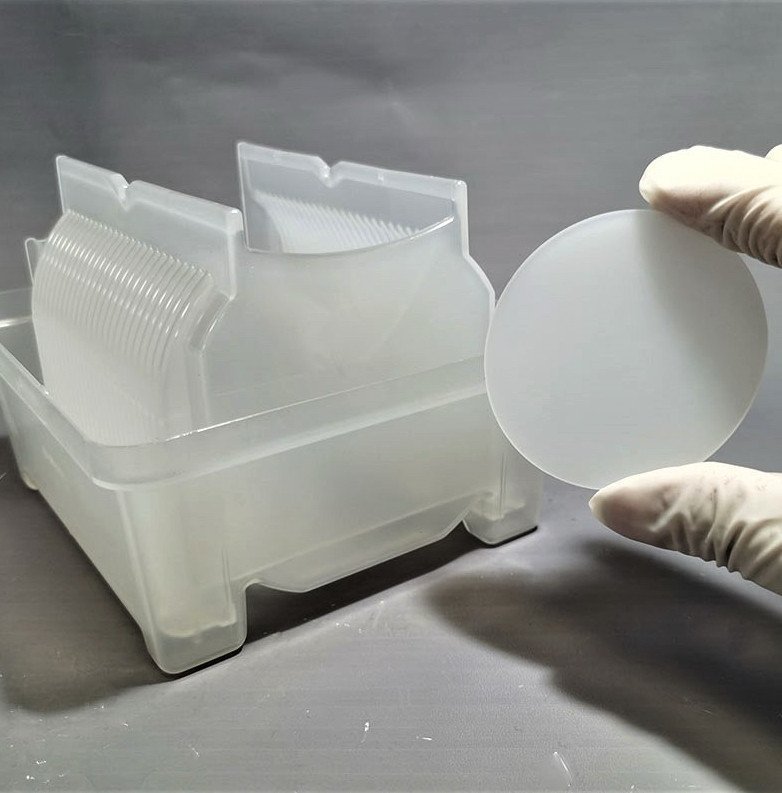
Prepare sapphire ingots for substrate finishing with spooled-wire, multi-wire slicing. Compare inverted and oscillating cutting configurations against your blank size and target slice requirements.
Separate the requested as-cut thickness from the finished substrate thickness. Include the stock that subsequent finishing will remove.
02 · EDGE & SURFACE
Agree on inspection
Define acceptable edge damage, thickness variation and surface condition before the trial. A listed slice range does not establish wafer quality.
03 · WORKPIECE
Check the complete setup
Provide the crystal orientation, shape and mounting method. The fixture and bonded support must be considered alongside the machine's listed blank envelope.
Process boundary
Sapphire ingot slicing in the substrate workflow
1. Prepare & mount
Confirm orientation and the prepared blank geometry, then review the fixture and support with the cutting team.
2. Slice with a wire web
Parallel cutting wires produce multiple slices. The SOM configurations here use spooled wire with reciprocating travel; their motion and setup must match the material and cut.
3. Inspect & finish
Inspect the separated slices against the agreed criteria before downstream finishing. Do not equate an as-cut slice with an epitaxy-ready LED substrate.
Cutting demonstration
12-Inch Sapphire Ingot Slicing
This video shows a 12-inch sapphire ingot being sliced with a diamond multi-wire saw. For a similar cutting trial, provide the ingot dimensions, fixture details and target slice thickness.
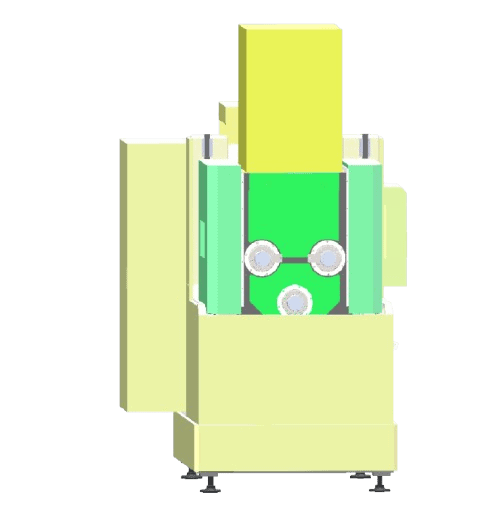
Equipment illustration from the technical documentation; not a machine photograph.
SOMIS-400 · Oscillating cutting
A three-axis, single-workstation configuration with a worktable that rocks through a small angle during cutting. Consider this option when evaluating oscillating cutting for hard, brittle sapphire blanks.
Listed blank envelope: 400 × 160 × 160 mm Listed slice thickness: 0.3–15 mm
Confirm the feed-direction configuration and the applicable recipe for your order. A general machine range is not a guaranteed sapphire process window.
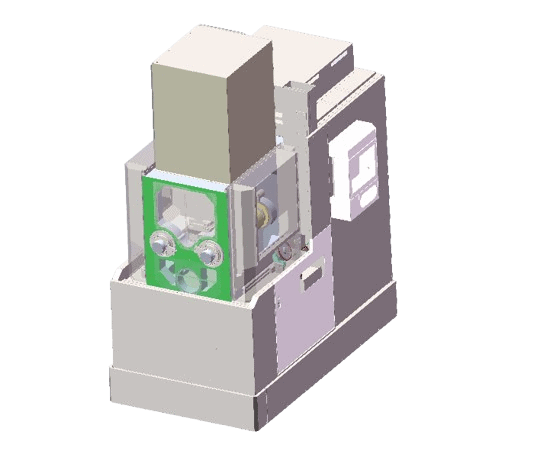
View SOMIS-400Equipment illustration from the technical documentation; not a machine photograph.
SOMI-430 · Inverted cutting
A dual-axis inverted multi-wire machine listed for sapphire and other hard, brittle materials. Consider it when evaluating an inverted cutting setup for thin slices.
Listed blank envelope: 430 × 160 × 150 mm Listed slice thickness: 0.3–3 mm
Confirm workpiece support, unloading and the target slice condition in a material trial. These published limits do not establish thickness tolerance.
Dimensions and thickness ranges are machine specifications, not sapphire-specific acceptance guarantees. Throughput, usable yield, thickness variation and surface quality require a trial with your material and setup.
Material grade, crystal orientation and incoming blank drawing
Blank length and cross-section, with fixture or bonding details
Required as-cut thickness and planned finishing allowance
Batch size and the inspection method you will use
Agree on the result to evaluate
Thickness measurements and acceptable variation
Edge condition and visible damage after separation
Surface condition before further finishing
Cutting time, consumable usage and usable slice count
Wire specification, tension, feed and coolant conditions should be selected for the agreed trial. There is no single validated recipe on this page for every sapphire grade and geometry.
Sapphire slicing questions
Which machine should I start with?
Start with SOMIS-400 if you want to evaluate small-angle oscillating cutting, or SOMI-430 for a dual-axis inverted setup. Check blank size and slice requirements first; use sample results to choose between applicable configurations.
Does a 0.3 mm listed thickness mean finished 0.3 mm LED substrates?
No. The listed range describes machine slice thickness. Finished substrate thickness depends on the agreed cutting result and downstream material removal. Confirm the allowance before selecting the as-cut thickness.
Can you guarantee a sapphire cutting rate or surface finish?
This page does not set a universal cutting-rate, roughness or yield guarantee. Those values need material-specific trial conditions and agreed acceptance criteria.