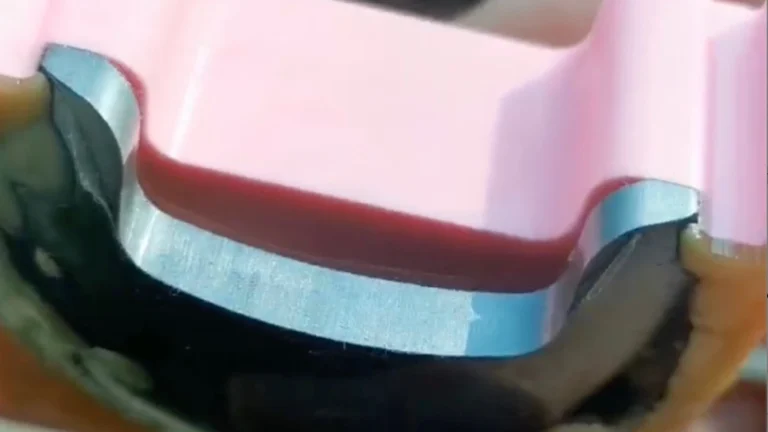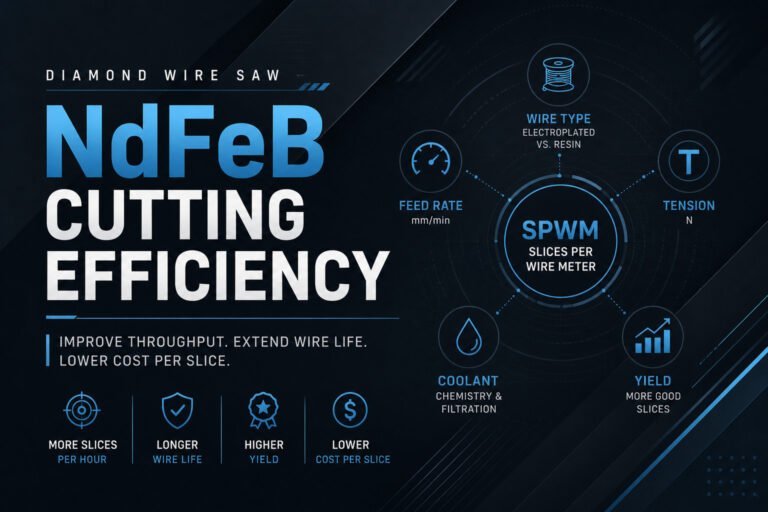
Diamond wire slicing uses diamond abrasive carried by a moving wire to separate material into sections. When reviewing a diamond wire slicing machine, start with the required cut sequence and the material to be processed. A machine name alone does not tell you how the wire is arranged, which movements are available, or what is included in the proposed configuration.
This guide explains how to compare process layouts, define the scope of supply and build a useful operating-cost estimate. For the inspection criteria used to approve the resulting parts, see our precision slicing requirements and quality checks.
What happens during diamond wire slicing?
The workpiece is positioned and supported relative to the wire path. Controlled relative movement brings the abrasive wire through the intended cut. The selected equipment, consumable and process settings must suit the workpiece and the required result. Ask the supplier to explain the complete sequence, from loading the blank to removing the final section.
Review the proposed wire arrangement, feed movements, tension control, fluid delivery and handling method as separate items. Confirm which functions are included, which require an option and which depend on the fixture. Do not assume that every machine described as a wire saw can execute the same program.
How do single-wire and multi-wire configurations differ?
An individual cutting path and a set of parallel cutting paths lead to different planning questions. Compare them against the part drawing, batch size and expected changeovers rather than treating either arrangement as universally better.
| Requirement | What to discuss | Where to begin |
|---|---|---|
| Individual sections or changing jobs | Cut sequence, available movements, fixture access and setup changes | SVO-40 single-wire product information |
| Small-batch parallel slicing | Blank arrangement, slice spacing and handling of the complete batch | SOM200 product information |
| Production batch slicing | Required output, workpiece loading, consumable changes and downstream handling | Multi-wire model overview |
These links identify starting points for a configuration review, not a guarantee that a model meets every listed job. Confirm the applicable cutting envelope, material and options against the current model documentation. Do not transfer specifications from one model to another.
Which application details change the configuration?
Provide the material grade and condition, incoming dimensions, intended slicing direction and finished geometry. For crystal work, include the required orientation. State whether the blank changes between orders and whether the setup must accommodate several part families.
Separate wafer slicing from the later division of a processed wafer into individual devices. Describe the actual operation in the enquiry so that equipment is evaluated for the intended stage. Likewise, distinguish straight parallel slices from profiles or internal features; confirm the required movement and access before selecting a machine.
For sapphire substrate work, use the sapphire slicing application page to frame the discussion. This article does not establish a common recipe for silicon, silicon carbide, sapphire or ceramics.
What belongs in a complete equipment quotation?
Compare written scopes of supply. A lower machine price may cover a different set of fixtures, fluid-system components, consumables or services. Ask each supplier to identify the proposed configuration and exclusions before comparing totals.
- Machine and controls: configuration, included movements, software functions and options.
- Workholding: standard fixtures, application-specific tooling and responsibility for fixture design.
- Process equipment: included fluid delivery, filtration and any separately supplied equipment.
- Consumables and spares: initial quantities, replacement specifications and ordering arrangements.
- Delivery and commissioning: packing, transport responsibilities, installation scope and training.
- Acceptance and support: trial criteria, documentation, warranty scope and support arrangements.
Request the utility and installation requirements for the quoted configuration. Treat delivery dates, on-site services and response commitments as quotation items to confirm, rather than assumptions attached to every model.
How should operating cost be compared?
Build the comparison from measured consumption and agreed operating assumptions. Include consumables, labour, utilities, maintenance and the handling steps needed to produce an accepted part. Record material loss and rejected output separately so they are not hidden inside a headline cutting rate.
| Cost input | Evidence to request |
|---|---|
| Wire and other consumables | Replacement specification, purchase cost and usage observed during representative work |
| Operator time | Loading, setup, monitoring, unloading and cleaning time |
| Utilities and maintenance | Configuration-specific requirements and the documented maintenance schedule |
| Material utilisation | Incoming material, accepted output and the agreed treatment of remnants and rejects |
| Downstream processing | Finishing and inspection required before the part meets its drawing |
Use the same material, part geometry and acceptance rules when comparing options. A premium configuration does not automatically have the lowest running cost, and a faster cut does not automatically produce more accepted parts. Where trial data is missing, leave the assumption visible rather than inventing a savings percentage or payback period.
How can a supplier’s proposal be checked?
Ask for a configuration-specific demonstration, a documented sample trial and the inspection results agreed beforehand. Verify that the quotation and demonstration refer to the same machine arrangement. Review the operating manual, maintenance responsibilities and the scope of technical support.
Certificates and references should relate to the product or service being assessed. A general company claim does not substitute for evidence that the proposed configuration can perform the required job. Record unresolved points in the quotation review before approving the order.
Prepare the next technical discussion
Send the drawing, material identification, blank dimensions, expected batch size and intended cut sequence through our equipment enquiry page. Include the quality requirements and any downstream finishing steps. These details give the team a practical basis for reviewing the configuration and defining a representative cutting trial.