Why do magnets attract while grinding? Over 8 years of experience in magnet processing industry. I’ve seen this issue cost manufacturers thousands of dollars. In this article, I will explain how coolant, pressure, and heat create cracking and how the correct industrial magnet grinding machine can stop it.
You will learn about causes of cracks. You will see how industrial magnet grinding machine design may assist. After this you’ll know what to look for – and why Vimfun is the ideal option for your line.
What Is an Industrial Magnet Grinding Machine and Why Does It Matter?
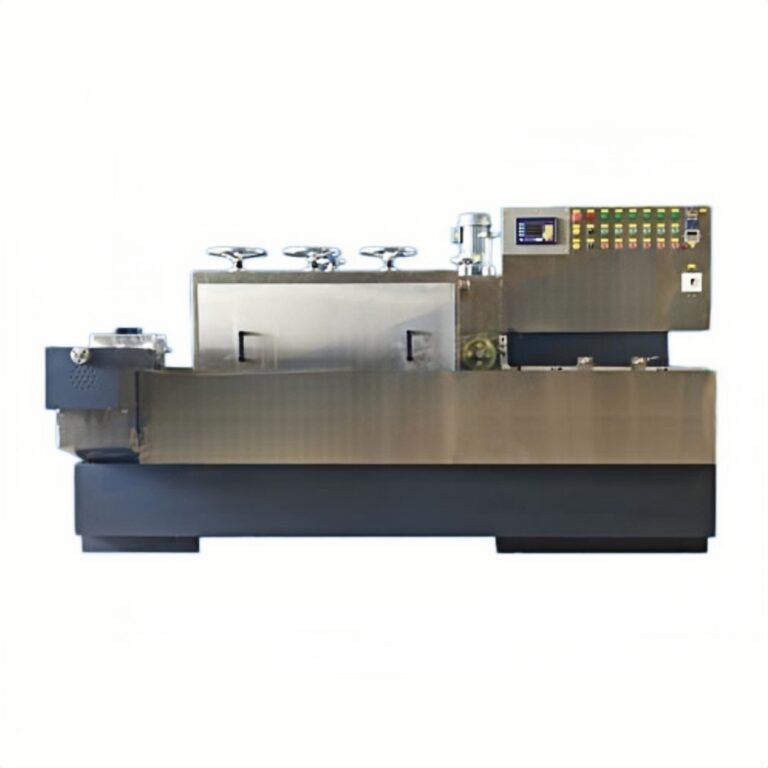
An industrial magnet grinding machine polishes and finishes permanent magnets to precise sizes. Used in numerous sectors from EV motors to blower systems. NdFeB and ferrite magnets are highly fragile materials. They break easily. A good machine can handle heat, pressure and coolant all at once.
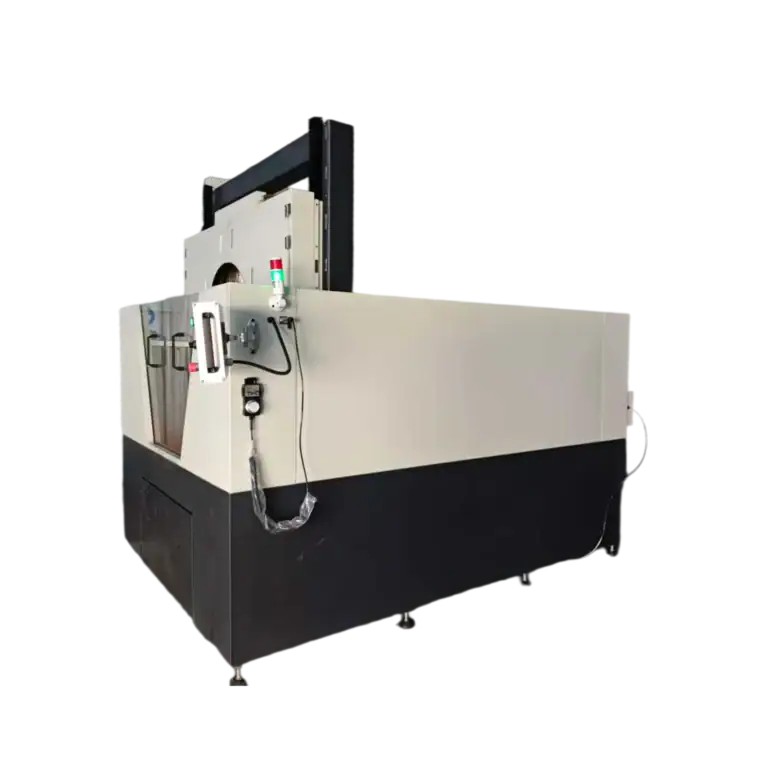
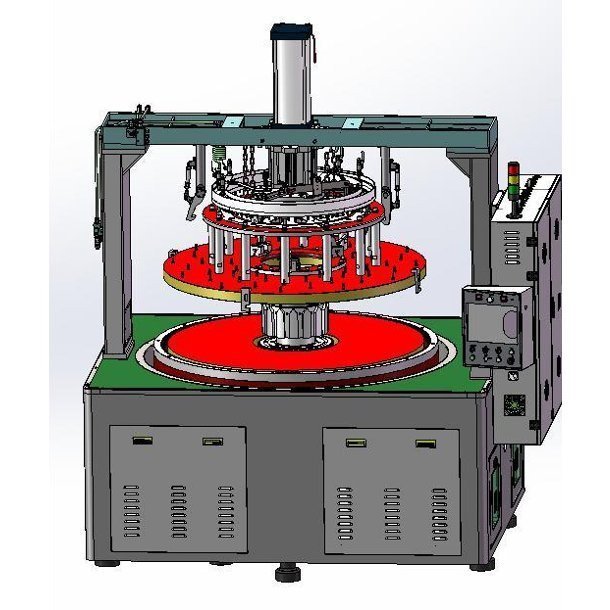
Grinding inaccuracies result in microcracks, chipping and size problems. Modern machinery, like the 4-station grinding machine and pass-through magnet grinder, securely handle huge quantities.
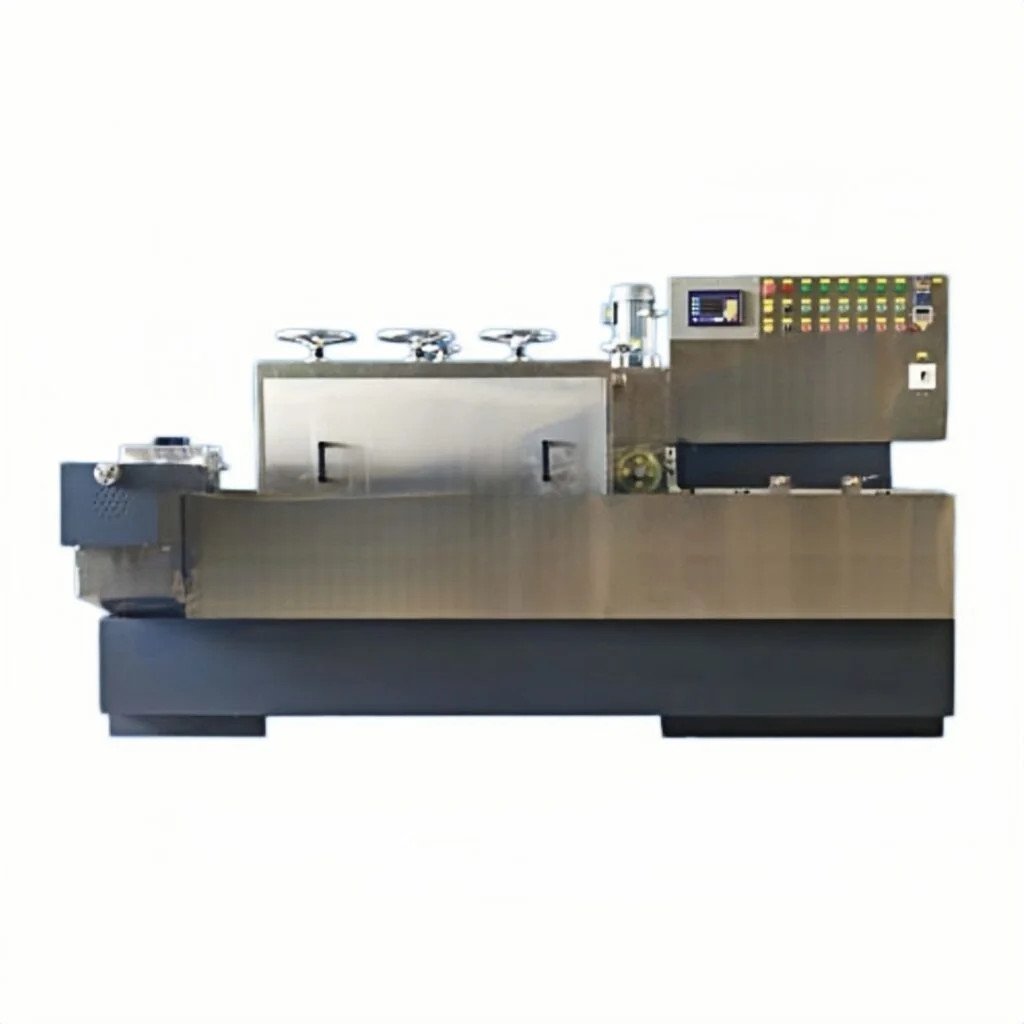
Basic vs. Advanced Magnet Grinder: Key Differences
| Feature | Basic Grinder | Advanced Industrial Magnet Grinding Machine |
| Pressure Control | Manual | Automatic / CNC |
| Coolant System | Basic Flood | Precision Directional Coolant |
| Heat Management | Passive | Active Thermal Control |
| Station Count | 1 | 4+ (Multi-station) |
| Output Speed | Low | High (Pass-through / Conveyor) |
| Crack Risk | High | Very Low |
| Ideal For | Small batch | Mass production / EV / Motor magnets |
Why Does Heat Build-Up Cause Magnet Cracking During Grinding?
In magnet grinding, heat is the number one adversary. The friction of the wheel produces heat extremely quickly. If not removed promptly the surface becomes hot but the inner remains cool. That gap causes tension and fractures.
In EV traction motor magnet grinders, even a short heat spike might damage a batch. This is fixed using a directed coolant system. The tile magnet finishing machine employs precision nozzles to eliminate heat at the grind spot.
How Does Coolant Flow Direction Affect Crack Prevention?
Flow direction more important than amount of coolant. The coolant has to touch the precise point of contact between the wheel and the magnet. It is not enough to overflow the surface nearby.
- Directed nozzles reduce heat at source by up to 60%
- Side-flow coolant does not touch the contact zone
- High pressure coolant might shake the magnet if not set up appropriately
- Low-pressure coolant may not reach far into grind zone
Coolant Type Comparison
| Coolant Type | Heat Removal | Surface Safety | Best Use Case | Cost Level |
| Water-soluble oil | High | Safe for NdFeB | General magnet grinding | Medium |
| Synthetic coolant | Very High | Good | EV motor magnets | Medium-High |
| Pure water | Low | Risk of rust | Not recommended | Low |
| Oil-based flood | Medium | Good lubrication | Ferrite magnets | High |
Key Coolant Best Practices
- Always match coolant type to magnet material
- Check coolant temperature at the start of each shift.
- Keep coolant fresh to prevent bacterial growth
- Use a filter to clean magnet dust out of the coolant
How Does Grinding Pressure Lead to Cracking – and What Fixes It?
The second reason for cracks is the wrong pressure. Too much force causes stress fractures in the interior of the magnet. Too little will result in a poor surface quality. It’s quite difficult to get the balance perfect by hand. Modern no-reclamp magnet grinding systems solve this problem with servo-controlled pressure heads.
They adapt in real time. In multi-station magnet grinding systems, each station operates at a distinct pressure for rough grinding, finishing, and polishing. The right industrial magnet grinding machine saves your money.
What Are the Best Pressure Control Systems Available Today?
Servo controlled pressure is the most popular option in magnet grinding nowadays. It eliminates human mistake. It always gets the same effect.
- Fixed pressure systems – cheap but dangerous on thin magnets
- Servo controlled pressure – adapts to magnet size and hardness
- Pneumatic floating heads – gentle touch, ideal for tile magnets
Advantages and Disadvantages of Pressure Systems
| System Type | Advantage | Disadvantage |
| Fixed Mechanical | Low cost, simple | High crack rate on thin magnets |
| Pneumatic Float | Gentle on surfaces | Less precise on hard materials |
| Servo-Controlled | High precision, low crack risk | Higher starting cost |
| CNC Adaptive | Full auto, data logging | Needs a skilled operator |
The finest fracture protection is provided by servo and CNC systems. They are the #1 choice for EV traction motor magnet grinders and blower motor magnet grinders when 0% faults are required.
How Do Modern Machine Designs Reduce Cracking in High-Volume Production?
High volume manufacturing is difficult. You need quickness and quality. This problem is solved by modern continuous conveyor magnet grinders and 4-station industrial magnet grinding machines. They run magnets through each step themselves. No handling from one step to another is required.
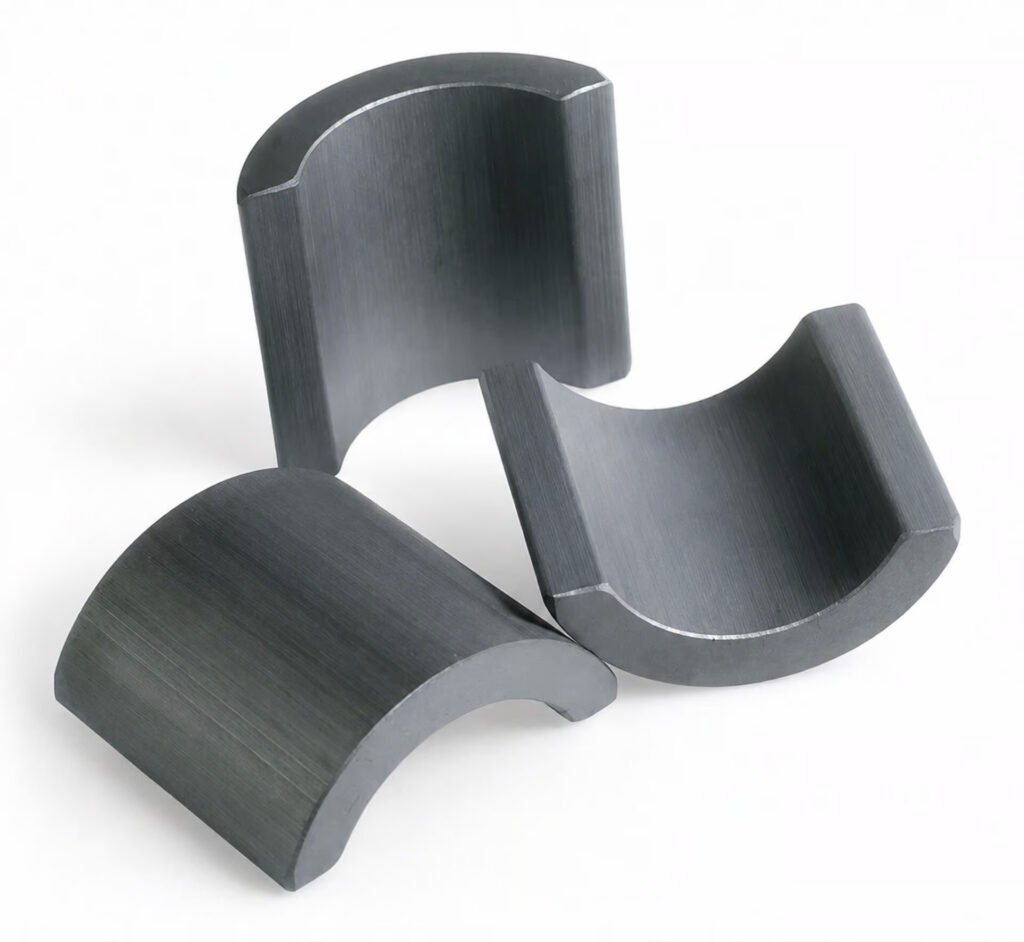
Reduced handling equals reduced chance of chipping and edge damage. A flat conveyor bed is used by the tile-shaped permanent magnet grinder. It retains tile magnets without clamping force. This alone eliminates one of the primary causes of edge cracking.
Real-World Case Studies: Machine Design vs. Crack Rate
| Case Study | Machine Type | Problem Solved | Crack Rate Reduction |
| EV Motor Factory, China | 4-station grinding machine | Heat and pressure spikes | 78% reduction |
| Blower Motor Supplier, Germany | Continuous conveyor magnet grinder | Manual handling damage | 65% reduction |
| Tile Magnet Maker, Japan | Tile-shaped permanent magnet grinder | Edge chipping on thin tiles | 82% reduction |
| NdFeB Magnet Plant, USA | No-reclamp magnet grinding system | Clamping stress cracks | 70% reduction |
Why Pass-Through Design Matters for Quality
The pass-through magnet grinder moves magnets in a single direction. On one side. Out the other side. No stops. No Reload. This is significant because.
- Fewer stops less shaking occurrences cracking magnets
- Consistent feed rate, uniform pressure all the way
- The workers may inspect the output without halting the machine
- The conveyor speed is variable for coolant responsiveness.
Sectors That Benefit Most from Modern Machine Design
- EV & hybrid motor building – zero-defect magnets are a requirement
- Blower and HVAC motor lines – high capacity, thin tile magnets
- Industrial servo motor manufacturers – strict constraints on size on all sides
- Suppliers of consumer electronics – tiny magnets, high accuracy
Additional Factors That Affect Cracking: Wheel, Fixture, and Feed Rate
The major three are heat, pressure, and coolant. But they are not the exclusive factors. Another three elements contribute silently to fractures in many plants. They’re ignored by most. But they make a tremendous difference to the end product.
Type of grinding wheel, speed of feed rate, and how a magnet is held all effect fracture risk . They are as crucial as coolant and pressure control. Getting them correctly. Use an industrial magnet grinding machine for best results.
Grinding Wheel Selection
Cracks are often caused by a concealed incorrect wheel. A wheel too coarse can damage the surface. Same harm is done by a too hard wheel for a soft magnet.
- NdFeB, rare earth magnets: finest diamond wheels
- CBN wheels are useful for ferrite and ceramic magnets
- Soft resin bond wheels – good for thin, delicate magnets
- Vitrified bond wheels – high accuracy, requires precise coolant pairing
Feed Rate and Its Impact on Surface Integrity
The pace at which the magnet goes past the wheel called the feed rate. Too quickly, and the wheel will chew up the surface. Too fast and it accumulates heat in one place.
- Test feed rate on sample pieces first – before complete batch runs
- Match feed to wheel speed and coolant flow rate
- Machine data logs for determining optimal range by magnet type
- Change feed rate if changing magnet grades or sizes.
Fixture and Holding Design
How you hold the magnet, that’s a big deal. Side tension is caused by fittings that hold excessively strongly. Instead, better systems employ magnetic chucks or soft carriers.
FAQs About Industrial Magnet Grinding Machines
Is a 4-station grinding machine better for reducing cracks?
Yes. A 4-station industrial magnet grinding machine is divided into 4 phases. Every step eliminates less material. This means less heat and pressure is applied at once. Far less harsh on fragile magnets. It allows the coolant time to do its thing between steps.
- Less removal each pass equals less heat per pass
- Each station may have a distinct wheel grain
- Crack rate much less than single pass grinding
Can a pass-through magnet grinder safely handle EV motor magnets?
Yes. The pass through magnet grinder is still handling extremely low. A constant supply ensures consistent pressure and contact of coolant throughout. This design is being used for zero-defect targets in several EV motor magnet facilities throughout Asia and Europe.
- Constant feed speed = Constant grind conditions
- No reloading means no chance of dropping or chipping between passes
- Works excellent with directed coolant nozzle systems
What coolant works best for NdFeB magnet grinding?
NdFeB magnets should be flushed with water-soluble oil or synthetic coolant. Both are good in heat removal. Both prevent the magnet from rusting. Do not use distilled water, NdFeB corrodes quickly. Always filter the coolant to eliminate swarf that will damage the surface.
- Water-soluble oil is the usual choice
- Use synthetic coolant for high heat tasks
- Change the coolant filter after each shift to keep the coolant clean.
- Check coolant pH weekly.
What is no-reclamp magnet grinding, and why does it help?
No-reclamp magnet grinding involves grinding the magnet on all required faces without removing and re-clamping it. Each time you unclamp a magnet you risk edge chipping and tension. This danger is avoided by no-reclamp systems. They also cut time each cycle.
- One setup grinds all faces in sequence
- No edge chip danger, no re-clamp stress
- 9 Faster cycle time per magnet
- All ground surfaces with improved size precision
Conclusion
Is There a Way to Prevent Cracking in Magnet Grinding – and Who Can Help You Avoid It? Yes, you can avoid cracking. The major reason is heat, pressure and bad coolant. All have exact fixes. Modern industrial magnet grinding machines have lowered the crack rates by as much as 82%.
The appropriate partner in machines is everything. Vimfun has blower motor magnet grinders, tile-shaped permanent magnet grinders and whole multi-station magnet grinding lines. Check out vimfun now and get the best answer for your line.