
Precision
Temperature Control
for Every Crystal
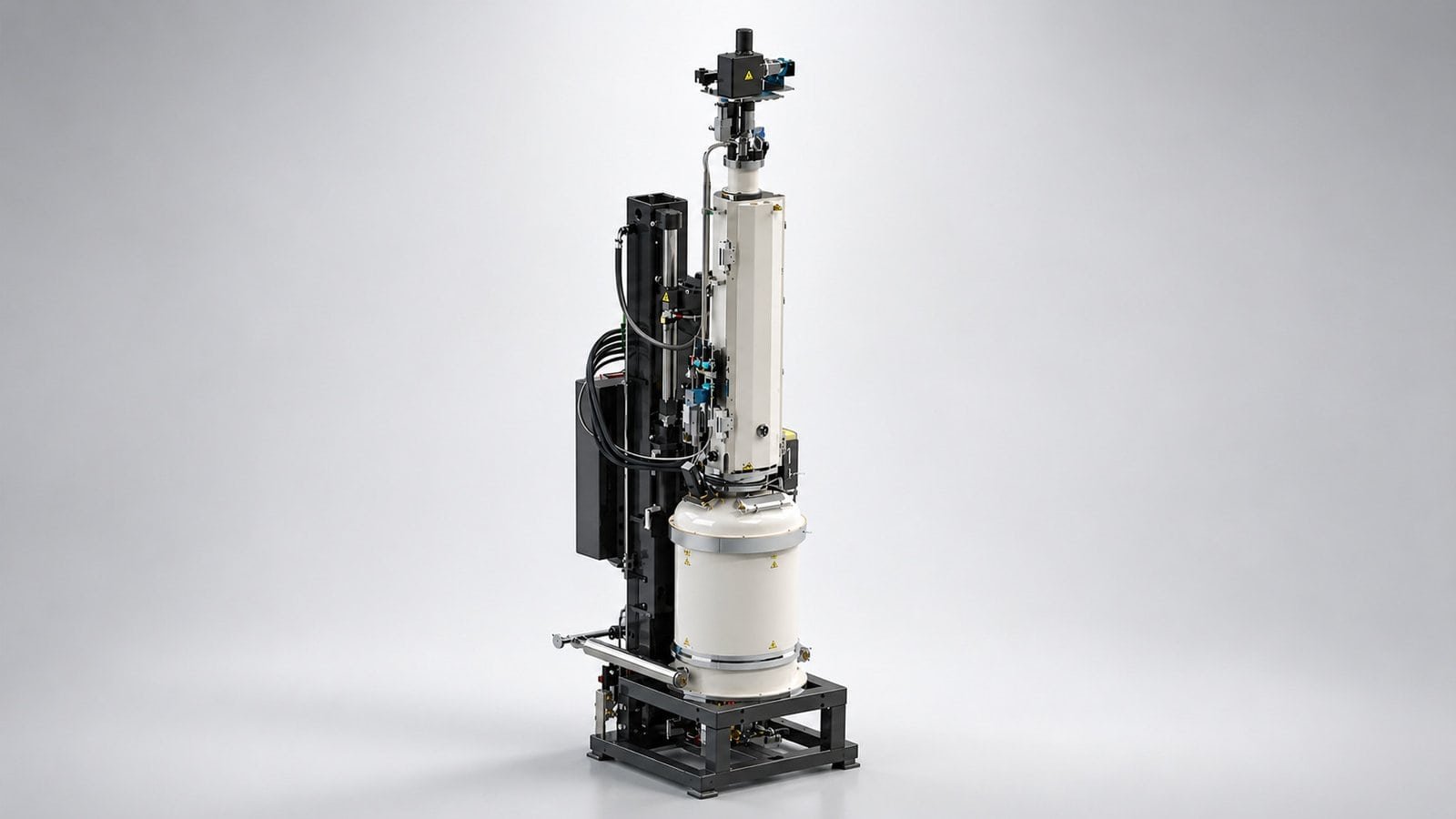
In the Czochralski process, fluctuations as small as ±1°C disrupt the atomic lattice. Our multi-zone control system delivers ±0.5°C precision, ensuring thermodynamic stability and flawless ingot formation.
Why Absolute Temperature Control
is the Lifeline of Crystal Quality
Crystal formation is a delicate battle against thermodynamics. Even a micro-fluctuation in the thermal field can trigger catastrophic defects in the atomic lattice. Here is what is truly at stake:
Solid-Liquid Interface Instability
If the temperature gradient at the melt-solid interface fluctuates, the crystal diameter becomes uneven, leading to structural twinning (双晶) or complete batch failure.
Thermal Stress & Dislocations
Non-uniform cooling zones create massive internal thermal stress. This stress multiplies dislocation density within the lattice, directly ruining electrical properties.
Melt Convection & Impurities
Without precise multi-zone thermal management, unstable melt convection currents cause uneven distribution of oxygen/carbon impurities and micro-striations.
Precision Thermal Management
System Overview
Engineered to manipulate thermodynamic variables. Our system provides absolute authority over the melt and phase transition zones.
Multi-Zone Independent Heating
The furnace body utilizes multiple independent heating zones to sculpt the exact thermal gradient required from the melt interface to the cooling chamber.
Intelligent PID Auto-Regulation
Advanced algorithms adjust power output in milliseconds. The system instantly compensates for the latent heat of crystallization without manual intervention.
High-Fidelity Thermal Sensing
Strategic thermocouple placement provides real-time mapping of the thermal field with ±0.5°C accuracy, allowing for predictive thermal stabilization.
Optimized Thermal Shielding
Advanced insulation geometries minimize parasitic heat loss, ensuring that thermal energy is directed precisely where the atomic phase transition occurs.
Metallurgical Quality Assurance
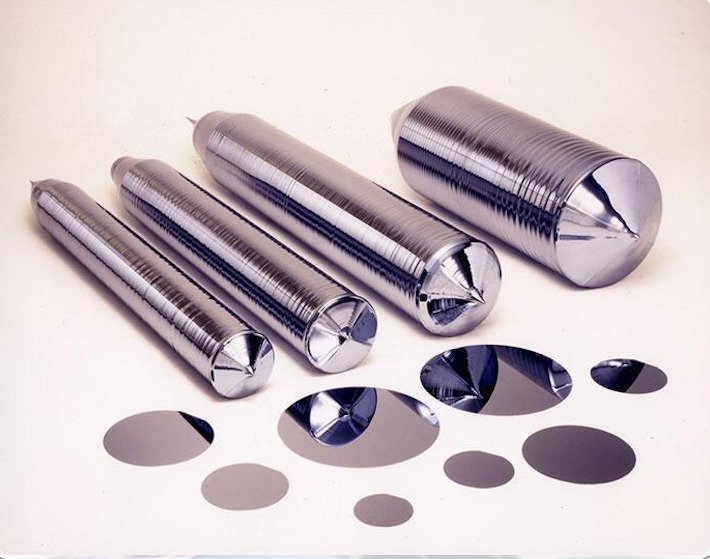
By eliminating thermal instability, our control system guarantees the structural integrity of the grown ingot.
Eliminates microscopic thermal variations to ensure consistent crystalline lattice structure.
Maintains optimal thermal stress profiles to drastically reduce dislocations and striations.
Stable convection currents ensure homogeneous dopant distribution across the entire wafer.
Continuous thermal mapping provides a complete thermodynamic signature for every crystal.
Thermodynamic Stability
A stable thermal field is non-negotiable for large-diameter ingots. Our multi-zone control prevents the temperature oscillations that typically lead to structural defects at the solidification interface.
Dopant Homogeneity
Uneven temperatures cause erratic melt convection, pushing dopants unpredictably. By precisely managing the radial temperature distribution, we ensure uniform electrical resistivity from the center to the edge.
Thermal Stress Relief
As the crystal pulls away from the melt, improper cooling creates internal stress. Our system programs specific axial gradients to anneal the crystal naturally, minimizing dislocation density.
Latent Heat Compensation
The phase transition from liquid to solid releases latent heat. Our advanced PID controllers detect and compensate for this micro-shift in real-time, preventing diameter fluctuations.
Engineered for Advanced Material Synthesis
Different crystalline structures demand entirely different thermal dynamics. Our control system's programmable architecture is designed to handle the specific temperature thresholds and gradient requirements of high-value industrial materials:
- ✓ Silicon Carbide (SiC) PVT/TSSG Growth
- ✓ Sapphire Kyropoulos/CZ Pulling
- ✓ Semiconductor Silicon (Large Diameter)
- ✓ Gallium Arsenide (GaAs) Processing
- ✓ Germanium (Ge) Optical Crystals
- ✓ Magnetic Materials & Specialty Alloys
How Micro-Temperature Dynamics
Impact Final Ingot Quality
Precision is not just a number; it dictates the metallurgy and chemistry of the ingot. Our control system manages these critical thermal variables in real-time to eliminate structural defects.
| Critical Thermal Variable | Potential Defect (If Poorly Controlled) | Vimfun Precision Solution |
|---|---|---|
| Melt Temperature Fluctuation | Diameter variation & structural twinning (双晶) | Maintains an ultra-stable solid-liquid interface, ensuring perfect cylindrical growth. |
| Axial Temperature Gradient | High dislocation density & thermal cracking | Multi-zone heating controls the exact cooling rate, minimizing internal lattice stress. |
| Radial Thermal Symmetry | Asymmetric shape & uneven resistivity distribution | Advanced crucible management guarantees symmetrical heat distribution across the melt. |
| Latent Heat Management | Growth rate inconsistencies & micro-striations | Intelligent auto-regulation instantly compensates for the latent heat released during crystallization. |
| Upper Zone Gas Temperature | Oxide particle dropping & melt contamination | Precise upper-chamber thermal management prevents vapor condensation from falling back into the crucible. |
Understanding Thermal Dynamics
What temperature precision can the furnace achieve during the pull phase?
How does precise thermal management reduce dislocation density?
Can the control system handle extremely high-temperature materials like SiC or Sapphire?
How does the system respond to latent heat of crystallization?
Ready to Optimize Your
Thermal Parameters?
Speak directly with our materials engineering team to design a temperature control architecture tailored to your specific crystal growth methodology.