Technical Ceramic Cutting with Multi-Wire Diamond Saws

Technical ceramic cutting uses a multi-wire diamond saw to turn ceramic blocks into parallel plates and substrate blanks. This page covers alumina, zirconia and silicon carbide ceramics, with listed slice ranges spanning 0.3–35 mm across the recommended models.

Compare five modelsRequest free sample cutting

What Makes Advanced Ceramics Hard to Slice

Hardness

Industrial ceramics such as alumina: approximately Mohs 7–9.

Brittleness

Chipping and microcracks require support and inspection.

Material yield

Assess kerf loss together with usable plate output.

Material differences and cutting considerations

Start with the material, block dimensions and required as-cut thickness. A multi wire saw forms several cutting paths in one wire web, so a batch of parallel slices can be made in a single run. Technical ceramic cutting remains a material-specific process: a listed machine capacity does not establish the yield or edge quality of your particular ceramic.

Hardness and brittleness create different challenges. The material catalogue places industrial ceramics such as alumina at approximately Mohs 7–9. Hard grains resist abrasion, while a brittle edge can chip when local cutting loads or support conditions are unsuitable. Technical ceramic cutting must therefore control both material removal and the condition of the remaining plate.

A narrow cut can preserve material, but kerf is only part of the calculation. A damaged slice may need extra finishing stock or may be rejected altogether. Compare usable plates after the required downstream operation, rather than judging a process only by the visible width of its cut.

Block geometry, material grade and mounting condition belong in the initial enquiry. Porosity and the incoming condition should also be identified when relevant. General background is available in ceramic engineering; ASTM Committee C28 on Advanced Ceramics covers standards for advanced ceramics. Agree which inspection criteria apply to the part before evaluating a cut.

Alumina and Zirconia Plates

Alumina, or aluminium oxide, is used in insulating components, substrates and wear-resistant parts. zirconia is another engineering ceramic used for wear-resistant components. Technical ceramic cutting produces plate blanks for subsequent manufacture; the finished component may still need grinding, surface finishing or feature machining. A material name alone is not a cutting recipe. Identify the actual grade and required final geometry.

Silicon Carbide Ceramics vs Single-Crystal SiC

Sintered silicon carbide ceramics and single-crystal SiC ingots are different incoming materials. Ceramic plates should be reviewed as ceramic parts, with the grade and final application stated. Semiconductor crystal slicing has its own orientation and substrate requirements; see sic ingot slicing for that route. Technical ceramic cutting on this page concerns ceramic blocks, rather than device-wafer dicing or crystal-growth equipment.

How Multi-Wire Diamond Saws Handle Technical Ceramic Cutting

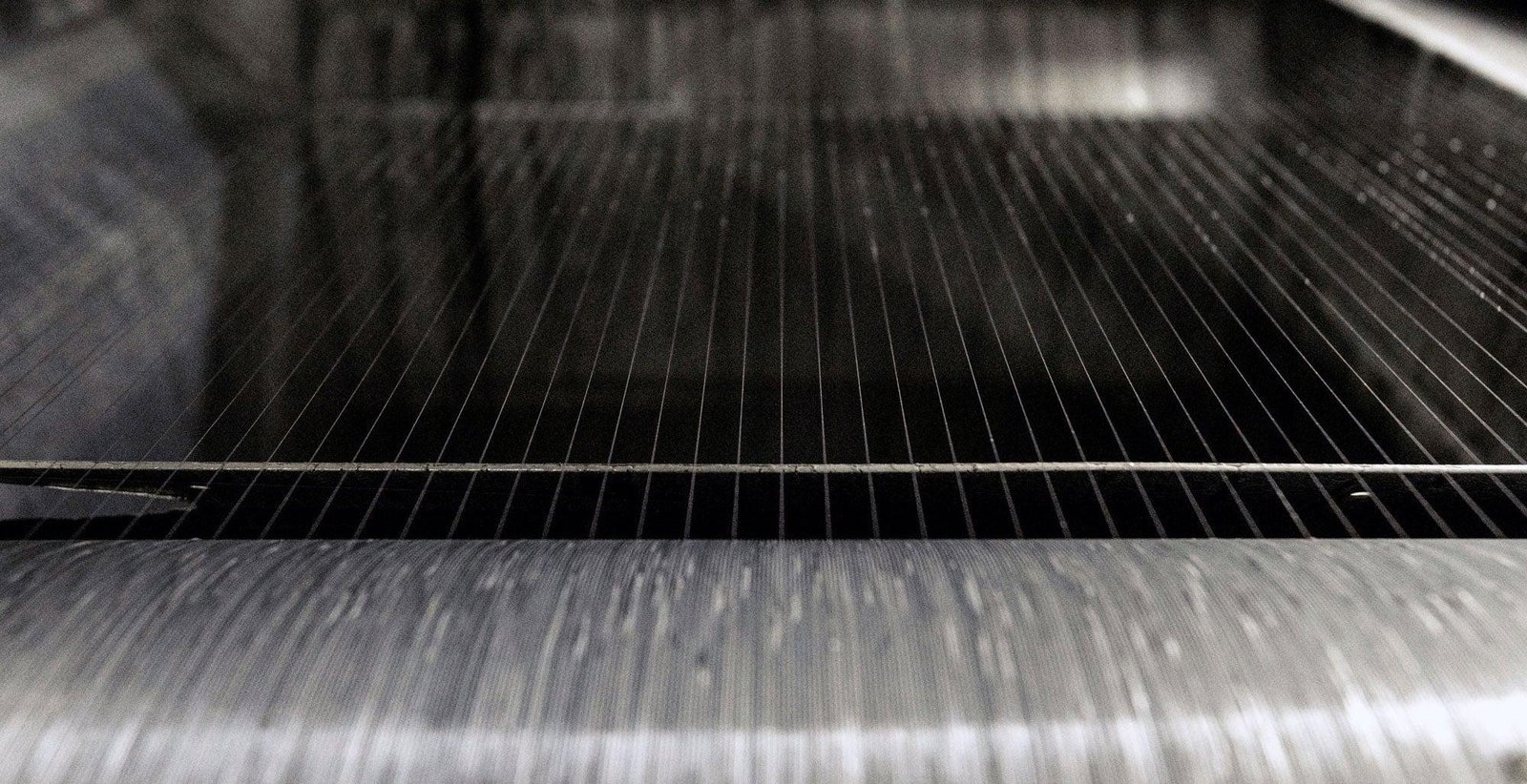
A parallel diamond wire web separates several ceramic plates in one cutting cycle. Groove pitch and actual kerf determine the as-cut slice thickness.

  1. Wire web

    Guide rollers position the parallel diamond wire paths.

  2. Workpiece feed

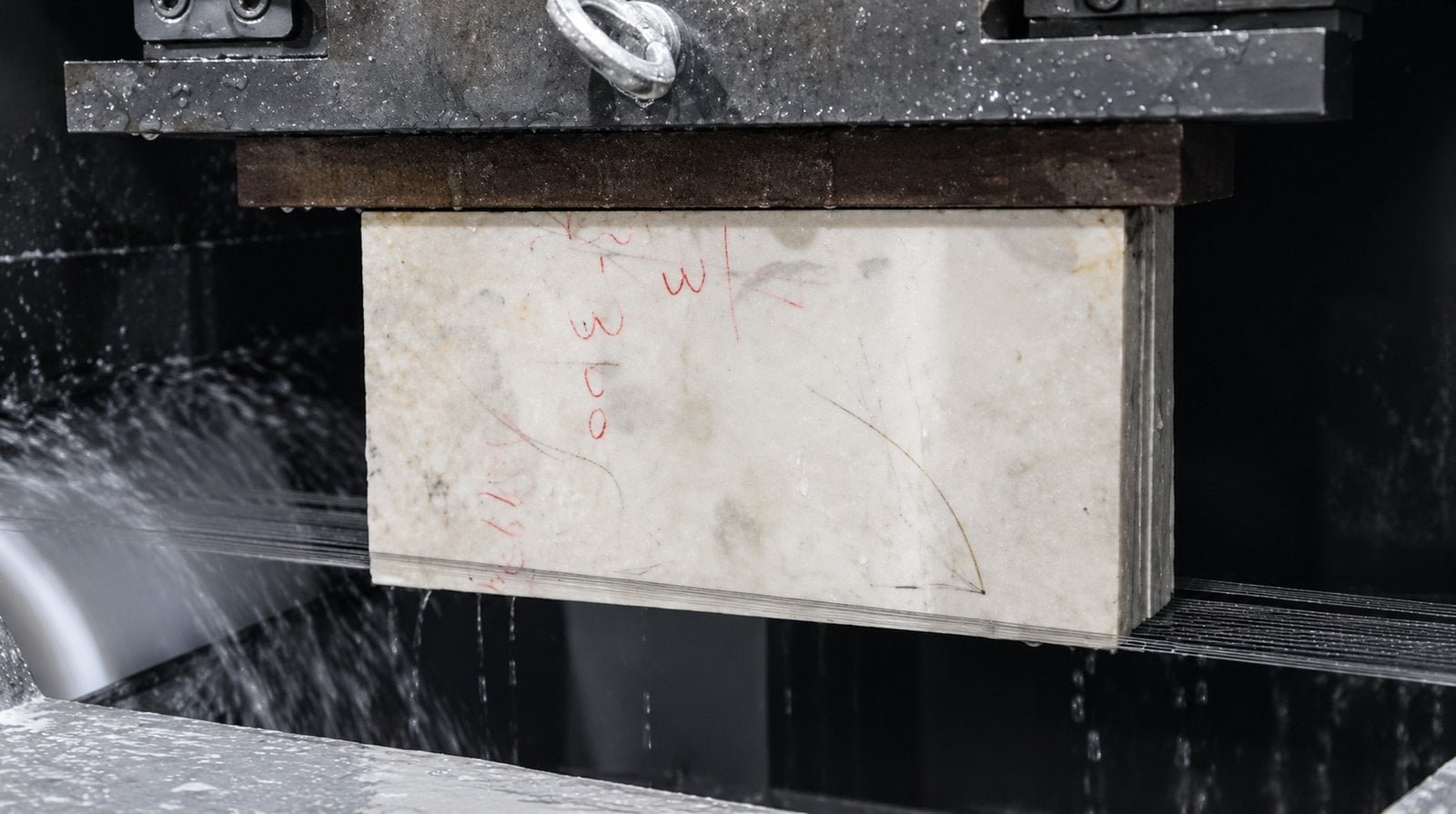
    The supported workpiece feeds into the moving wire web.

  3. Parallel slices

    Several cuts separate the block into slices in one cycle.

Multi-wire cutting principle · configuration varies by model. Watch on YouTube
Wire-web diagram and process notes
Technical ceramic cutting: parallel wire web and ceramic blockConceptual guide rollers support a parallel wire web. A ceramic block feeds into the web to produce plates. Not a machine drawing.Guide rollerGuide rollerParallel diamond wire webCeramic block · feed into wire webConcept only · groove pitch sets spacing; actual kerf affects slice thickness
Diagram of a multi-wire diamond saw slicing a ceramic block. Concept only; not a dimensioned machine drawing.
How the wire web works and what to confirm

A diamond wire passes around grooved guide rollers to form a set of parallel cutting lines. The mounted block feeds into this web, allowing several plates to be separated in the same cutting cycle. Technical ceramic cutting benefits from distributing the operation across fine cutting paths rather than repeatedly positioning a blade for each slice.

The groove pitch establishes the distance between cutting paths. Actual slice thickness also depends on the material removed by the wire, so pitch and finished thickness are not interchangeable. Select the roller configuration against the target as-cut plate thickness and the allowance needed for later finishing.

The fine abrasive contact can reduce cutting load and material loss, but it does not eliminate chipping or microcracks. Technical ceramic cutting still depends on support, feed and wire condition. Consistent wire spacing helps repeat the thickness setting across a batch; it is not a guarantee of identical finished plates on every ceramic grade.

For technical ceramic cutting, judge the web arrangement together with the mounting method and inspection plan. The guide how does a multi wire saw work explains the basic mechanism. Specific wire speed and feed settings require material evaluation and are not prescribed here.

Recommended Multi-Wire Saws for Ceramic Plates and Substrates

Match the block envelope and slice requirement before choosing a configuration. The values below come from the model documents; they are machine specifications, not a validated ceramic production recipe. Technical ceramic cutting needs a representative material review before the final machine and fixture are selected.

ModelDocumented ceramicsWorkpiece sizeSlice thicknessListed precision
SOM200SiC, alumina, zirconia200 × 200 × 200 mm0.3–12 mmThickness tolerance ±0.1 mm
SOM400SiC, alumina, zirconiaCross-section ≤400 × 400 mm; length 830 mm1–35 mmSlice thickness tolerance ±0.02 mm
SOM4-630DSiC and other advanced ceramics630 × 160 × 150 mm ×2Confirm for your partCutting accuracy ±0.015 mm
SOMI-430Electronic ceramics430 × 160 × 150 mm0.3–3 mm—
SOMIS-400SiC, alumina and other ultra-hard ceramics400 × 160 × 160 mm0.3–15 mm—

Thickness tolerance and cutting accuracy describe different specification terms. Do not compare them as a single finished-part guarantee. A dash means no corresponding precision value is quoted here. For technical ceramic cutting, agree the measurement method and finishing allowance as part of the sample discussion.

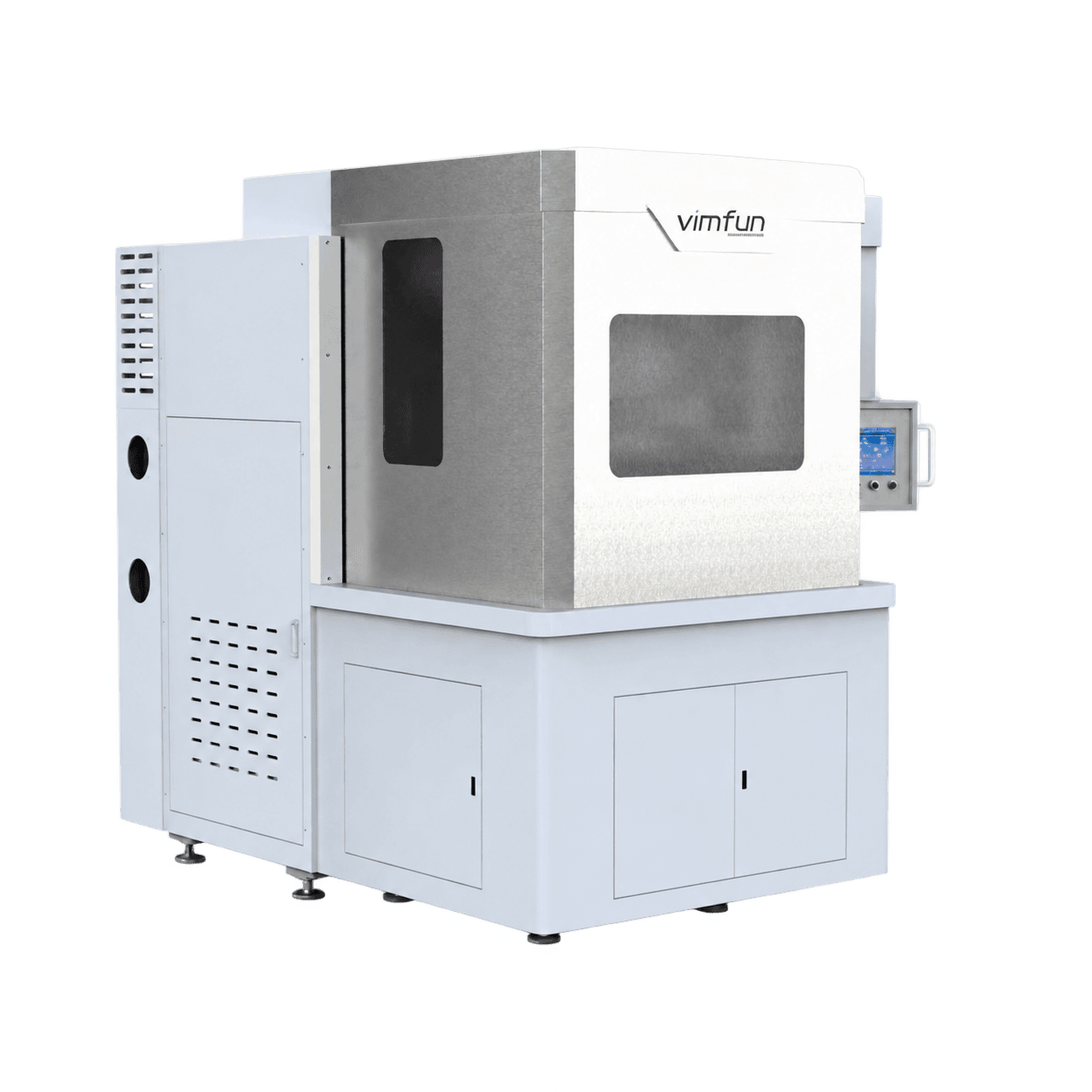
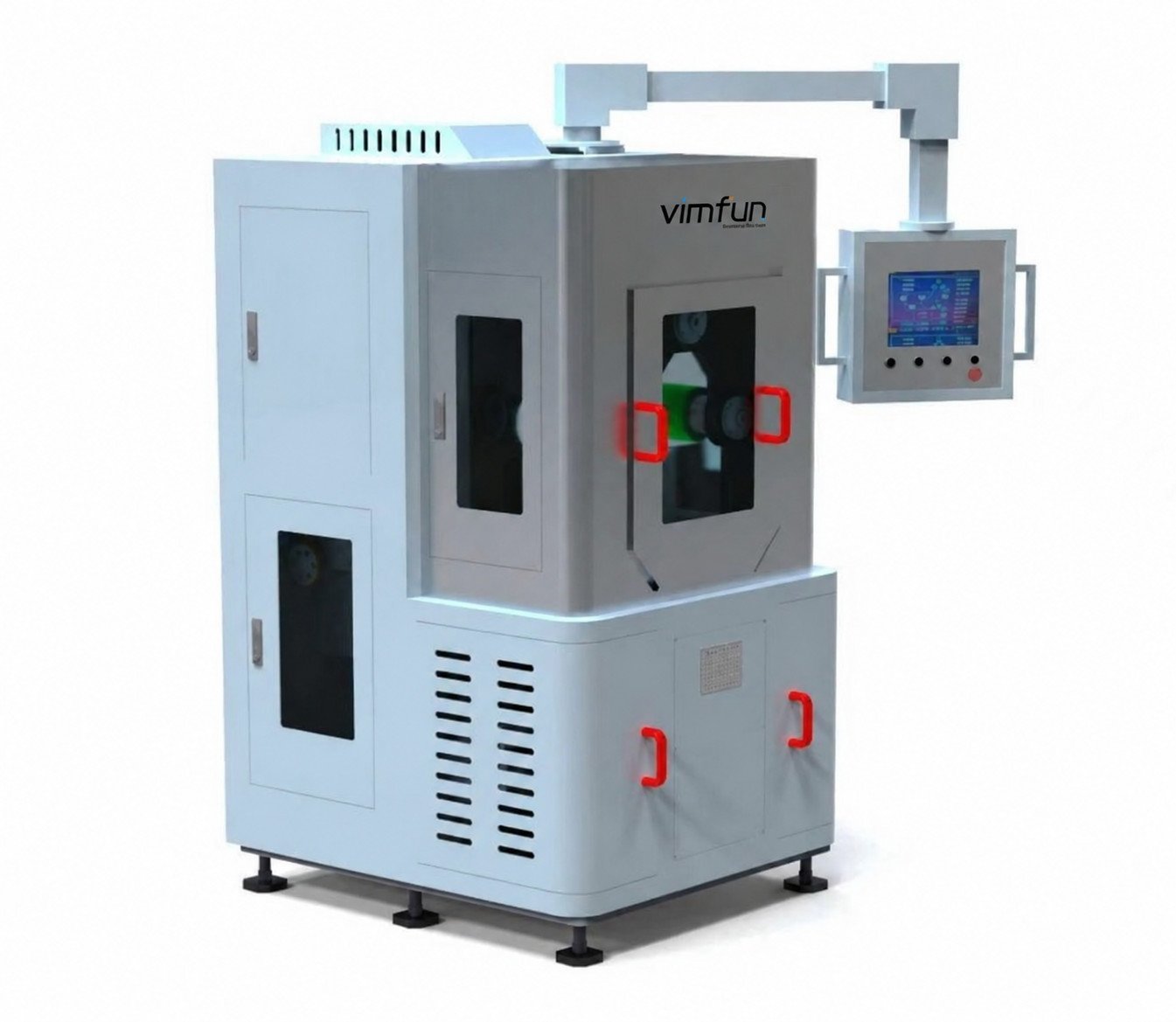
SOM200 small multi wire saw with suspended control panel
SOM200 · Existing product image

Lab and Pilot Batches: SOM200

Application notes

Use SOM200 when the available block fits its compact workpiece envelope and the task is a laboratory or pilot batch. Its documentation lists SiC, alumina and zirconia. Technical ceramic cutting from 0.3–12 mm is supported by its listed slice range, with thickness tolerance stated as ±0.1 mm. Confirm the mounting arrangement for small or valuable blocks.

small multi wire saw →

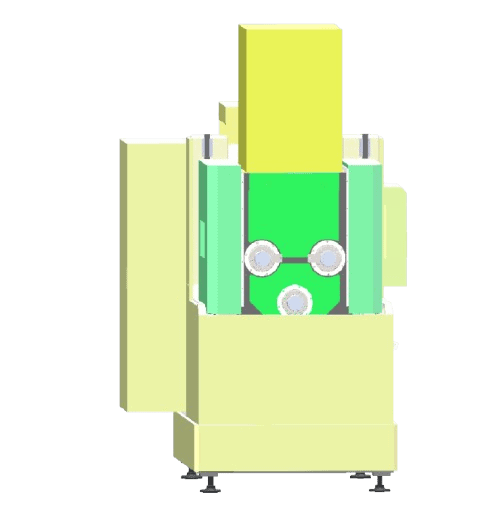
SOM400 dual plate multi wire saw appearance illustration
SOM400 · Illustration

Large Ceramic Blocks: SOM400

Application notes

SOM400 accommodates a larger cross-section and a longer charge than SOM200. Its listed ceramic materials include SiC, alumina and zirconia, with a 1–35 mm slice range and ±0.02 mm slice thickness tolerance. For technical ceramic cutting of larger blocks, review the complete charge and work-plate arrangement rather than assuming that every maximum dimension can be used with any fixture.

dual plate multi wire saw →

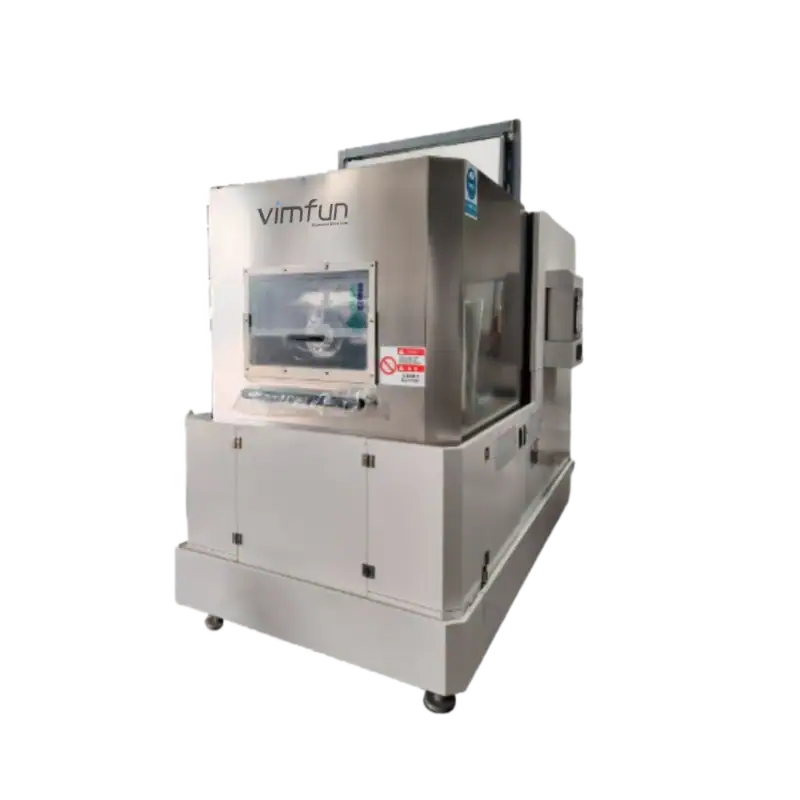
4 Axis Multi Wire Saw SOM4-630D
SOM4-630D · Existing product image

Two-Station Production: SOM4-630D

Application notes

SOM4-630D provides two stations for workpieces within the listed envelope. Its source names SiC and other advanced ceramics, and specifies ±0.015 mm cutting accuracy. Technical ceramic cutting on this model requires confirmation of the desired plate thickness for your part. The two-station arrangement is a production configuration; it does not by itself establish a cycle time or accepted output.

4 axis multi wire saw →

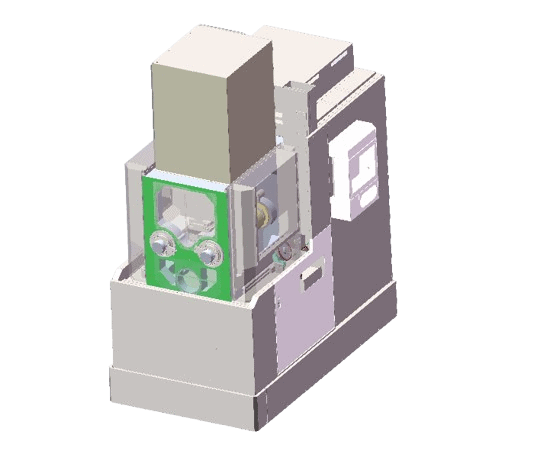
SOMI-430 inverted multi wire saw equipment illustration
SOMI-430 · Illustration

Thin Electronic Ceramic Slices: SOMI-430

Application notes

SOMI-430 is an inverted multi-wire configuration whose introduction includes electronic ceramic slicing. Its 430 × 160 × 150 mm workpiece envelope and 0.3–3 mm slice range make it a candidate for thin plate evaluation. Technical ceramic cutting still requires confirmation of the actual electronic ceramic grade; the general application category is not a promise for every composition.

inverted multi wire saw →

SOMIS-400 oscillating multi wire saw equipment illustration
SOMIS-400 · Illustration

Ultra-Hard Ceramics: SOMIS-400

Application notes

SOMIS-400 adds a swinging worktable to a multi-wire cutting system. It is positioned for SiC, alumina and other ultra-hard ceramics. Its listed envelope is 400 × 160 × 160 mm, with slices from 0.3–15 mm. In technical ceramic cutting, the swing changes contact conditions during the cut. Evaluate the resulting edges and finishing stock on the actual material rather than assuming a universal improvement.

oscillating multi wire saw →

Ceramic Slicing Process: From Block to Plate

Technical ceramic cutting begins with a supported block and ends with inspected plates, not just a completed machine cycle. The process sequence is shown below; detailed cutting settings are selected for the actual material.

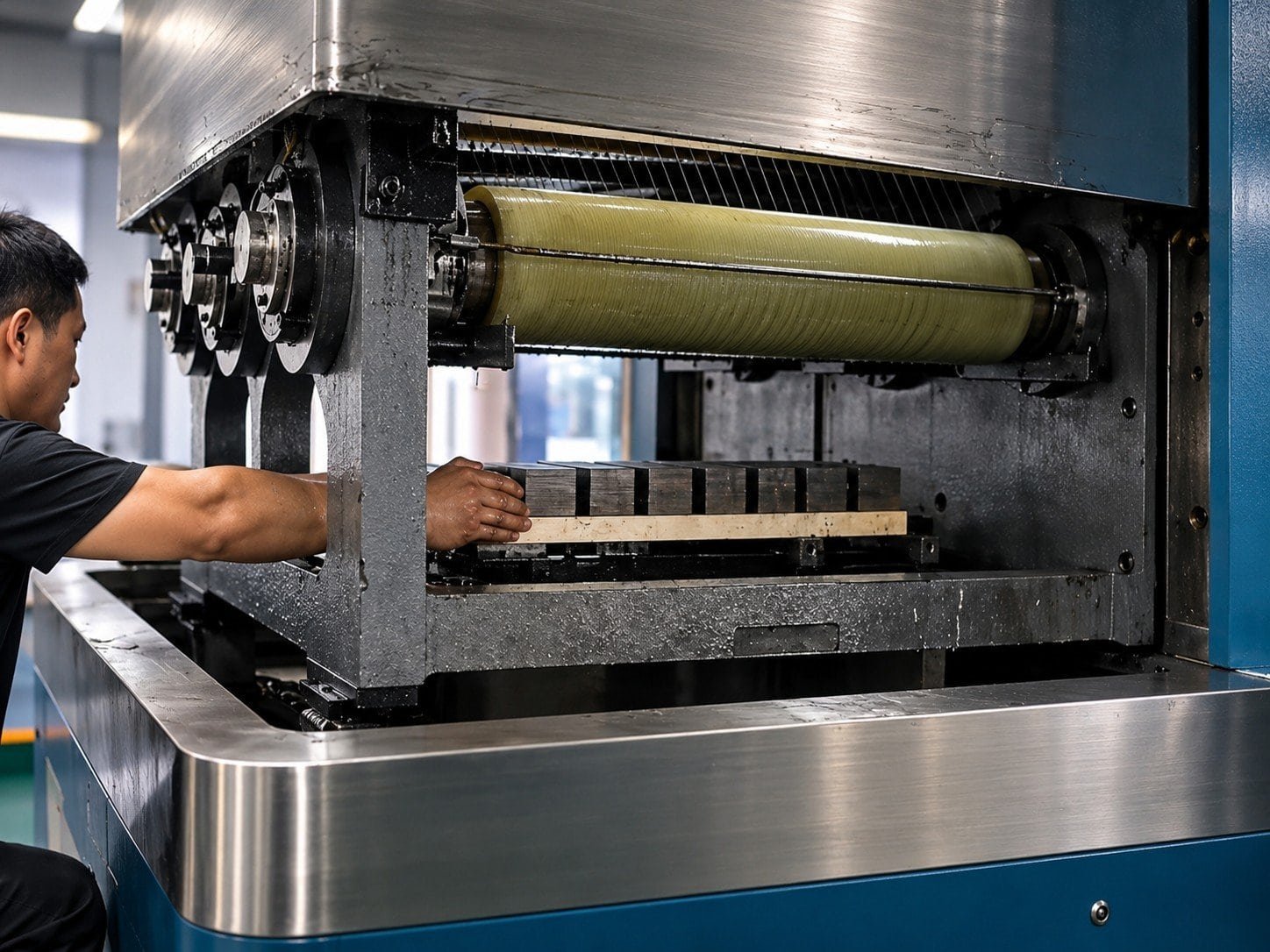
Block mounted on a multi-wire saw work plate
01

Bond and mount the block

Position the supported block on the work plate.

Parallel diamond wire web between guide rollers
02

Set up the wire web

Prepare parallel cutting paths for the required slice spacing.

Technical ceramic cutting with a parallel diamond wire web
03

Feed and slice

Feed the mounted block into the diamond wire web.

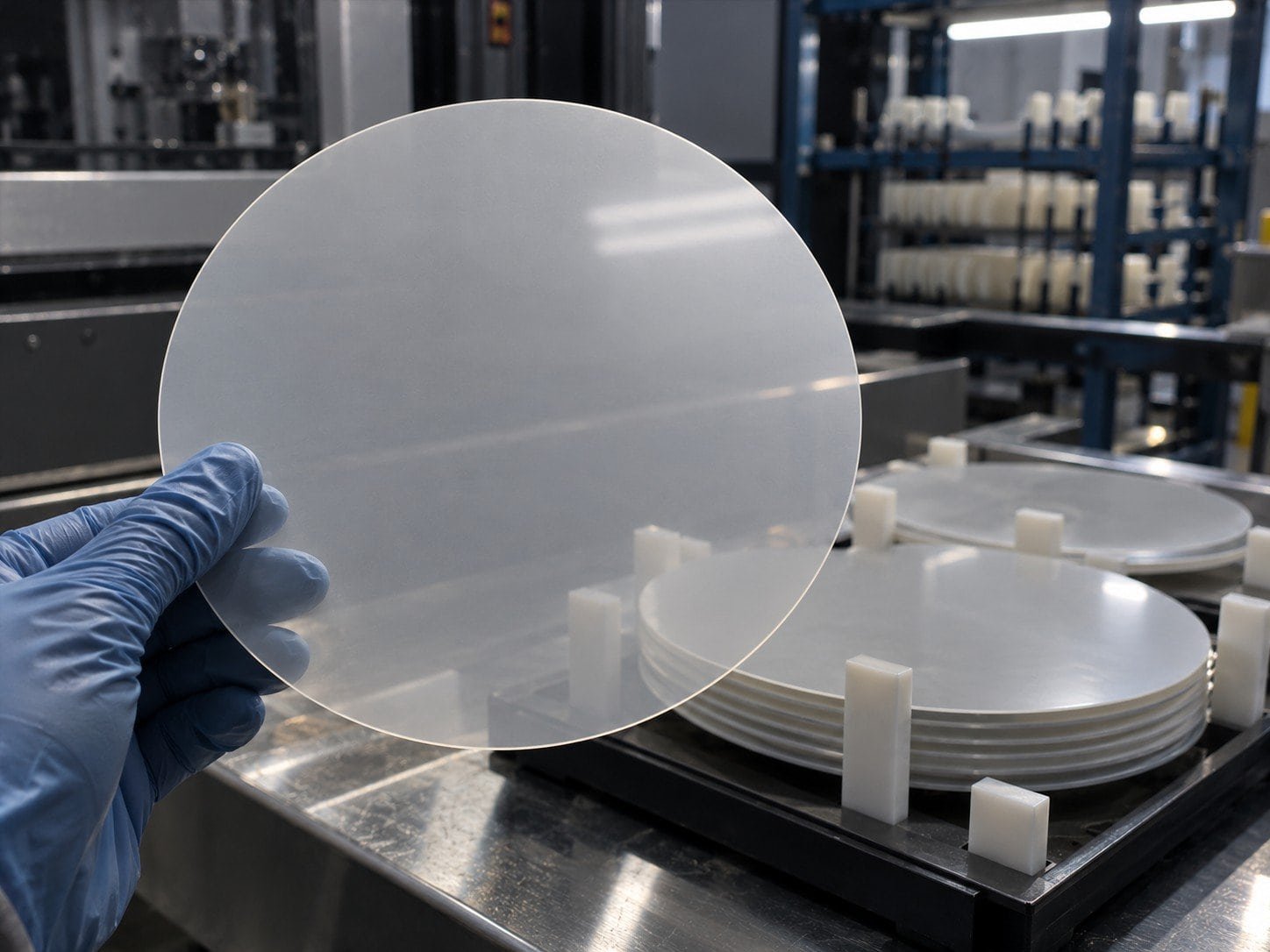
Gloved hand holding a separated plate beside a stack of plates
04

Debond and retrieve

Keep the separated plates supported during retrieval.

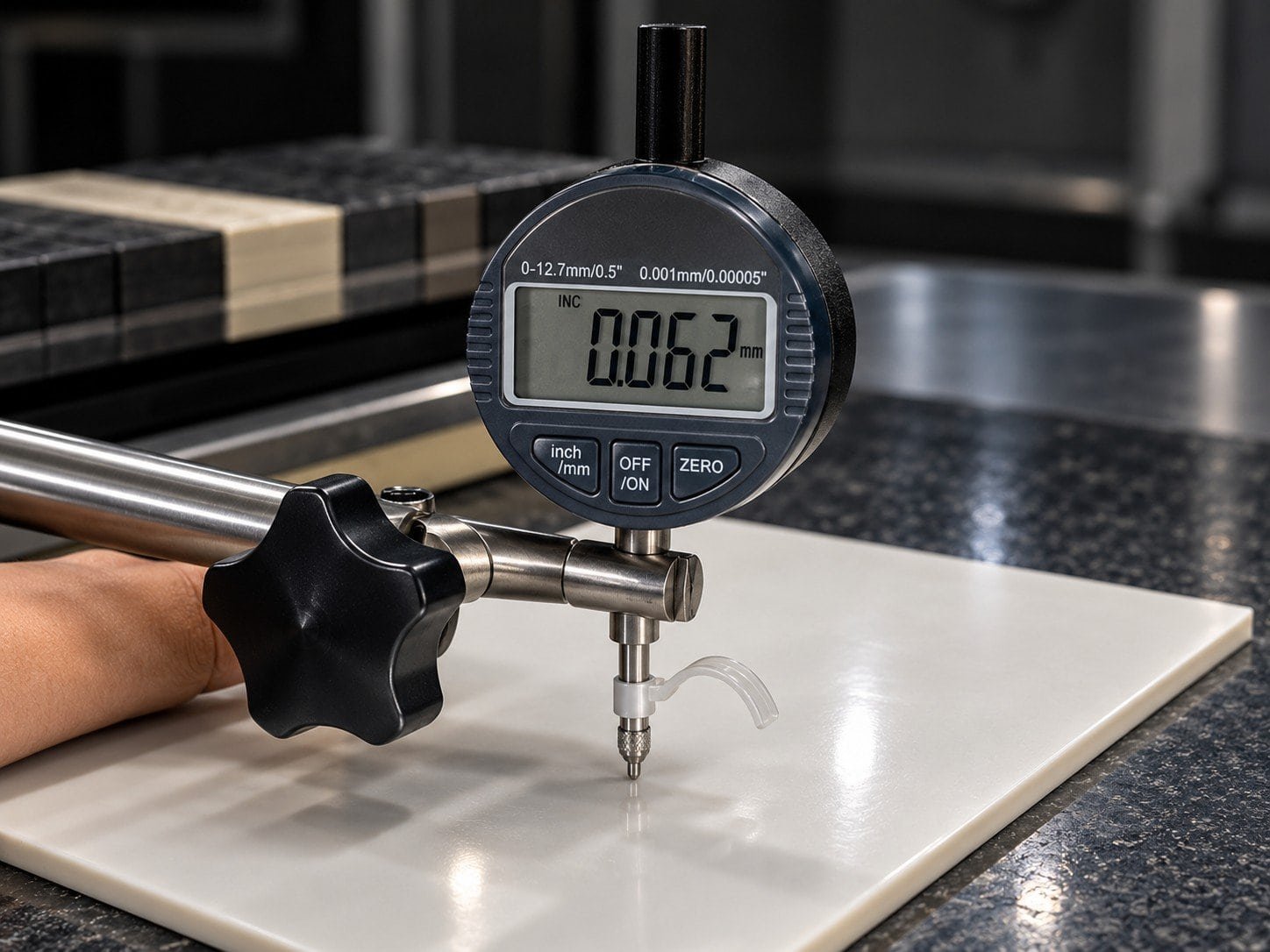
Digital indicator inspecting a plate surface
05

Clean and inspect

Check plate thickness and edge condition against the agreed requirements.

Ceramic slicing process from block to plate.
Step-by-step process notes
  1. Bond the block to the work plate. Establish the reference surface and support the material through the cut.
  2. Set up the wire web. Match the roller groove arrangement to the target plate thickness and cutting allowance.
  3. Feed and slice. Run the prepared block through the cutting web under the agreed process conditions.
  4. Debond and retrieve the plates. Keep the separated slices supported while removing them from the mounting arrangement.
  5. Clean and inspect. Check thickness and edge condition against the intended downstream requirements.

For technical ceramic cutting, preserve the connection between the incoming block, cut plates and inspection results. This makes a sample discussion useful when deciding whether the selected machine and mounting route fit the production task.

Multi-Wire Saw, Blade or Laser for Ceramic Blocks

Multi-wire saw

Batches of parallel plates.

Diamond blade

Individual straight cuts and smaller runs.

Laser

Selected thin sections or features; evaluate thermal effects.

Compare applications and limitations

Choose the route by the output geometry and production task. A multi-wire wire saw suits batches of parallel plates because the wire web provides several cutting paths together. Technical ceramic cutting is a useful application when the requirement is repeated slicing of a block, rather than individual features in a finished component.

A diamond blade can suit individual straight cuts and smaller runs, but repeated cuts require their own positioning and kerf assessment. A laser can suit particular thin sections or features, although material response and thermal effects need evaluation. Neither route should be selected from the material name alone.

For technical ceramic cutting into a stack of plates, start by comparing a multi-wire configuration with the required as-cut output. If the part needs isolated slots or intricate features, assess that geometry separately from the block-slicing operation.

FAQ

Which ceramics can a multi-wire saw slice?

The SOM200 and SOM400 sources name SiC, alumina and zirconia. SOM4-630D lists SiC and other advanced ceramics; SOMI-430 includes electronic ceramics. SOMIS-400 is positioned for SiC, alumina and other ultra-hard ceramics. Technical ceramic cutting must still be reviewed against the actual grade, block geometry and target plate.

How thin can ceramic slices be?

SOM200 and SOMI-430 both list a minimum slice thickness of 0.3 mm. These are model capabilities, not a guaranteed minimum for every ceramic. Define the as-cut thickness and later finishing allowance separately when requesting technical ceramic cutting.

What thickness tolerance can I expect?

SOM200 lists thickness tolerance of ±0.1 mm, while SOM400 lists slice thickness tolerance of ±0.02 mm. SOM4-630D lists cutting accuracy of ±0.015 mm. The last value is not presented as a thickness-tolerance specification. Confirm how each requirement will be measured on your sample.

Can I test my material first?

Yes. Free sample cutting is available. Send the ceramic material identification, block dimensions and target slice thickness so the team can review the appropriate model and sample arrangement.

Do you cut ceramic rings and profiles?

This page covers parallel plates and substrate blanks. For ring or profile requirements, see ceramic cutting on our sister site.

Request Free Sample Cutting

Send your ceramic block dimensions, material grade and required plate thickness to discuss technical ceramic cutting. Free sample cutting is available; confirm the sample arrangement with the team before shipping material.

Request free sample cutting

CE certified · 12-month warranty · 12-hour response · free sample cutting

Scroll to Top
Contact the Vimfun Team
Need a quote, support, or partnership discussion? Let’s connect.