無料サンプルカット依頼書の作成方法
Sample cutting service requests work best with material identity, dimensions and acceptance checks. Prepare a trial that answers your process question.
Sample cutting service trials fail to answer the buying question when the sample arrives without a blank drawing or acceptance method. “Cut it as thin as possible” asks for a demonstration; it does not say what your next operation can use. Send the intended thickness, finishing allowance and rejection criteria first.
Confirm the free sample cutting arrangement before shipping. The sample cutting service should return identifiable blanks and the measurements needed for a decision, not only a photograph of the best-looking slice.
A Vimfun SOM200 enquiry can begin with a sample cutting service request when repeated blanks are the task under review. Confirm the actual material, geometry and scope first; a free sample arrangement is not an automatic qualification or shipping approval.
Define the Question for Your Sample Cutting Service
A wire saw sample cutting request should identify the decision the returned pieces must support. For example, ask whether a defined blank thickness survives release and leaves enough stock for finishing. Include material identity, dimensions, target output, images and inspection criteria, then confirm the free-sample arrangement and shipping details before sending stock.
Start with the uncertainty that prevents a purchasing decision. You may need to know whether a fragile material can be released at the intended thickness, whether a fixture preserves orientation, or whether the blank can complete your finishing process. Each question calls for different evidence.
Write that question in one sentence. A sample cutting service request for “the best quality” leaves the supplier to guess which feature matters. A request for representative blanks evaluated by your named inspection method gives both teams a shared objective.
If several uncertainties exist, rank them. Resolve a fundamental material or handling issue before using a trial to compare throughput. A sample that cannot survive the receiving process makes a cycle-time comparison premature.
Identify the Material Reliably
Provide the material name, grade or composition information available from its supplier, and whether the sample is a single crystal, polycrystalline material, sintered ceramic or magnet. Attach the relevant certificate or drawing when available. A photograph supplements identification but cannot replace it.
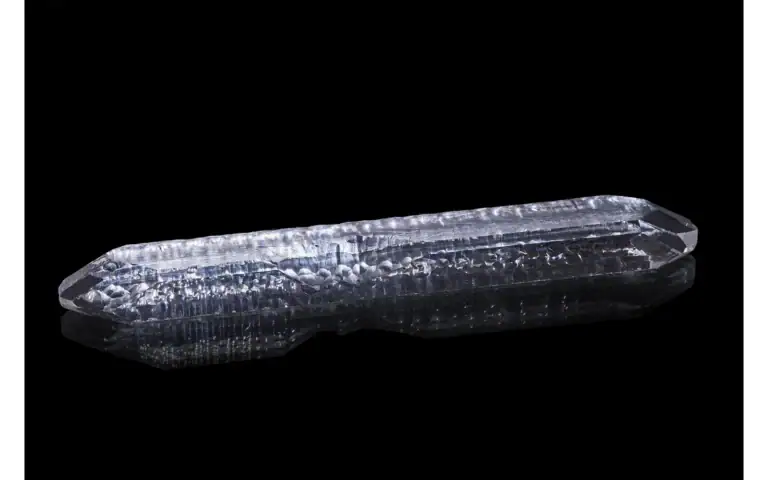
For crystals, include the desired plane and reference information. For a sample selected from a larger lot, explain whether it represents normal production stock or an experimental section. The sample cutting service report should retain that distinction.
Do not relabel an unknown white plate as alumina or silicon based on appearance. If identification is incomplete, say so before shipment. Material uncertainty affects tooling, cleaning, handling and the interpretation of the result.
Describe the Input Geometry
Measure the stock and provide a drawing or annotated photograph. Identify usable length, excluded regions, reference surfaces and the area available for mounting. Include any pre-existing chips or visible defects so that they are not later counted as cutting damage.
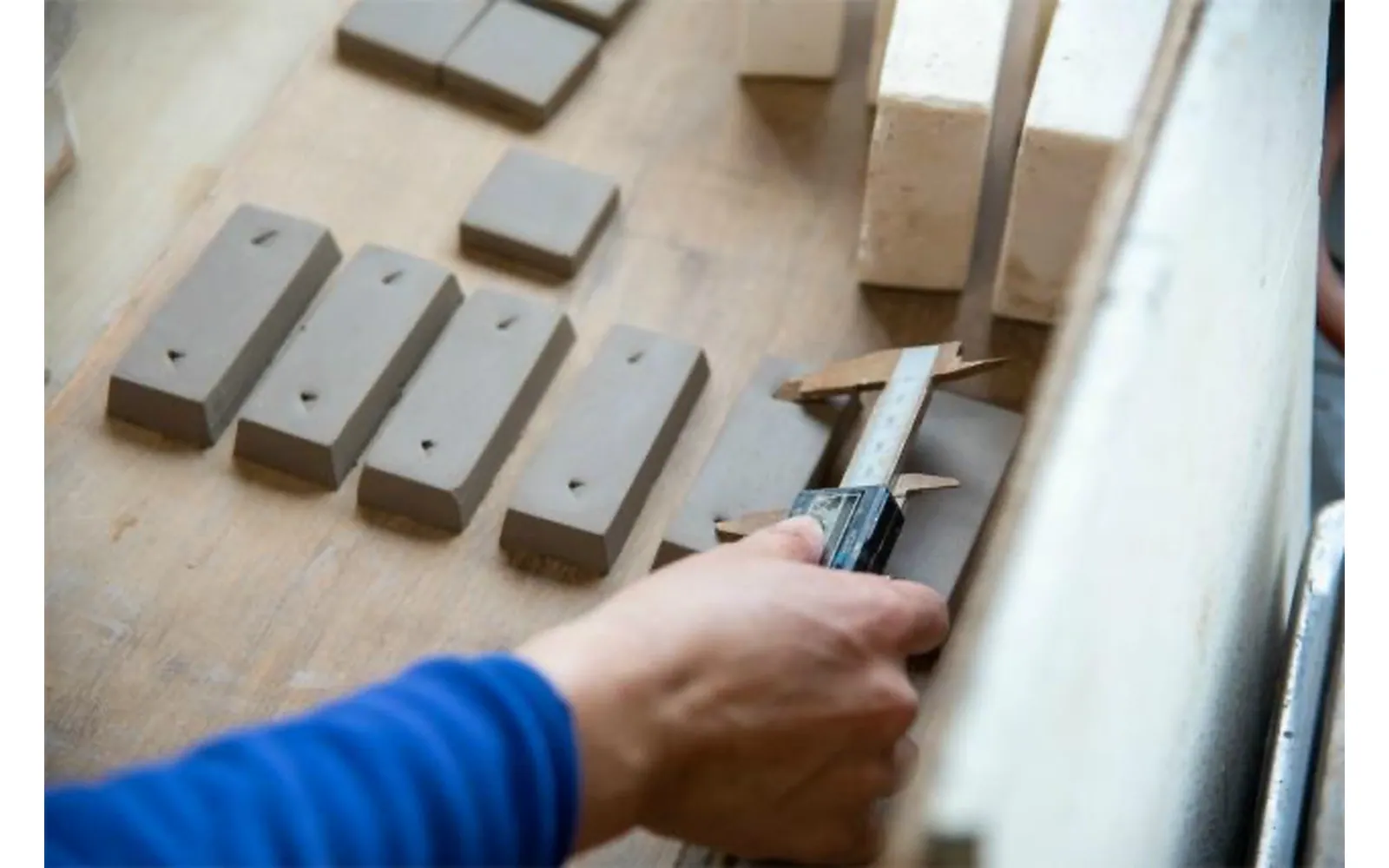
A sample cutting service needs the mounted workpiece envelope as well as bare dimensions. A fixture or bonding plate can change what the machine must accommodate. Ask the team to confirm the mounting arrangement instead of assuming that a sample fitting the table is automatically workable.
If the trial stock is smaller than future production stock, record that limitation. A successful small cut may answer a material question without resolving the production-scale contact or support question.
An annotated input photograph should show the usable stock, the attachment region and any pre-existing defect. Put the measured dimensions on a drawing as well. A cropped close-up can hide the face the operator needs for mounting or make a damaged region look like usable material.
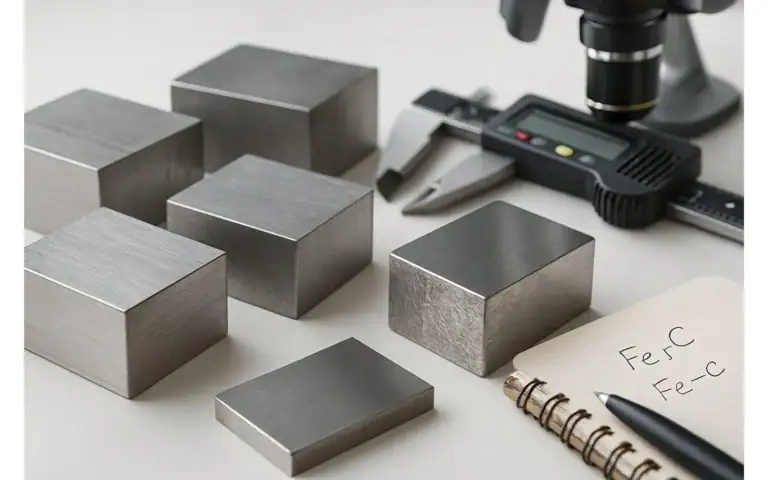
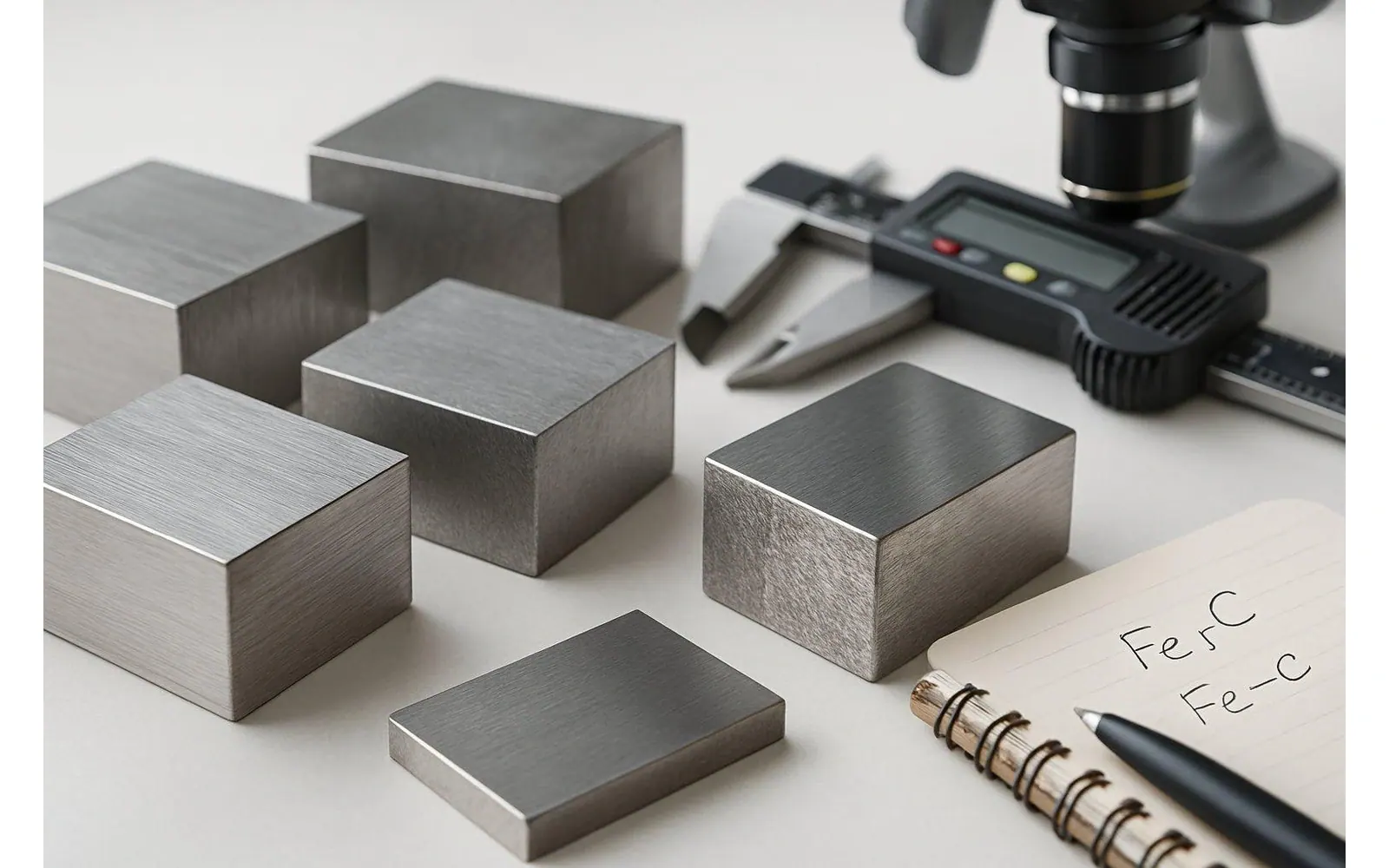
For a sample cutting service, I would give each piece an ID before packing and repeat that ID on the drawing and return list. The pitfall is sending several similar white blocks with their material names only in an email. The operator cannot verify which block is which from colour.
Ask the report to separate accepted, rejected and uninspected pieces. A sample cutting service that returns ten pieces has not established ten acceptable blanks if only one was measured. A rejected piece is worth returning when it can show whether the problem arose in the cut, release or finishing.
Label the stock before packing.
What must the returned blank actually meet?
State the as-cut thickness and what happens next. If the pieces will be ground, lapped or polished, obtain the finishing allowance from that process. Keep the final part requirement separate from the blank target.
List the features that decide acceptance: thickness at defined locations, variation over an area, edge condition, visible damage or a subsequent processing result. The sample cutting service should not substitute a visually attractive selected slice for the evidence you requested.
Include the sample quantity needed for your inspection. Returning one piece may be insufficient to assess a batch or perform destructive evaluation. Agree on how accepted, rejected and retained pieces will be identified.
Send Images That Help the Operator
Useful photographs show the whole stock, its identifying marks, reference faces and existing defects. Include a scale where dimensions matter, but retain the measured drawing as the dimensional authority. Avoid sending only a close-up that hides the full mounting geometry.
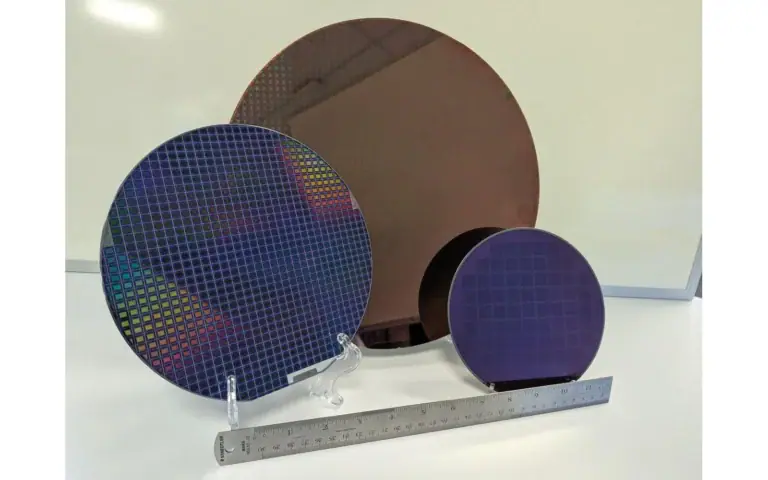
For a sample cutting service, images of the intended finished part or receiving fixture can clarify the required condition. Label them as reference images so that they are not mistaken for output already achieved on your material.
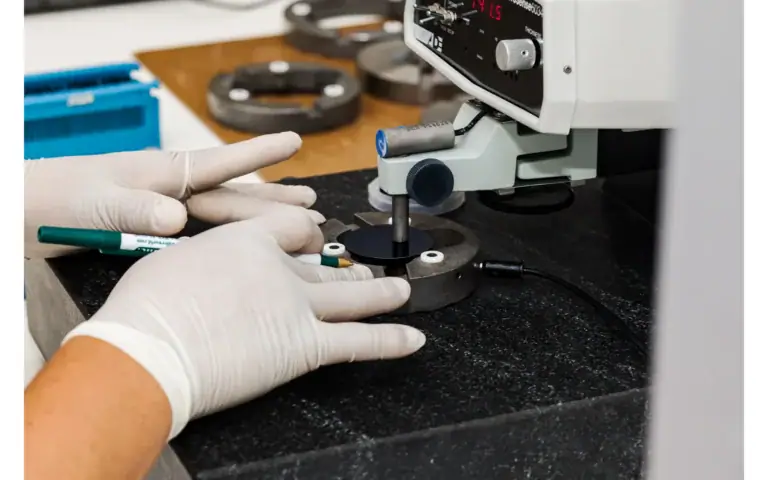
Do not use a measurement display in a photograph as an equipment accuracy claim. The image records one observed reading; its meaning depends on the instrument, setup and feature being measured.
Who measures which acceptance feature?
Name the method, sampling locations and process state. A supplier measuring as-cut thickness and a customer measuring after finishing are assessing different conditions. Define any edge exclusion and the support arrangement if these affect the result.
For damage investigations, NIST's ceramic and glass fractography reference provides technical background on interpreting fractures. A general reference does not diagnose your sample; an appropriate examination is needed when fracture origin is important.
The sample cutting service report should say what was measured and what was not. If subsurface damage or functional properties are outside the test scope, keep them outside the acceptance claim.
Confirm Shipping and Handling Arrangements
Before dispatch, confirm the receiving contact, shipment description, quantity and return arrangement. Provide relevant handling documentation through the agreed channel. Material-specific chemical, environmental and transport requirements should be addressed by the responsible parties using the applicable procedures.
Choose packaging that protects the stock and preserves its identity. Separate samples with different grades or planes and label them clearly. The operator should not have to guess which of several visually identical blocks matches the request.
A sample cutting service should begin with confirmed logistics rather than an unexpected parcel. Agree on whether the trial may consume the entire sample and what material or records will be returned.
What should come back with the samples?
Request input identification, setup photographs, process notes, output count and inspection results. Include interruptions, adjustments and rejected pieces where they help explain the test. A selected successful photograph is useful documentation but not a full trial report.
Compare the output with your predefined acceptance sheet. If the process condition changed during the run, ask which samples correspond to each condition. Keep preliminary observations separate from conclusions that the receiving operation has verified.
For a sample cutting service, the result can be “more evidence needed.” That is still useful if the next test has a specific objective, such as validating release or assessing a larger workpiece.
Agree the Decision before the Material Ships
Write the decision the trial is supposed to support. It may be whether the proposed blank reaches the receiving process, whether a fixture retains the required reference or whether the supplier can return a usable inspection record. “Show us the machine” is a different objective and should not be substituted for a qualification question.
For a sample cutting service, agree the output status categories before the material arrives. Separate accepted, rejected and not-yet-evaluated samples. If the receiver needs to finish a blank before deciding, preserve that status instead of counting it as accepted at dispatch.
Define the sample-selection rule. Sending an unusually clean or convenient piece can be appropriate for an initial setup exploration, but it limits what the run represents. Identify that limitation and plan a later representative trial if the first stage is useful. Do not promote an exploratory sample into a routine-yield promise.
Make responsibility explicit. The supplier may measure geometry while the receiving team performs a different material or surface evaluation. Put both scopes on the acceptance sheet. When a feature is outside the cutting supplier’s measurement capability, record who will evaluate it and how the returned identity is retained.
The sample cutting service record should explain any deviation from the original plan. If the input dimensions differ, the fixture changes or the blank target is revised, obtain the relevant technical agreement and include it in the report. A good result under a changed condition is still useful, but it answers the changed question.
Keep unperformed checks visible. A blank not assessed for a required feature must not be described as passing that feature. This is especially important when the report contains clear dimensional values but the receiving decision also depends on conditions those values cannot establish.
At the end, compare the evidence with the original decision. If the report is incomplete, request the missing information before treating the trial as an equipment recommendation. The right next step may be one additional inspection or a revised sample, rather than a new saw configuration.
| 決定フィールド | 保持する証拠 |
|---|---|
| 決定 | Question the trial must answer |
| Responsibilities | Supplier measurements and receiver evaluation |
| Returned package | Samples, identities, deviations and open checks |
質問に答えるページを選択してください
This article answers: What evidence should the sample trial return for the equipment decision? It does not replace the following equipment or application scopes.
| あなたの質問 | 関連ページ | 境界 |
|---|---|---|
| ウェーハスライシングマシンのコンテキストが必要ですか? | ウェーハ切断機 | 受信タスクのアプリケーションまたはプロセスコンテキスト |
| Need the manufacturer information context? | manufacturer information | 受信タスクのアプリケーションまたはプロセスコンテキスト |
よくあるご質問
What must be confirmed before a sample cutting service shipment?
Confirm the sample cutting service arrangement, material handling requirements and delivery instructions first. Agree the trial scope and required returned evidence before shipping. The service description does not replace the actual technical and logistical agreement.
Is a selected piece enough for a sample cutting service decision?
No. State how samples were selected and retain their relation to the batch. The receiving team needs representative evidence for its decision, including rejected or unresolved pieces where these explain the route limitations.
Does a sample cutting service qualify the finished part?
No. Free sample cutting describes an arrangement, not a promise that the material will satisfy every downstream requirement. Establish the acceptance sheet and inspect the returned condition before drawing a production or equipment conclusion.
Connect the Trial to Equipment Selection
Once the material question is clearer, review a ウェーハ切断機 against the workpiece and batch objective. The manufacturer information page provides company context. A successful trial informs selection; it does not automatically establish continuous production capability.
Consider setup effort, consumables, release, cleaning, inspection and finishing as well as cutting time. State which parts of that route are included in the supplier's evaluation and which remain your team's responsibility.
Prepare your sample cutting service request with material identity, measured geometry, blank thickness, orientation where relevant and an acceptance method. Confirm free sample cutting arrangements before shipment. The strongest outcome is a traceable set of blanks and measurements that resolves your process question and shows what the next decision should be.
Before dispatch, confirm the recipient, trial scope and return arrangement. Include the material certificate, measured input drawing, blank target, finishing allowance and inspection sheet. Ask the sample cutting service to retain slice order and report rejected pieces. Evaluate the returned blanks against that sheet before approving equipment or requesting a speed comparison.