
Vimfun SOM200 · Single-station multi-wire saw
Kleine Multi-Drahtsäge SOM200
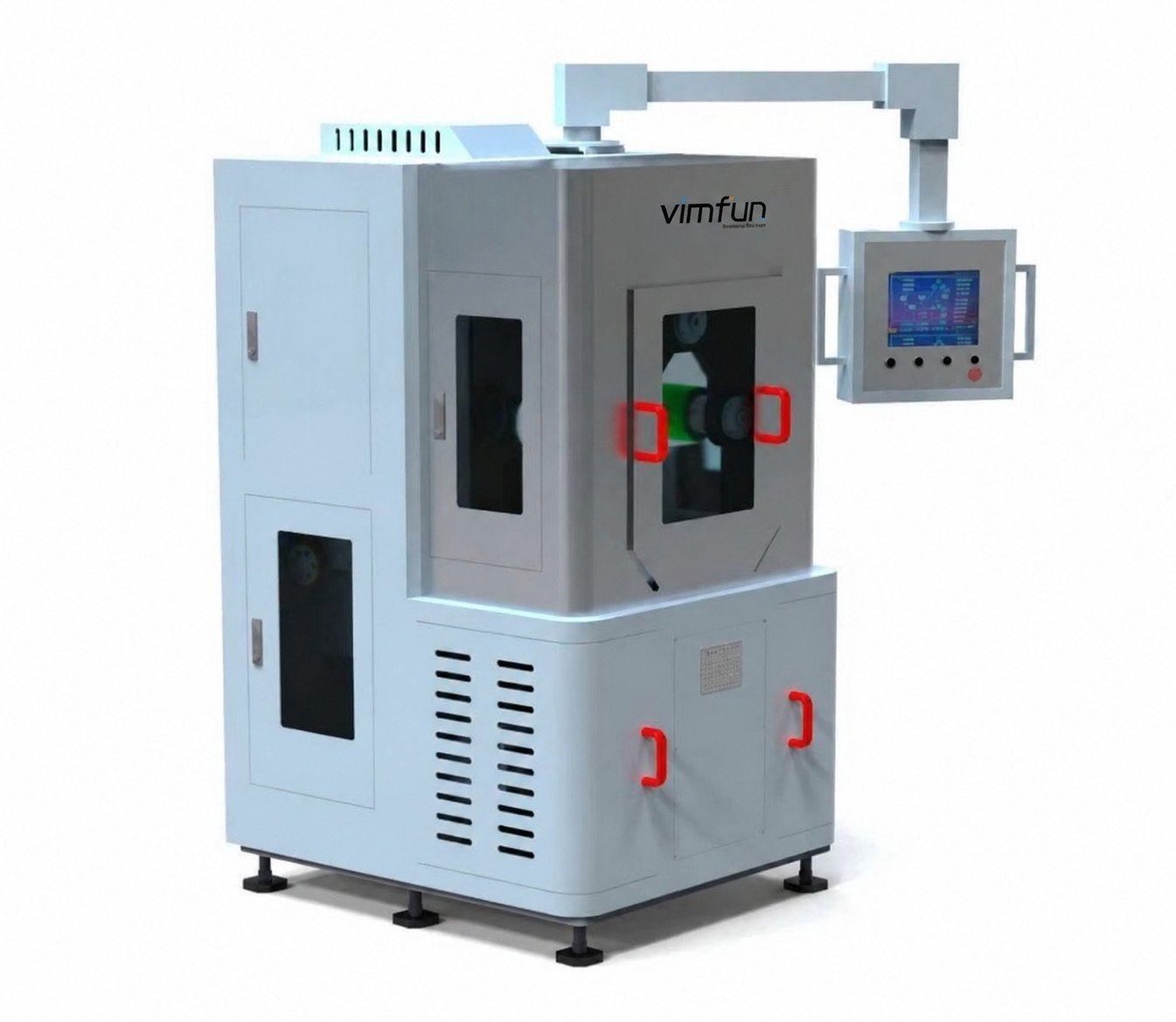
A small multi wire saw for laboratories, pilot lines and small-batch production. It takes a block up to 200 × 200 × 200 mm and slices it into dozens or hundreds of wafers 0.3–12 mm thick in one cutting cycle, on a footprint of about one square metre.
For larger-section opening cuts, CNC profiles or quartz rod inner-hole work, compare the SVO-40 precision diamond wire saw. Its single-wire cutting path serves a different job from parallel slicing on SOM200.
Where does the SOM200 sit between crystal growth and polishing?
The SOM200 does one job: it turns a block or a short ingot into a stack of parallel slices. Upstream, you bring a grown crystal, a sintered block or a cropped ingot section that fits within 200 × 200 × 200 mm and is bonded to the work plate. Downstream, the slices go to lapping, grinding or polishing. The specification lists a thickness tolerance of ±0.1 mm; confirm the required finishing allowance through a sample cut on your material.
Typical users of a small multi wire saw are materials laboratories, university and institute research groups, and pilot lines that need real multi-wire slices — not single test cuts — before they commit to a production machine. Slices from the SOM200 can go straight onto our double sided lapping machines or into your existing grinding and lapping line.
How does a wire web turn one block into hundreds of slices?
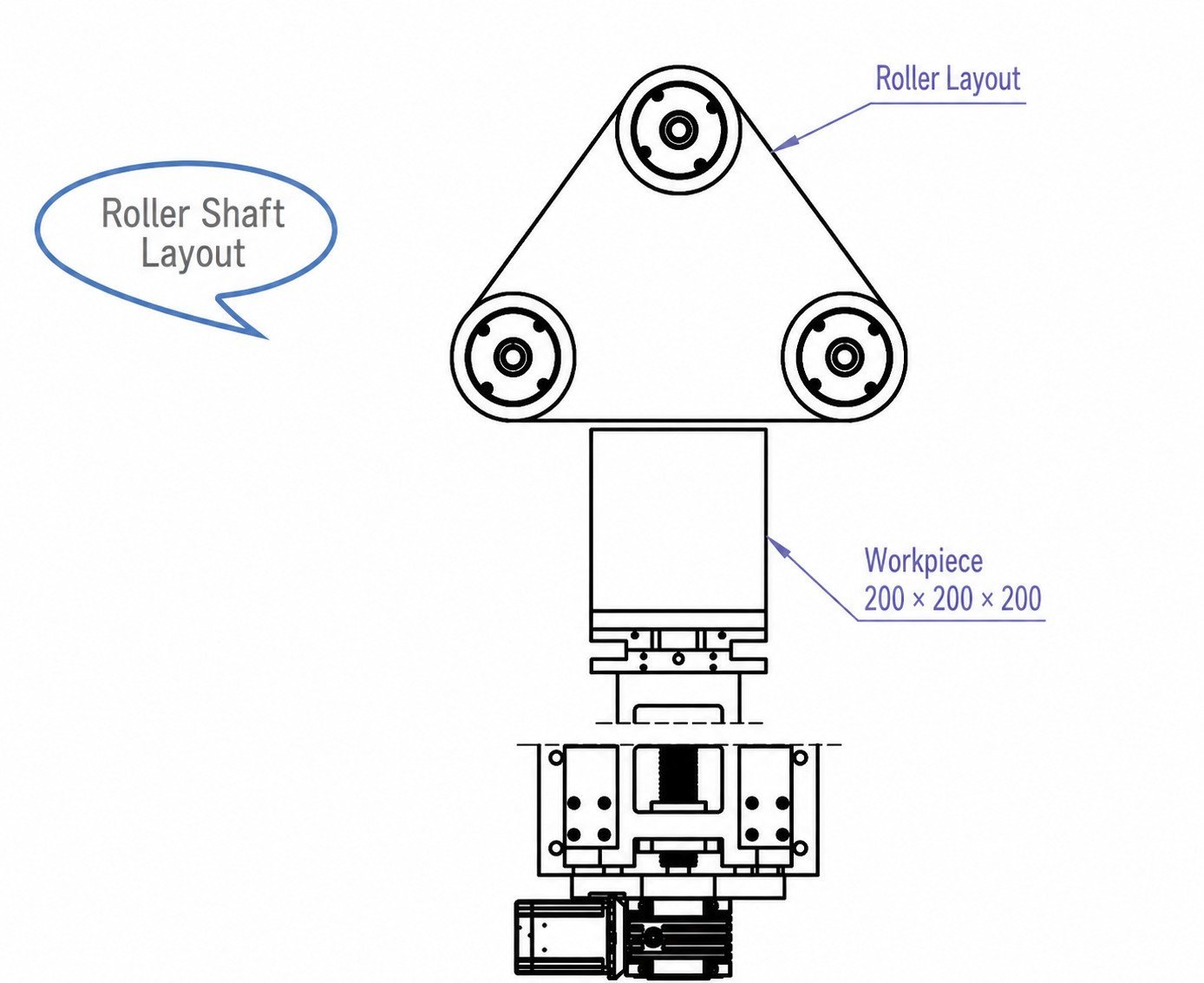
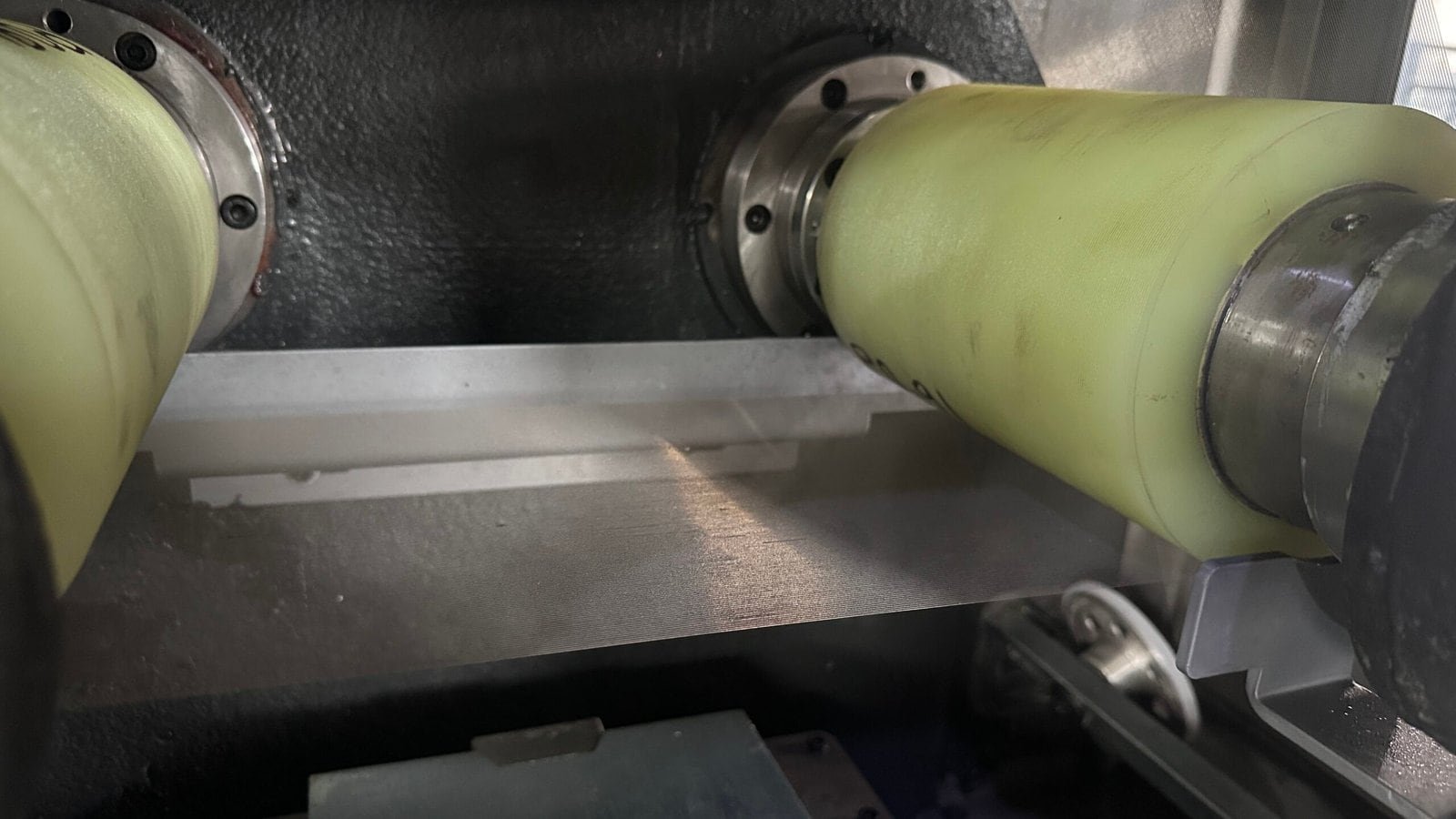
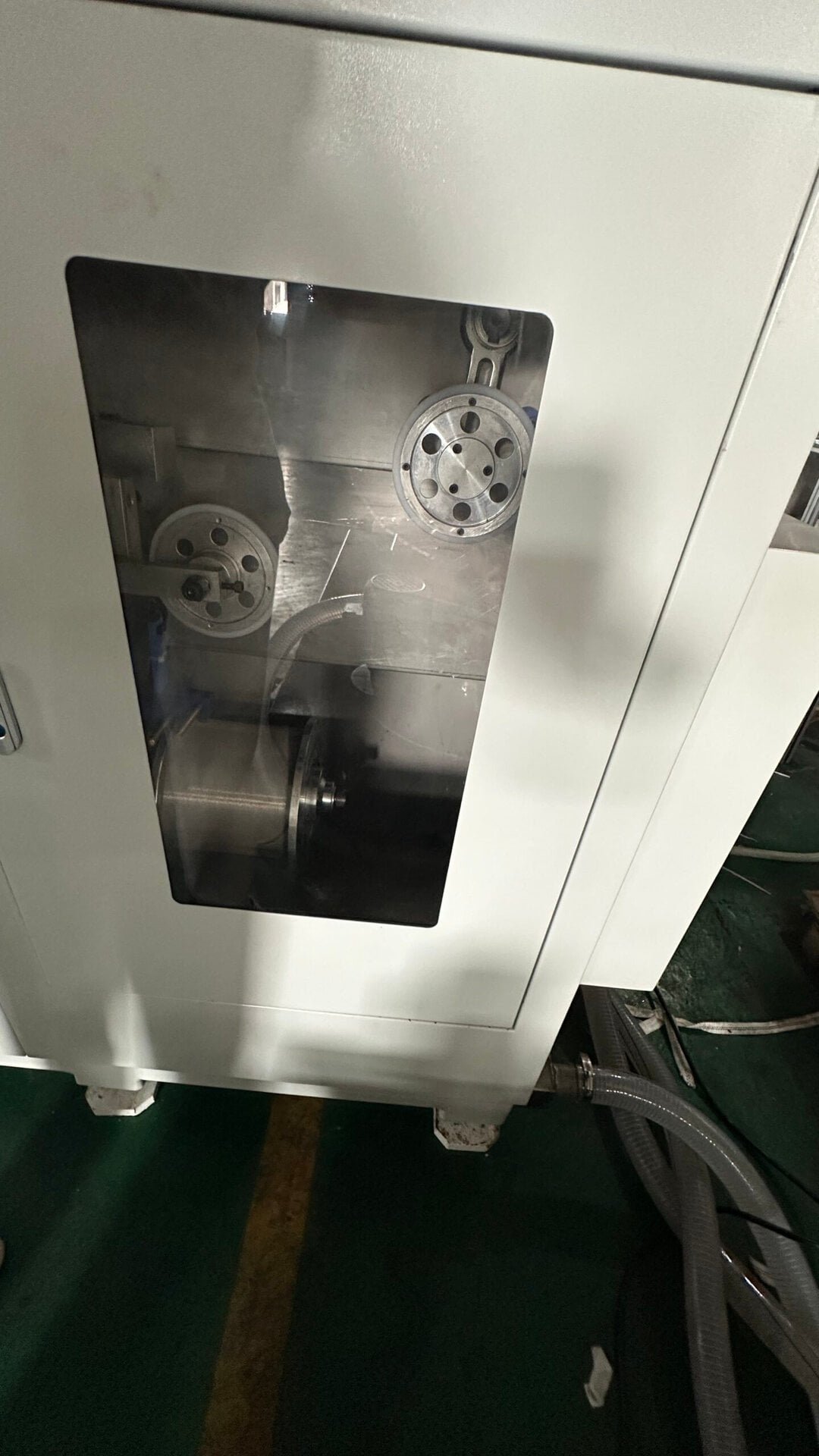
In this small multi wire saw, diamond wire is paid off from a supply spool, wound many times around three grooved rollers arranged in a triangle, and collected on a take-up spool. Every turn of wire sits in its own groove, so the lower span between two rollers becomes a flat web of parallel cutting wires. The work table lifts the bonded workpiece into this moving web, and every wire cuts at the same time.
Groove pitch sets the slice
The distance between grooves on the rollers decides the slice pitch. The slice you keep is roughly the pitch minus the kerf the wire removes, so the actual kerf should be measured during a trial rather than assumed to equal the wire diameter.
Reciprocating wire
The wire runs back and forth at up to 1,000 m/min and reverses up to 8 times a minute, with a listed take-up spool capacity of 3 km. Wire consumption depends on the selected process and material.
Closed-loop tension
Tension is held anywhere between 0 and 32 N. Stable tension keeps the wire straight in the cut, and is one part of controlling cut consistency. Fixture support, feed and wire condition also need to be reviewed.
Why can a small multi wire saw hold full-size accuracy?
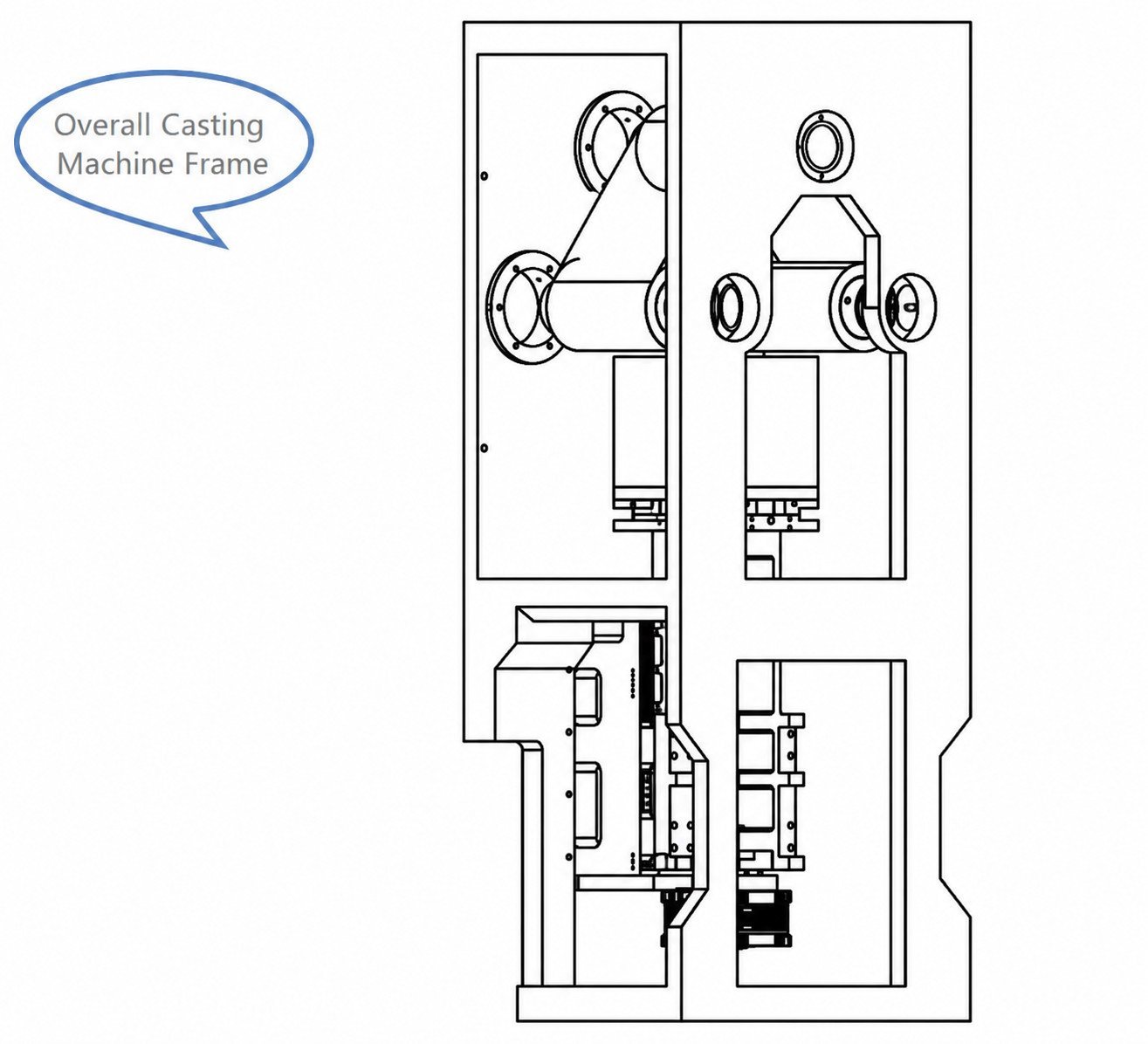
The SOM200 combines independent servo drives and a one-piece frame in a 1,060 × 1,200 mm footprint. These features support process control in a compact machine; the specified thickness tolerance should still be checked against the acceptance criteria for your part.
Servo on every axis, no belts
Wire drive, supply and take-up, traverse and table feed each have their own servo motor. The belt-free arrangement removes belt transmission from these drives; setup and maintenance still affect repeatability.
One-piece cast-iron frame
The body is a single casting. It resists deformation and damps vibration, to support wire-web stability during cutting.
Leak-proof spindles, runout ≤ 0.01 mm
The anti-leakage spindle structure keeps coolant and slurry out of the bearings. Main and auxiliary spindles run on large imported bearings and can be taken apart and reassembled easily during service.
Integrated process control
The touch-screen panel displays wire speed, tension and feed position. Review the recipe and loading method for each material instead of transferring one setup unchanged between different blocks.
For a research team, the practical result is that the machine allows wire speed, feed rate and tension to be studied on a multi-wire setup. Revalidate the process when moving to a different production machine, fixture or batch size.
Which materials and slice thicknesses can it handle?
Because this small multi wire saw is aimed at labs that work with many materials, it has the widest material list in the SOM range. The listed capacity is 200 × 200 × 200 mm with a 0.3–12 mm slice range. Suitability, wire selection and the working speed and feed must be reviewed for the actual material, fixture and required output.
| Material group | Examples | Related page |
|---|---|---|
| Semiconductor crystals | Monocrystalline and polycrystalline silicon, germanium, gallium arsenide, indium phosphide | — |
| Wide-bandgap & advanced ceramics | Silicon carbide (SiC), sapphire, alumina, zirconia | Sapphire slicing |
| Optical & infrared crystals | Optical glass, Ge, ZnSe, ZnS, CaF₂, quartz, fused silica, piezoelectric crystals | — |
| Magnetische Materialien | NdFeB, SmCo, ferrite blocks and ferrite cores | NdFeB-Schneidemaschine |
Schnittbereich: 0.3 mm to 12 mm, thickness tolerance ±0.1 mm across the full web, with diamond wire from 0.10 to 0.25 mm. For longer ingots within a 0.3–3 mm slice range, compare the SOMI-430 in our inverted-cutting model guide. Requirements below 0.3 mm need a separate equipment and sample-cut review.
Background reading on the materials and the process: wire saw (Wikipedia) und how wafers are produced (Wikipedia).
Technical specifications
| Cutting capacity & wire system | |
|---|---|
| Work stations | 1 |
| Work plate size | 200 × 200 mm |
| Max. workpiece size | 200 × 200 × 200 mm |
| Schnittdicke | 0.3 – 12 mm |
| Dickentoleranz | ±0.1 mm |
| Diamond wire diameter | 0.10 – 0.25 mm |
| Drahtgeschwindigkeit | 0 – 1,000 m/min |
| Direction reversals | up to 8 per minute |
| Drahtspannung | 0 – 32 N |
| Spool capacity (take-up) | 3 km |
| Cutting feed rate | Confirmed for the proposed setup |
| Table lifting stroke | 200 mm |
| Maschine | |
|---|---|
| Grooved rollers | 3, polyurethane-coated, Ø140 ± 10 mm |
| Roller center distance | 380 mm |
| Spindle runout | ≤ 0.01 mm |
| Drives | Servo on every axis, no belts |
| Full-load power | 25 kW |
| Overall dimensions (L × W × H) | 1,060 × 1,200 × 2,100 mm |
| Weight | approx. 3.5 t |
Specifications may be refined as the product develops; the final technical agreement for your order applies.
Main assemblies and what each one does
- Grooved roller system. Three polyurethane-coated rollers in a triangle, 380 mm apart. The grooves hold each wire turn in place and define the slice pitch.
- Main and auxiliary spindles. Carry the rollers with runout held to 0.01 mm or less. The anti-leakage design protects the bearings from coolant and cutting slurry.
- Wire supply, take-up and traverse. Servo-driven spools pay out and collect the wire while two traverse axes lay it evenly, so the wire does not cross or bunch on the spool.
- Tension control. A closed loop keeps wire tension at the set value (0–32 N) through every speed change and reversal.
- Lifting work table. A servo-driven table with a 200 mm stroke raises the bonded workpiece into the web at the programmed feed rate.
- Precision chiller. Keeps coolant temperature stable during the cut, protecting slice dimensions and wire life.
- Touch-screen control. A suspended panel with recipe storage, real-time display of wire speed, tension and feed position, and password-protected parameter levels, so trained operators can run jobs after a short introduction.
SOM200, SVO-40 or SOMI-430: which one fits your work?
All three are used on hard and brittle materials, but they solve different problems. Choose the small multi wire saw when you need a full stack of slices from blocks up to 200 mm; choose the others for the jobs below.
| SOM200 | SVO-40 | SOMI-430 | |
|---|---|---|---|
| Typ | Multi-wire, single station | Single wire, vertical cut | Multi-wire, inverted cut |
| Output per cycle | A full stack of slices | One cut at a time, including profiles | A full stack of thin slices |
| Max. workpiece | 200 × 200 × 200 mm | 400 × 400 × 300 mm | 430 × 160 × 150 mm |
| Schnittdicke | 0.3 – 12 mm | — | 0,3 – 3 mm |
| Am besten für | Labs, pilot lines, many materials, small batches | Opening large blocks, contours, inner holes | Longer ingots, thin slices in production |
If you need one precise cut through a large block, or a curved profile, the SVO-40 precision diamond wire saw is the better tool. For larger-section blocks and dual work-plate loading, compare the SOM400 dual plate multi wire saw. If your ingots are longer than 200 mm and you slice them every day, look at the SOMI-430 inverted multi wire saw or the rest of our multi wire saw range.
Utilities, installation and safety
Power supply, coolant, compressed air, foundation, service clearance and site safety requirements for the SOM200 small multi wire saw are confirmed with your order — please ask us. Leave service clearance around the machine for door opening and maintenance.
Warranty and after-sales support
- 12-month warranty on the machine.
- Response within 12 hours to any service request.
- CE certified.
Send us your material and target slice thickness
Tell us what you want to slice and we will cut samples on the SOM200 small multi wire saw free of charge, so you can judge the slices before you decide.
Request sample cutting- Material and grade
- Block size (up to 200 × 200 × 200 mm)
- Target slice thickness and tolerance
- Monthly volume, if you are planning production
CE certified · 12-month warranty · 12-hour response · free sample cutting