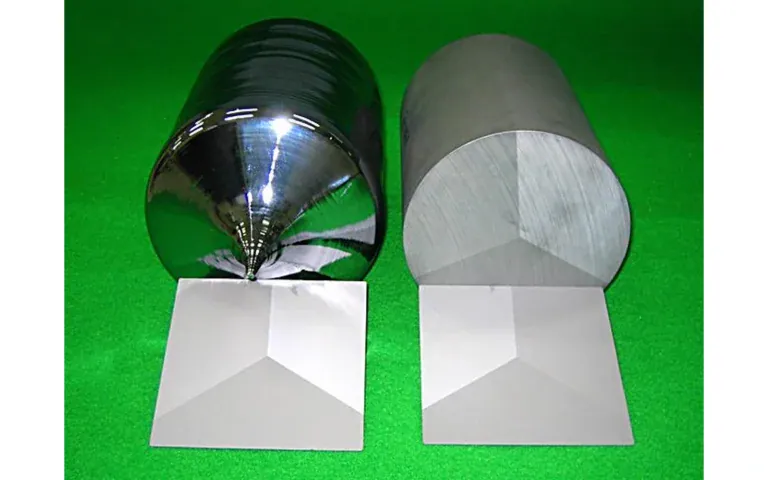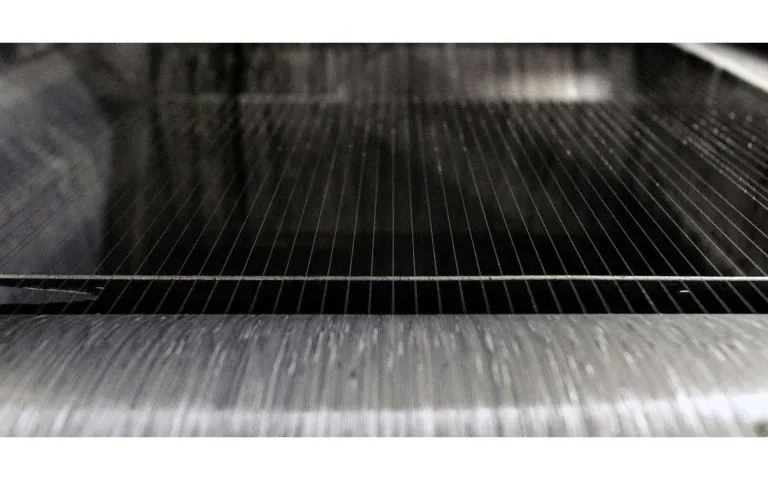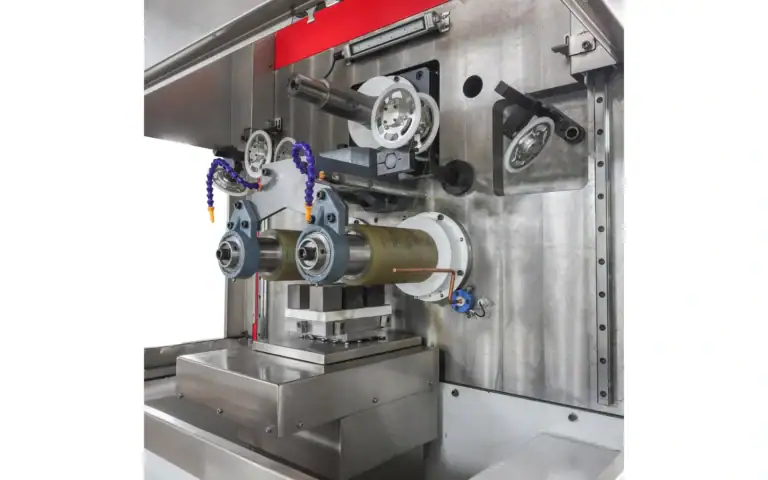
How to choose a crystal puller is a question best answered by defining the crystal that the next process must accept. A useful enquiry specifies material, usable geometry, quality requirements, production pattern, and site constraints before it asks which model is best.
The largest chamber, the most automated screen, or the lowest equipment quote cannot answer those questions alone. Buying decisions become easier to compare when each proposal responds to the same requirements. This crystal puller buying guide turns the initial conversation into ten questions that can be checked in drawings, documents, and acceptance records.
Vimfuns Kristallzüchtungsofen overview is the starting point for silicon, germanium, and sapphire configurations. Use it to identify the relevant family, then apply the questions below to the actual proposed configuration.
What material and grade will the furnace grow?
Question 1: What is the specified material? Write the chemical identity, feedstock form, intended grade, and any excluded contaminants. Silicon, germanium, and sapphire are separate enquiries even when all are described as single-crystal growth. Do not ask a supplier to infer material requirements from the eventual application alone.
Die University of Kiel’s CZ description illustrates the seed, melt, and crucible relationship for silicon. That relationship explains why containment and growth conditions belong in the equipment discussion. It does not prove that a silicon configuration is qualified for another material.
State who owns the material specification. A purchasing team may collect quotations, but the crystal and receiving-process teams need to agree what constitutes acceptable output. Record unresolved requirements rather than replacing them with words such as high purity or premium quality.
Which crystal geometry is actually useful?
Question 2: What diameter is needed? Separate as-grown diameter, prepared diameter, and finished substrate diameter. Cropping, grinding, or other preparation may remove material. The furnace enquiry should identify the required usable section and the allowances that the receiving process has established.
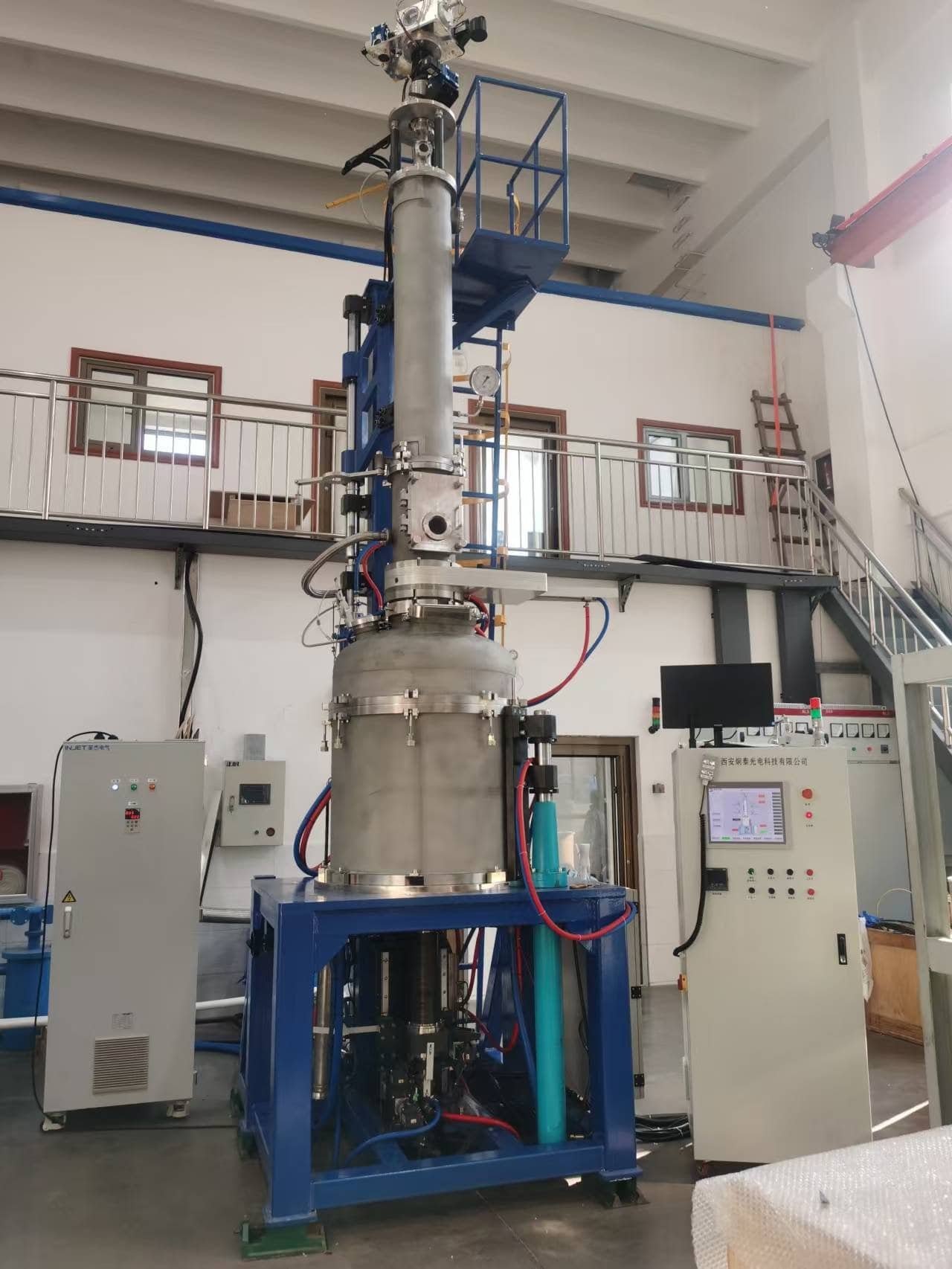
Question 3: What usable length and shape are needed? A maximum lifting travel is not automatically a maximum accepted crystal length. Starting and ending transitions, handling arrangements, receiving-chamber geometry, and the process route all need to be considered. Request a drawing that labels the relevant limits.
For sapphire, specify the required boule regions or intended cores rather than treating an irregular bulk shape as a long cylindrical silicon ingot. For germanium, state whether the next operation needs circular blanks, another section, or a particular orientation reference.
The KX360MCZ specification illustrates why the dimensions need separate names: it lists a maximum crystal diameter of 12 inches, a 1400 mm furnace-chamber inner diameter, and a 32–36-inch hot-zone range. The crystal target, chamber envelope, and hot-zone designation are different fields. Match each one to its function rather than selecting a machine from whichever dimension is largest.
How much accepted output is required?
Question 4: How will production demand be measured? Decide whether the planning unit is accepted crystal mass, usable ingot length, accepted blanks, or another defined output. A charge capacity measures an input; it is not a guarantee of accepted output.
Ask for the complete basis of any proposed production estimate: material, crystal specification, cycle boundaries, preparation time, maintenance assumptions, and rejection criteria. If those inputs are not available, keep the estimate provisional. Do not compare a best individual run from one proposal with a sustained production estimate from another.
Die CCz-1600 silicon puller is relevant when discussing continuous feeding. Its product data list a linearly adjustable feeding range of 20–600 g/min. That is the silicon-feed setting range, not accepted crystal output per minute. Evaluate it against the intended material-addition route and the complete cycle rather than treating the largest feed setting as production throughput.
Which hot zone and heating arrangement are included?
Question 5: What is inside the proposed hot zone? Request a configuration list identifying crucible, supporting parts, heaters, shields, insulation, and material-contact components. Clarify which components are included in the supply and which are consumables or customer-supplied items.
Question 6: How will the thermal arrangement be qualified? A stable heater indication is different from a measured melt temperature distribution. Ask what quantity is controlled, where it is observed, and how the proposed acceptance test relates to the crystal requirement.
Die KX240Ge Germanium-Kristallwachstumsofen provides a dedicated germanium starting point. Its configuration should not be assumed to share every feature of a silicon puller merely because both use CZ growth. Likewise, sapphire enquiries should identify the KY configuration and its own thermal arrangement.
How to choose a crystal puller for stable diameter
Question 7: What does the quoted diameter specification mean? Ask whether the number describes sensor resolution, measurement accuracy, repeatability, or actual grown-crystal diameter variation. Those terms must not be exchanged during quotation comparison.
NIST’s measurement uncertainty guidance explains why a measured quantity needs a defined reference and meaningful calibration. Apply that principle to the acceptance plan: specify the crystal region, measurement locations, cold or operating state, inspection method, and treatment of shoulders or end transitions.
KX360MCZ product data state an effective diameter-control range reaching target diameter ±0.05 mm, using control and vision algorithms. Treat this as the stated equipment control specification when reviewing the proposal; agree the assessed crystal region and measurement method for acceptance. A control-screen trend and an independent measurement of the cooled ingot remain different evidence.
Is the site ready for the proposed configuration?
Question 8: What site interfaces must be provided? Ask for the equipment layout, installation envelope, service clearances, lifted-component envelope, floor loads, electrical requirements, cooling-water specification, process-gas requirements, and exhaust interfaces for the selected configuration.
Separate supplier responsibility from the facility contractor’s responsibility. A connection list should identify the connection point, required condition there, and the document revision on which the installation design is based. A general brochure should not become the construction specification.
Check access as well as operating footprint. Doors, transport routes, lifting equipment, and maintenance space can affect installation even when the assembled machine appears to fit on a floor plan. Resolve those constraints before freezing the configuration.
What support and acceptance records are needed?
Question 9: What support is included? Separate equipment installation, operator training, maintenance training, process assistance, spare parts, and remote support. Record the delivery item or service scope for each. Do not assume that equipment training includes development of a production recipe for a new grade.
Question 10: What will count as acceptance? Define the test material, configuration, operating responsibility, inspection method, and required records. Assign who supplies feedstock and consumables, who performs the measurements, and how exceptions will be resolved.
Keep equipment checks distinct from product qualification. A successful motion or vacuum test does not establish crystal quality. Conversely, one accepted crystal does not prove every option or future material is qualified. Acceptance should match the scope being purchased.
What should a supplier comparison sheet contain?
Use a common comparison sheet with a requirement column, supplier response, evidence reference, and open issue. Keep a separate row for an option instead of hiding it inside a general statement. Mark not offered and not yet confirmed differently so missing information is visible.
| Requirement area | Zu beantragende Nachweise | Decision it supports |
|---|---|---|
| Crystal target | Material and usable-section specification | Correct process and equipment family |
| Equipment boundary | Configuration and responsibility list | Comparable supply scope |
| Site readiness | Released layout and utility schedule | Installation feasibility |
| Leistung | Agreed test and measurement plan | Meaningful acceptance |
| Unterstützung | Training, documentation, and spare-part scope | Continued operation |
Cost evaluation belongs beside this technical comparison, with its assumptions visible. The detailed explanation of quotation factors should remain a separate reading task; this checklist is intended to establish what is being quoted.
Prepare the material specification, a sketch of the usable crystal, the required acceptance measurements, the planned production pattern, and the site constraints. Send them through the Ausrüstungsanfrageseite and ask for a configuration response that identifies every remaining open item.
Häufig gestellte Fragen
Can I select a crystal puller from diameter alone?
No. Material, usable length, quality requirements, process configuration, site conditions, and acceptance measurements also affect the selection.
Is charge capacity the same as production output?
No. Charge capacity describes material input. Accepted output also depends on the growth route, useful crystal region, inspection, and production cycle.
Does camera resolution prove crystal diameter accuracy?
No. Resolution describes a measurement-system characteristic. Grown-crystal accuracy needs its own definition and an agreed inspection method.
What should I send with the first enquiry?
Send the material specification, usable crystal geometry, required quality measurements, production pattern, and known site constraints.