Crystal puller cost depends on the defined equipment configuration, the work required to install it, and the resources needed to operate it. A comparable quotation therefore starts with a common scope, rather than a single price attached to the word furnace.
A buyer may be comparing different crystal sizes, a different hot zone, magnetic control, continuous feeding, or a different level of commissioning support. Until those differences are visible, the cheaper quotation may simply contain less equipment or fewer services. The purpose of a cost review is to identify what each proposal includes and which assumptions remain open.
Vimfun’s crystal growth furnace overview separates the relevant silicon, germanium, and sapphire families. Choose the process family first, then request a configuration-based quotation. This article explains the comparison structure without giving a price range or promising operating savings.
Why is there no single standard price?
A crystal puller is part of a manufacturing installation. Its cost boundary may include only the main machine, or may also include power equipment, vacuum equipment, cooling interfaces, gas controls, handling arrangements, software functions, spares, installation, and training. Two headline quotations can therefore describe different purchases.
Before comparing a czochralski furnace price, write a supply-boundary list. Identify equipment supplied by the furnace provider, equipment supplied locally, installation work, and services to be performed by the customer. Ask each bidder to answer against the same list and mark exclusions explicitly.
A useful comparison also separates firm requirements from options. An optional feature should have a clear purpose, a description of what changes in the configuration, and a route to acceptance. Otherwise the discussion can become an unstructured list of upgrades whose value cannot be checked.
What drives crystal puller cost?
| Cost area | What to define | What must not be assumed |
|---|---|---|
| Crystal geometry | Material, useful diameter, useful length, and grade | A larger external size means more accepted material |
| Thermal system | Hot-zone configuration and included consumables | One thermal design serves every material |
| Process options | Magnetic field, feeding, and control functions | Every option increases useful output |
| Site integration | Utilities, layout, transport, and installation work | Machine price includes the entire facility |
| Service scope | Commissioning, training, documentation, and spares | Equipment training includes process development |
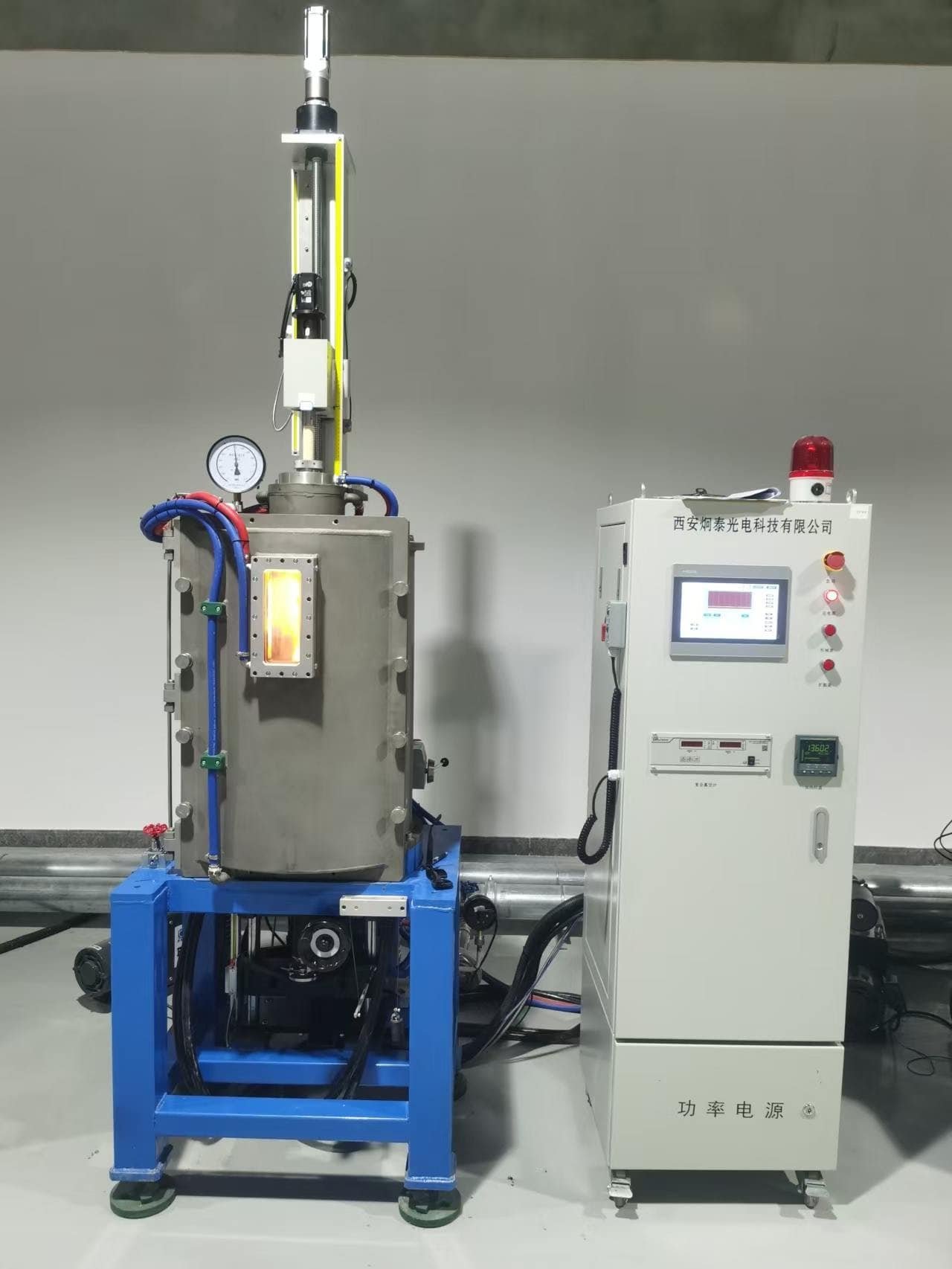
The table is a quotation checklist, not a fixed ranking of expense. The relative importance of each item depends on the project. For one installation, the building interface may be the main uncertainty. For another, the required process configuration may determine most of the technical scope.
Keep any requested alternatives traceable. If a supplier proposes a smaller crystal, another feeding arrangement, or reduced automation, evaluate the resulting product and operating requirements before treating the alternative as a saving.
How does crystal diameter affect the configuration?
Crystal dimensions influence the required growth and handling arrangement. The proposal may need a different hot zone, chamber layout, lifting arrangement, or receiving space. These are configuration questions, not a simple cost-per-diameter formula.
For a larger crystal target, ask which parts change and why. Separate external crystal dimensions from the useful accepted section. A requirement for a longer usable body should not be answered only with a maximum seed-lift travel. The drawing and acceptance description need to identify the actual usable geometry.
The KX360MCZ 12-inch MCZ crystal puller is a relevant configuration for silicon enquiries. Its nominal size identifies an equipment family; the project quotation still needs its own scope. This does not establish a universal relationship between equipment size and financial return.
Are magnetic control and continuous feeding worth including?
Evaluate a process option against a specific requirement. Magnetic control, for example, belongs in a discussion of the required melt behavior and crystal properties. Continuous feeding belongs in a discussion of the intended production route and material addition. Neither should be selected solely because it sounds more advanced.
For the CCz-1600 continuous silicon puller, ask what the proposed feeding arrangement includes, how it will be commissioned, and which results will be checked. A feeder’s rated range is not accepted crystal output, so it should not be used alone in a payback calculation.
KX360MCZ provides a concrete scope distinction: its reference configuration lists the horizontal superconducting magnetic field as standard, while a heater lifting mechanism is optional. A comparison should therefore establish whether the magnetic-field system is already in the quoted base scope and whether the adjustable-heater option is included. If the magnet appears as a separate quotation line, establish whether its price is already included in the base total so the same scope is not counted twice.
For CCz-1600, distinguish the continuous feeder and the linked online solid-doping system from a furnace offering only a replenishment attachment. The supplied equipment, process interfaces, and commissioning scope affect what the quotation contains. Monitoring, recipes, data recording, and permissions also need their own function descriptions rather than being grouped under one automatic-control label.
Which running costs belong in the assessment?
Equipment purchase is only one part of crystal growth equipment cost. A project assessment should also consider energy, process gases, consumables, labor, maintenance, inspection, and the cost of unavailable production time. Every estimate needs an operating basis and a boundary.
The U.S. Department of Energy’s life-cycle cost guidance distinguishes purchase, installation, operation, maintenance, and disposal. Its example subject is pumping systems; the relevant point here is the accounting structure, not an implied furnace efficiency result.
Request energy consumption for a defined duty if an operating estimate is needed. Nameplate power, peak heater power, and continuous operating energy are different quantities. Similarly, a gas flow capability does not state the amount consumed over an entire cycle. Without a supported duty profile, keep these costs as open assumptions.
Consumables also need a stated basis. List what is replaced, what is inspected, what is included with initial delivery, and how replacement need will be determined. Do not assign a service life merely because another plant or another material reports one.
How should useful output enter the calculation?
Use accepted output as the denominator when comparing production economics. Define whether that means accepted crystal mass, usable prepared length, accepted blanks, or another receiving quantity. The same unit must be used for every alternative.
Separate theoretical conversion from measured performance. An assumed utilization rate, rejection allowance, or cycle time can be used for a planning scenario, but it must remain labeled as an assumption. Changing that assumption may alter the apparent value of an option more than changing the purchase figure.
The Federal Energy Management Program’s life-cycle perspective also separates initial, energy, maintenance, and disposal costs. It supports looking beyond acquisition cost; it does not supply crystal-production values. Build those inputs from the actual project documents and measured results when available.
What should be included in an accurate quotation request?
Send the material specification, intended useful crystal geometry, required quality measurements, production pattern, and known site constraints. Add a scope list identifying the utilities and support equipment already available. Ask for a base configuration and clearly identified alternatives rather than an unexplained total.
The response should state included equipment, optional functions, exclusions, installation responsibilities, documentation, training, spare parts, and acceptance scope. Where an operating-cost estimate is requested, ask for its input data and calculation boundary. Unsupported savings claims should remain outside the comparison.
For a technical purchasing checklist, use the separate topic on choosing a puller. For building preparation, use the facility-requirements topic. This cost discussion addresses how to compare scope and assumptions, rather than repeating the selection process or supplying an installation design.
Prepare a common specification and send it through the equipment enquiry page. Ask the supplier to explain every configuration difference before making the commercial comparison.
Frequently asked questions
Can a crystal puller be compared using purchase price alone?
Only when the equipment and service scopes are equivalent. Installation, utilities, consumables, maintenance, and accepted-output assumptions also belong in a project comparison.
Does a larger charge capacity guarantee a lower production cost?
No. Accepted output depends on the growth route, usable material, cycle, and inspection results. Charge capacity alone does not establish unit production cost.
Can peak heater power be used as average energy consumption?
No. Peak power is a capability or rating. An energy estimate needs the operating duty and the time spent in the relevant states.
What is needed for a meaningful quotation?
Provide material, useful crystal dimensions, quality requirements, production pattern, site constraints, and a common supply-scope list.