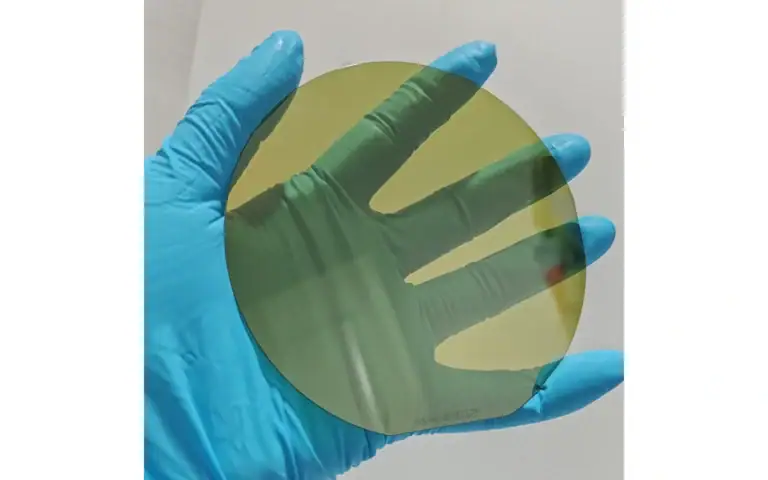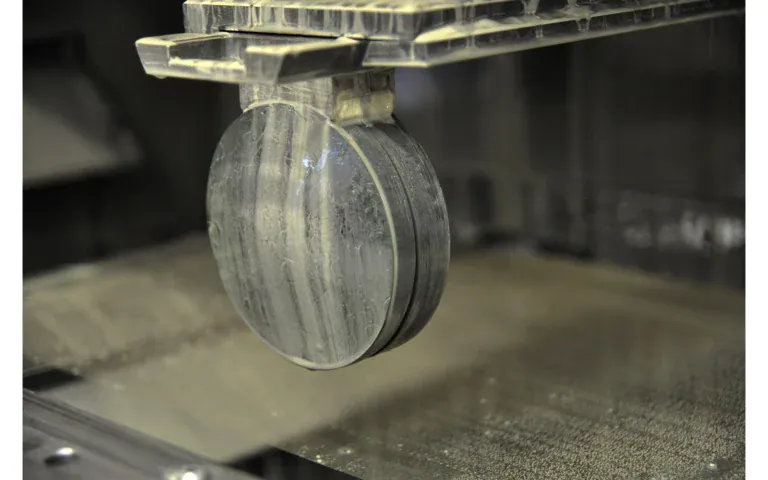
Crystal growth methods produce an ordered solid by controlling how material joins an existing crystal lattice. For bulk industrial crystals, the practical choice depends on the material, the required crystal form, and how heat and mass can be transferred during growth.
A silicon ingot, a sapphire boule, and a silicon carbide boule therefore should not begin with the same equipment enquiry. Their downstream products may all be sliced into blanks or substrates, but the conditions that create the starting crystal are different. Begin with the material specification and the useful crystal geometry; then compare the growth route.
Vimfun’s crystal growth furnace range covers dedicated silicon, germanium, and sapphire configurations. PVT crystal growth furnaces for SiC are available on request. Methods described below are a technical comparison, rather than a claim that every method is supplied.
What is the difference between a single crystal and an ingot?
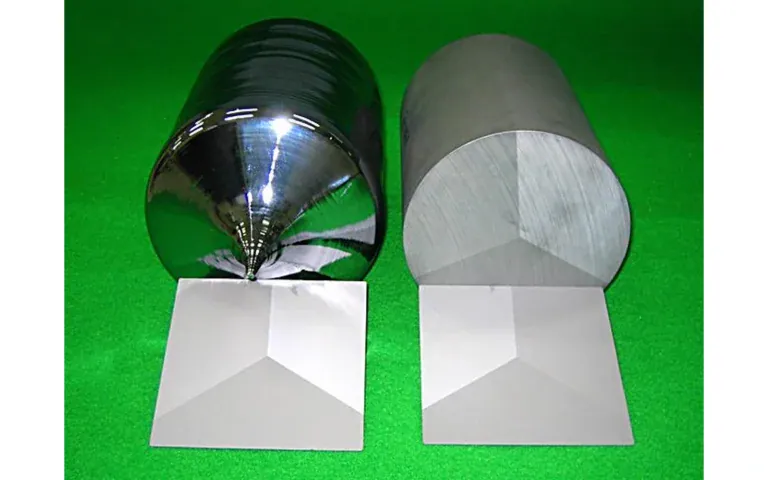
A single crystal has a continuous crystallographic orientation through the region being considered. An ingot describes a bulk shape or product form; the word alone does not establish whether the material is single crystal or polycrystalline. A boule is also a bulk growth product, commonly used when discussing sapphire and other crystals.
For a buyer, this distinction changes what must be requested. External diameter and total mass do not establish usable single-crystal volume. The receiving process may also need orientation, electrical or optical properties, and a defined allowance for cropping. State those separately so a large-looking boule is not mistaken for a fully usable component.
Bulk crystal growth also differs from growing a thin epitaxial layer on a substrate. Both extend an ordered structure, but they solve different manufacturing problems. This discussion concerns the bulk starting material that can subsequently be cut and processed.
Crystal growth methods at a glance
| Route | Where solidification occurs | Typical comparison material | Key selection question |
|---|---|---|---|
| Czochralski, or CZ | At the boundary between the melt and the seed-connected crystal | Silicon and germanium | Can the melt, crucible, and thermal field meet the crystal specification? |
| Magnetic CZ, or MCZ | At a CZ interface with an applied magnetic field | Silicon | Does the required melt-flow control justify this configuration? |
| Kyropoulos, or KY | Predominantly down into the melt volume | Sapphire | Is a large bulk boule the required starting form? |
| Bridgman | Through a controlled solidification zone in a container | Various compound semiconductors | Can the container and gradient support the selected material? |
| Float zone, or FZ | Through a moving molten zone | Silicon | Is a crucible-free route appropriate for the purity and geometry? |
| Physical vapor transport, or PVT | At a seed supplied through vapor transport | Silicon carbide | Can the vapor transport and thermal conditions support the required boule? |
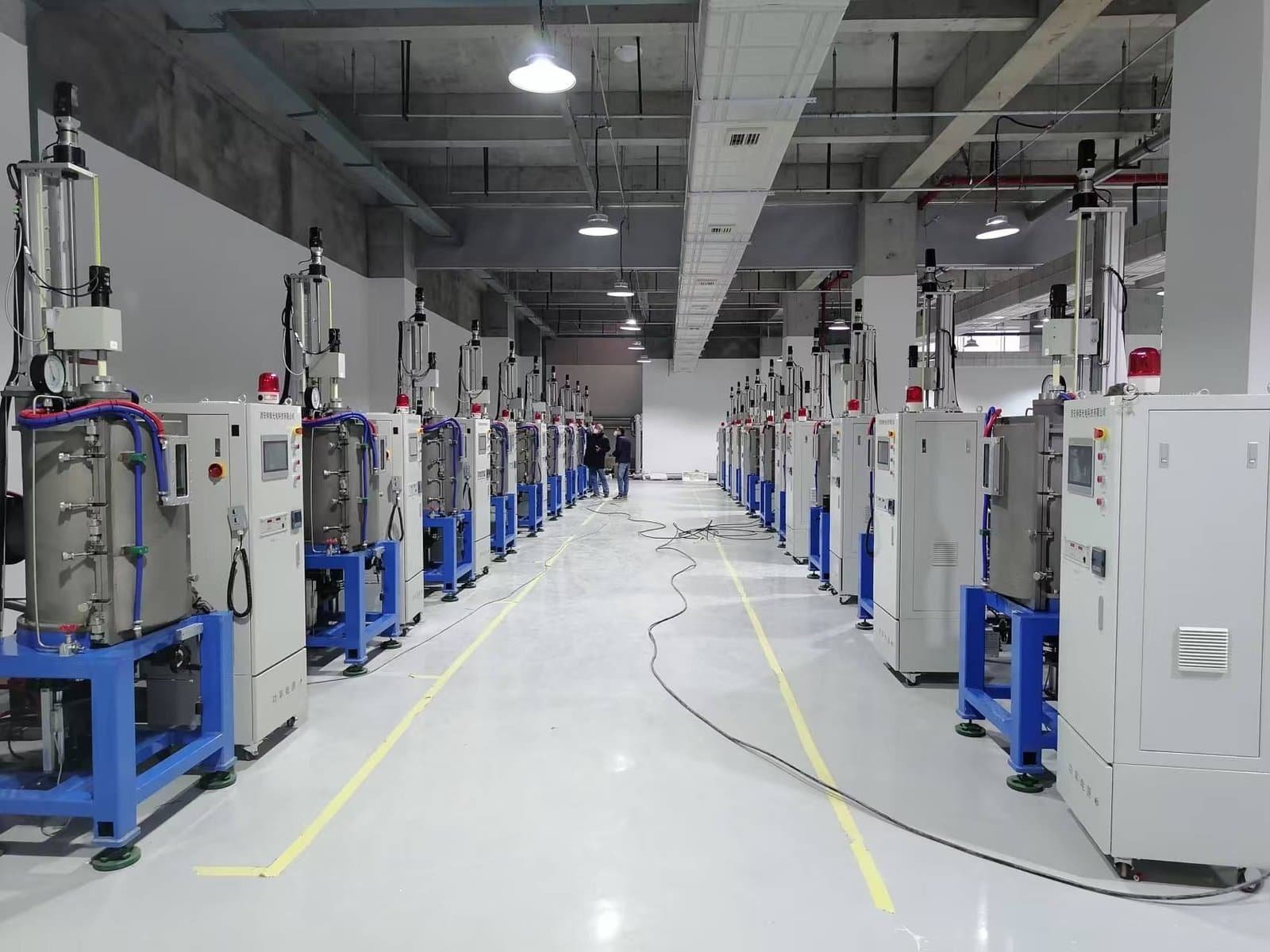
These crystal growth techniques are alternatives at the route-selection stage. They are not interchangeable operating modes that can be selected on any furnace controller. A machine must be designed and qualified for its actual process.
How does Czochralski pulling work?
In a CZ process, a seed contacts a melt and is withdrawn while material solidifies at the interface. The seed establishes the intended crystal orientation. Pulling, rotation, melt conditions, and heat removal then have to work together as the ingot grows. The University of Kiel’s silicon growth notes describe this seed-and-melt arrangement.

The useful cylindrical body comes after the starting transition. Its geometry is established during growth, while later machining establishes the prepared blank geometry. A nominal growth diameter is therefore not a finished wafer specification.
For silicon, magnetic-field and feeding arrangements create different CZ equipment configurations. MCZ adds magnetic control of melt behavior. Continuous CZ introduces feeding arrangements intended for continued material addition. The choice requires a defined production route, rather than assuming either option automatically improves every grade or duty.
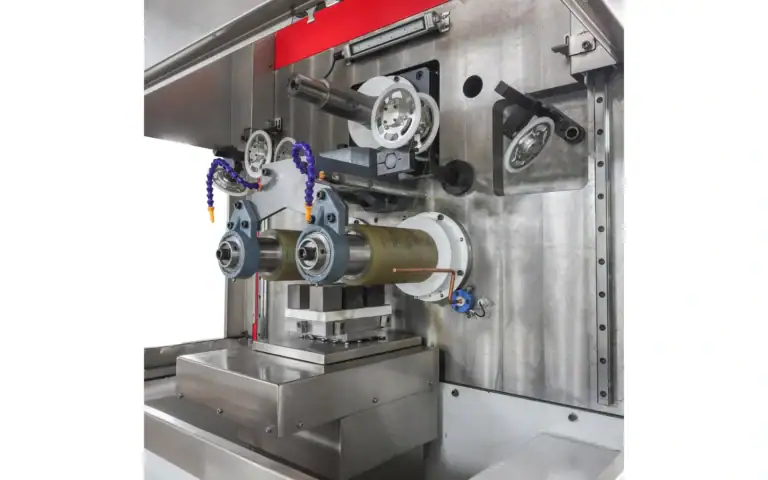
For example, Vimfun’s KX360MCZ 12-inch MCZ crystal puller is specified for semiconductor silicon crystals up to 12 inches, identified in its application specification as 300 mm, with a horizontal superconducting magnetic field as standard. CCz-1600 addresses another part of the route: its continuously adjustable feeding system adds silicon during growth. These are different configuration choices within the CZ family, not two names for the same control feature.
Vimfun’s CCz-1600 Czochralski crystal puller is a silicon configuration. Germanium enquiries belong with the dedicated KX240Ge germanium crystal growth furnace; a shared process name does not make the two hot zones equivalent.
How does Kyropoulos growth differ?
KY growth is used for bulk sapphire. After seeding, the crystal develops mainly into the melt volume as the thermal conditions are changed. It should not be pictured simply as a long CZ cylinder being pulled upward out of a crucible.
The International Molybdenum Association’s explanation of sapphire growth describes the relationship between the seed, melt, and crucible in a KY arrangement. The practical output is a boule from which suitable sections and cores can be selected.
The next question is what part of that boule the downstream process needs. Required orientation, clear volume, defects, and processing allowances determine how much material can become a useful blank. A whole-boule mass by itself does not answer that question. Vimfun’s KY-125 Kyropoulos furnace is the relevant equipment page for sapphire growth enquiries.
Where do Bridgman and float-zone routes fit?
Bridgman growth moves a material system through a thermal gradient, or moves the gradient relative to the material, so controlled solidification progresses through the charge. Container compatibility and the intended direction of solidification are central design questions. The publisher-hosted materials synthesis text illustrates how the solidification front advances from a seed into the melt.
Float-zone processing instead maintains a localized molten region in a feed rod and moves that region along the material. The University of Kiel float-zone explanation describes this moving-zone route. Its crucible-free arrangement changes the contamination and mechanical constraints compared with melt held in a vessel. It is not a drop-in replacement for a CZ hot zone.
Neither description is a Vimfun supply commitment for these furnace types. Their role in this comparison is to help identify when an enquiry belongs to a different growth route rather than being forced into a CZ specification.
Why does silicon carbide need a different discussion?
Industrial bulk SiC growth commonly uses PVT rather than the ordinary CZ melt-pulling arrangement used for silicon. Source material supplies vapor species to a seed under a controlled thermal field. The source, transport region, and growing interface must be considered together. A PVT thermal-field study in Materials examines the relationship between source, seed, and temperature gradients; its research results apply to its studied arrangement, not to a Vimfun furnace specification.
For planning purposes, keep the growth question separate from the subsequent wafer question. A boule leaving growth still needs a defined preparation and slicing route. The SiC ingot slicing page addresses that downstream operation; it does not establish a PVT furnace specification or promise a particular growth rate.
How should the material guide the decision?
Start by writing the intended material and grade without assuming the equipment. Add the required crystallographic orientation and the geometry needed after cropping. Then state how those properties will be verified. A material name without its receiving requirements leaves too much room for incompatible proposals.
Next, ask how the growth route interacts with its surroundings. A melt-growth enquiry needs compatible containment and a suitable thermal field. A vapor-growth enquiry needs a defined source and transport arrangement. A purity requirement may make a contact material important even when its mechanical dimensions appear suitable.
Finally, compare useful output rather than the largest individual number on the specification. Charge mass, grown mass, usable crystal volume, and accepted sliced product are different quantities. The conversion between them must come from the agreed process and inspection results, not from the method name.
For equipment selection, send the material, intended crystal form and useful geometry through the equipment enquiry page. Identify which optical, electrical or structural requirements the growth route must meet, so the discussion begins with a defined material output.
Frequently asked questions
Are crystal growth methods interchangeable on one furnace?
No. Each route needs a compatible thermal, mechanical, containment, and atmosphere arrangement. A shared material family does not prove that a furnace can change methods.
Does a larger boule mean more usable product?
Not necessarily. Cropping, orientation, defects, and processing allowances determine the accepted volume available for the next operation.
Which Vimfun furnace is relevant for sapphire?
The KY-125 is the sapphire Kyropoulos configuration. Its suitability should be assessed against the required boule and downstream blank specification.
Is crystal growth the same as wafer slicing?
No. Growth creates the bulk crystal; slicing separates prepared stock into blanks. The crystal specification and cutting specification must be agreed separately.