What Is Ingot Squaring? Cropping and Squaring Before Slicing
Silicon ingot squaring prepares stock geometry before slicing. Separate cropping, shaping and material allowances in the drawing and trial plan.
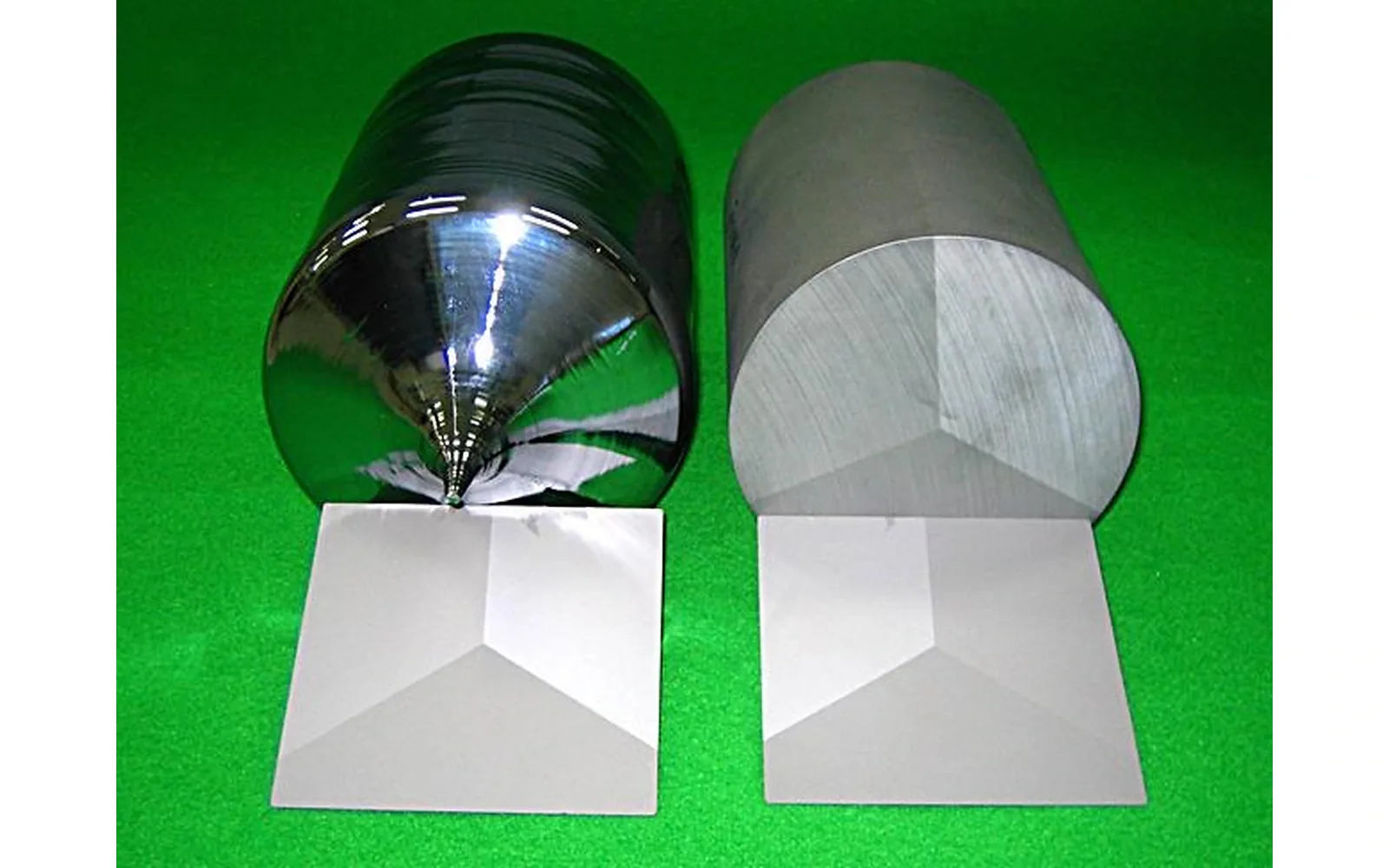
Silicon ingot squaring is needed only when the receiving product calls for that prepared cross-section. Cropping sets sections along the ingot; squaring changes the retained cross-section; slicing makes the blanks. Do not specify all three by habit when the route needs round substrates.
For silicon ingot squaring, draw the retained geometry and any permitted corner form before planning the cuts. The amount removed, the reference preserved and the stock needed afterward determine whether the layout is useful.
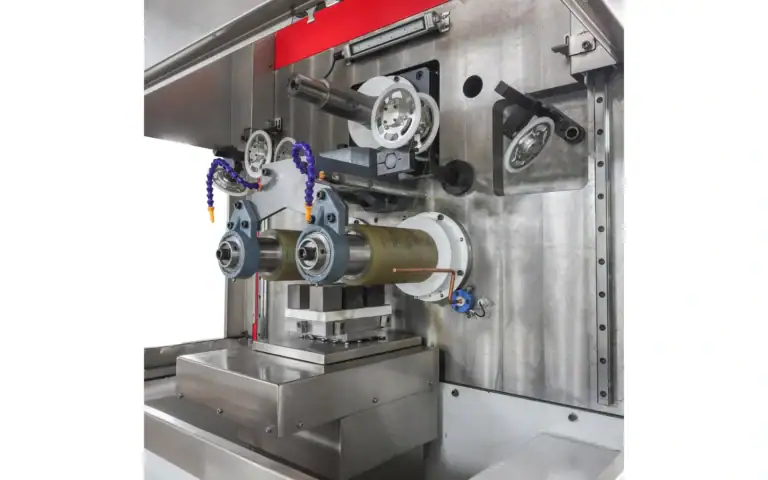
Vimfun SOM4-630D lists silicon squaring and slab-cutting applications. For silicon ingot squaring, that provides a relevant equipment reference, while the retained geometry and orientation requirements still need their own drawing and acceptance method.
What Silicon Ingot Squaring Changes
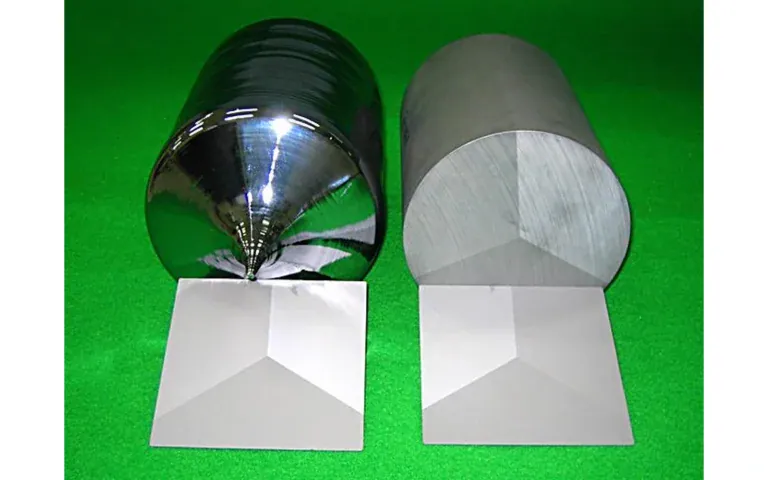
Squaring changes the cross-sectional geometry of stock according to an approved layout. The intended shape may be square or another specified form with defined retained corners. It is not a mandatory step for every silicon substrate route; round wafer production has a different shape requirement.
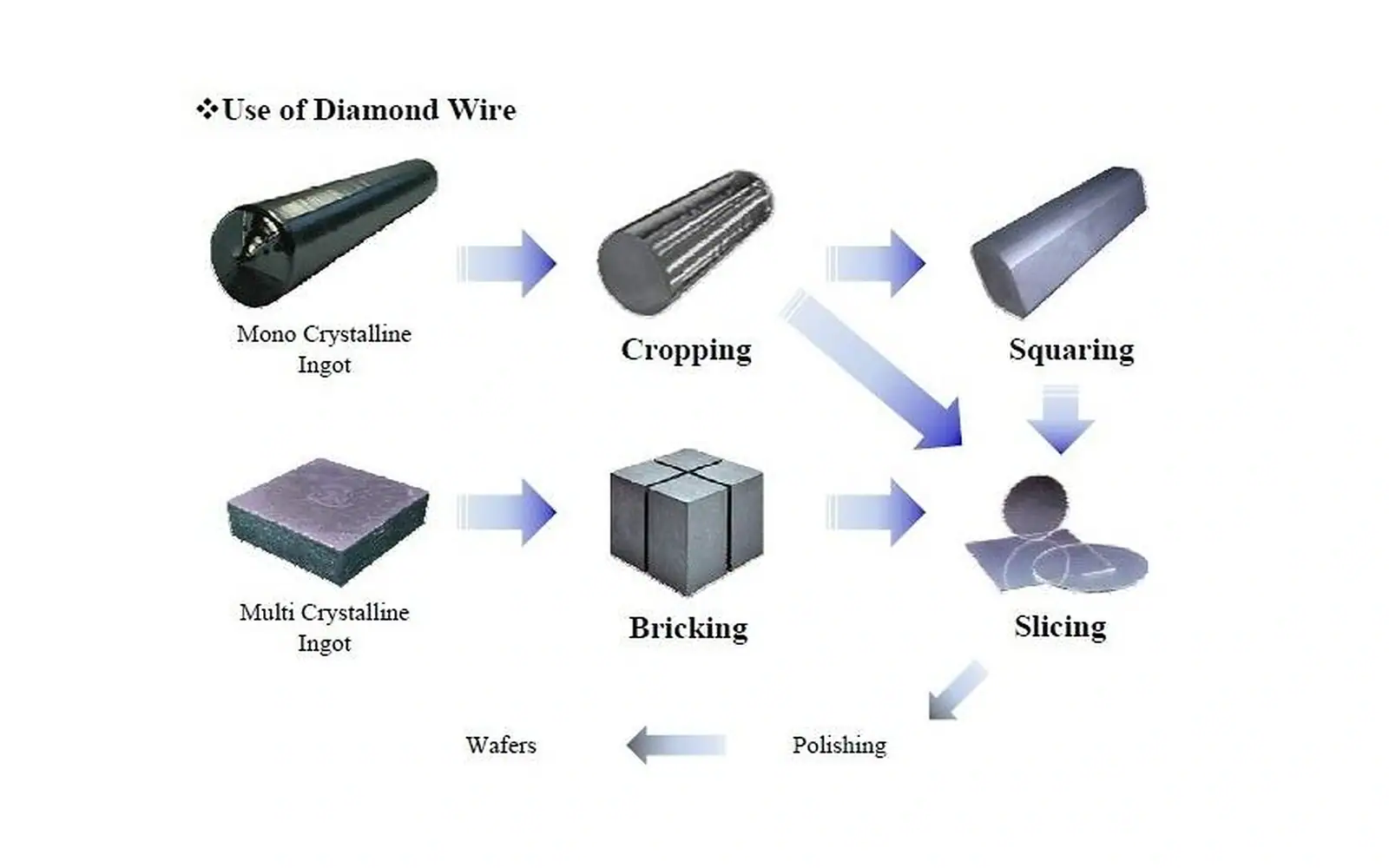
The City University crystal growth and wafer preparation notes provide background on the sequence from crystal to substrate. For a particular project, the customer's stock and blank drawings determine which preparation steps are actually needed.
Cropping Defines the Usable Sections
Ingot cropping establishes usable lengths; squaring establishes a required cross-section; slicing establishes repeated blank thicknesses. Apply them in that order only when the product requires each operation. A round-wafer route need not include squaring, while a square or specified corner-retaining product needs a cross-section drawing before side material is removed.
Cropping separates stock into planned sections and can exclude regions that the approved material plan does not use. The reason for exclusion should come from material evaluation or the product route, not an assumption that a fixed portion of every ingot must be discarded.
Silicon ingot squaring can follow or precede other preparation according to the assessed route. State the sequence and resulting dimensions. A work order that simply lists “crop and square” without intermediate drawings leaves the setup team to guess the required handoffs.
The ingot cropping machine provides equipment context for sectioning. Its role should be assessed separately from the later production of wafer blanks.
Does the drawing require fully square corners?
Define the retained shape using dimensions and reference surfaces. If the product allows or requires retained corner geometry, show it on the drawing. Do not use the informal word “square” to imply perfectly sharp corners unless that is the actual requirement.
For silicon ingot squaring, include any stock that must remain for later finishing. The intermediate shape is a blank for another operation, so its useful dimensions can differ from the final part dimensions.
A fixture should not determine the product shape by default. If the incoming stock cannot produce the desired geometry with the required allowance, resolve that material-layout issue before machining.
Does a prepared face establish crystal orientation?
Mechanical faces provide locating references, but they do not automatically establish crystallographic orientation. Identify the intended plane or directional reference where the substrate application requires it. Preserve that information when the outside shape changes.
Silicon ingot squaring should retain material lot and orientation traceability through every section. If a reference mark will be removed, transfer it using the approved method before cutting. Keep the original drawing and mapping with the resulting blocks.
A photograph can show the reference location and prepared shape. It cannot prove orientation or material quality, so those requirements need their specified documents or measurements.
Plan the Material Balance before the Cut
Map usable stock, cropping exclusions, cross-section removal, cutting width and finishing allowances. These terms consume material at different stages. A later slicing yield should not hide preparation losses by beginning its denominator only after the stock is shaped.
A silicon ingot squaring estimate can help compare layouts, but keep it separate from accepted output. Geometric recovery assumes that the retained stock can complete the route. Cracks, unusable regions and later rejection can change actual recovery.
State whether the material balance is by mass or volume and which process boundary it covers. Consistent boundaries make a proposed layout improvement interpretable.
Use separate fields for cropped exclusions, cross-section removal and the effective cuts. Add later finishing stock as its own allowance. These terms occur at different stages; combining them into a single saw-yield figure hides where material was actually lost.
For silicon ingot squaring, I'd compare the original usable stock with the accepted prepared section before evaluating subsequent slicing. A high slice recovery from that prepared section does not recover material already discarded during preparation.
The cropping model and SOM4-630D play different roles in the planned route. A “cutting accuracy” entry for the latter does not qualify the former's prepared geometry or the wafer's orientation. The pitfall in silicon ingot squaring is letting the next machine's catalogue replace inspection of the intermediate stock.
The retained shape comes from the product.
Support the Stock through Each Separation
The fixture must locate the stock and support the retained section as material is removed. Review access, fluid management and the condition near completion. A block held securely at the start can become insufficiently supported after a separation plane is completed.
For silicon ingot squaring, record the mounting surfaces and any sequence of fixture changes. A new setup can change the reference relationship, so the next operation needs a defined datum rather than an assumption of perfect transfer.
If attachment or bonding is used, its release procedure belongs to the approved process. Plan how prepared blocks will be transferred and protected before starting the trial.
Inspect the Prepared Stock as an Intermediate Product
Measure the features required by the next operation, including dimensions and the specified reference relationship. Inspect the relevant edges and surfaces for defects that would affect mounting or slicing. State whether orientation or internal condition has also been assessed.
Silicon ingot squaring acceptance is not the same as finished-wafer acceptance. A prepared block may be acceptable for slicing even though it is not a final component. Conversely, a visually regular block may fail an orientation or material requirement.
Retain rejected stock and process records when they can support an investigation. A final photograph alone may not show whether a defect existed before preparation or appeared during a particular cut.
Establish the Handoff to Slicing
The receiving saw needs input geometry, usable section, locating surfaces and material references. It also needs the blank thickness and finishing allowance planned for the output. Confirm that the mounted assembly fits the assessed configuration.
For the material application, see silicon ingot slicing. For a particular equipment concept, review the 4 axis multi wire saw against the actual prepared stock.
Silicon ingot squaring does not establish the slicing machine's capability by itself. A prepared shape can make the next task possible, while accepted blank output still requires a representative cutting and inspection trial.
Did the new layout change the required product?
A proposed change in preparation may reduce material removal, fixture changes or later effort. Evaluate it using the same required stock condition. If the new layout changes the product shape or usable section, state that difference rather than describing all of the result as efficiency improvement.
A silicon ingot squaring trial should document incoming dimensions, retained geometry, setup sequence, discarded material and inspection results. Track interruptions and adjustments so that output can be connected to the actual process condition.
If a small test block represents a larger future workpiece, identify that scale limitation. The trial may answer a material or locating question while leaving larger contact and support conditions unresolved.
Inspect the Prepared Section before It Reaches the Saw
Treat the prepared section as an intermediate product with a drawing. Mark retained faces, permitted corner form and the locating references needed by the next operation. A request to square the ingot is incomplete when it does not say which material remains and which features the receiver uses.
For silicon ingot squaring, keep length preparation separate from cross-section preparation. Record the useful section before estimating output. If cropping excludes part of the stock, that decision changes the input to the shape calculation. It should not be hidden inside an unexplained overall yield number.
Draw the cut sequence so the support question can be reviewed at each stage. Identify how the retained portion stays located after an earlier separation and how the final piece leaves the fixture. A layout that is accessible on the intact stock may need another arrangement after material has been removed.
Do not let a newly prepared face replace a crystal reference without verification. Geometric convenience and crystallographic meaning are different. If the next operation depends on orientation, the preparation record must preserve the relationship the receiver needs rather than asking it to infer direction from the finished shape.
A silicon ingot squaring measurement sheet should identify the inspected faces and method. State which features are checked at preparation and which are checked later. The slicing machine’s accuracy description cannot qualify the dimensions produced by an earlier operation without measurement of that prepared piece.
Keep removed pieces traceable when they are retained for another use. Their identity and location belong in the material balance, along with excluded stock. Reassigning an offcut to another purpose can be sensible, but it should not alter the accepted geometry of the main order without technical agreement.
For a repeat layout, compare the new input shape and receiver with the approved case. A different retained cross-section or corner requirement can change both the planning estimate and the support arrangement. Review those changes before crediting a better count to the cutting equipment.
| Decision field | Evidence to retain |
|---|---|
| Retained geometry | Faces, corners and prepared-section drawing |
| Sequence | Support after each separation and release |
| Transfer | Material identity and crystal-reference relationship |
Choose the Page That Answers Your Question
This article answers: Which cuts establish the required section without confusing shape and crystal reference? It does not replace the following equipment or application scopes.
| Your question | Relevant page | Boundary |
|---|---|---|
| Need the ingot cropping machine context? | ingot cropping machine | Equipment configuration and its stated scope |
| Need the silicon ingot slicing context? | silicon ingot slicing | Application or process context for the receiving task |
| Need the 4 axis multi wire saw context? | 4 axis multi wire saw | Equipment configuration and its stated scope |
FAQ
Is silicon ingot squaring always needed before slicing?
No. Silicon ingot squaring follows the required product geometry. If the receiver needs round stock, do not add squaring by habit. Distinguish cropping, shape preparation and blank slicing in the process drawing.
Does silicon ingot squaring establish crystal direction?
No. A prepared mechanical surface and a crystal reference are separate requirements unless their relationship has been established. Keep the incoming reference and its approved transfer visible through preparation.
What should follow silicon ingot squaring at the receiver?
An identified prepared section with accepted geometry, locating references and the required orientation information. Include the measurement state and any exclusions. The next operator should not have to reconstruct the retained shape from an undocumented material-loss estimate.
Write a Clear Preparation Request
Provide material identification, incoming geometry, usable-region information, required cross-section, reference surfaces and the next operation. Include the allowed preparation stock and the method used to inspect the intermediate output.
Issue an input drawing and a retained-stock drawing with corner form, references, excluded regions and later allowance. Record cropping and cross-section removal separately. Inspect the prepared section before transfer. Approve silicon ingot squaring only against the geometry and reference the receiving operation actually requires.