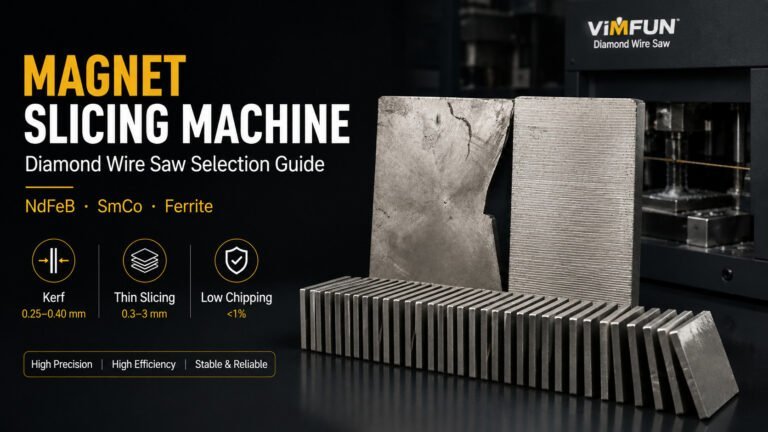
How can manufactures cut extremely hard wafers into very tiny slices without breaking or cracking them? A lot of people ask this basic question. I have been working in this sector for 12 years. In real life, I’ve seen both excellent and poor machines. I found out what helps an industrial slicing machine cut smoothly and remain on track. I will provide you some simple, helpful tips in this post.
This article will describe how an industrial slicing machine works in simple words. I’ll speak about design, control, and speed in a way that everyone can understand. I will also show you real-life examples from industrial labour and basic tables. You will discover how the machine cuts things step by step. You will know how to choose the proper machine for your job by the end.
What is an Industrial Slicing Machine, and Key Working Points
A machine that cuts hard materials into small slices is called an industrial slicing machine. Silicon, sapphire, or ceramic blocks are some of the things that may be used. The machine uses a wire, blade, or laser to softly and precisely cut the material. The goal is to consistently cut uniform, smooth, and level slices.
The machine must be very careful with force, heat, and speed to avoid breaking. It is used to make chips, glass, and tiny parts. It is also highly helpful for cutting through strong, hard brittle material slicings since they may shatter quickly.
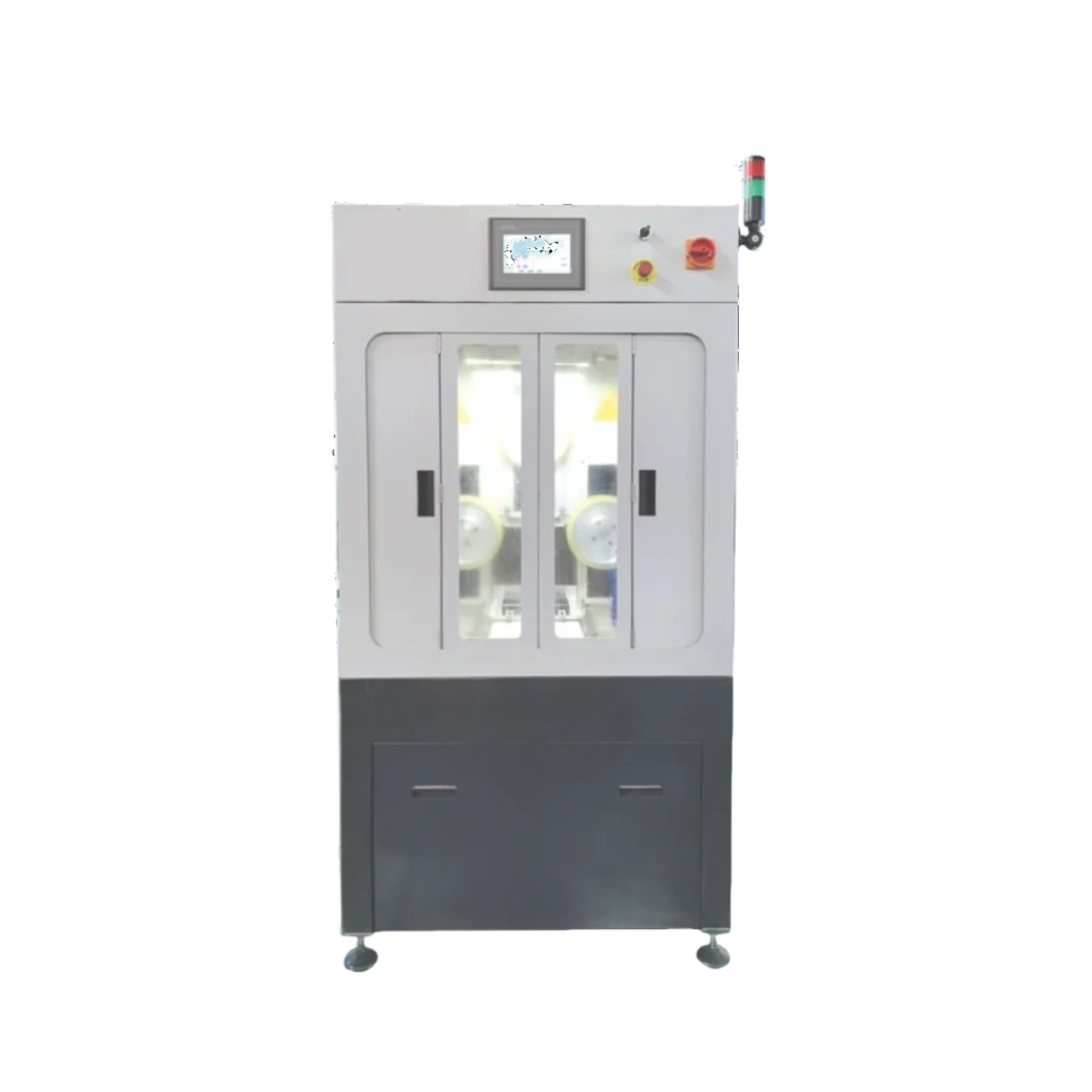
Core Features Of Industrial Slicing Machine
| Feature | Function | Benefit | Example Use |
| Wire System | Moves cutting wire | Smooth cut | Wafer slicing |
| Control Unit | Manages speed | High accuracy | Chip making |
| Cooling | Reduces heat | Less cracks | Glass cutting |
| Frame | Holds parts | Stability | Ceramic blocks |
How Does Design Shape Precision In Industrial Slicing?
It is very important that the design of an industrial slicing machine be good for cutting. The machine stays still as it operates because it has a robust, substantial frame. A straightforward and uncomplicated route for the wire maintains it tight and straight. Good design also cuts down on shaking and tiny vibrations.
It also helps keep the heat down while cutting for a long period. All of these little pieces work together to make a cut that is clean and smooth. This is highly critical for equipment that cut wafers, like the diamond wire slicing machine.
Frame And Wire Path Stability In Cutting
As the industrial slicing machine slices through difficult materials, a strong frame keeps it stable. The machine may wobble and produce poor cuts if the structure is not sturdy enough. The route for the wire has to be straight and smooth so that it may travel freely.
Even the right amount of wire tension helps make sure that every slice is tidy and smooth. Good design also makes parts last longer by protecting them from harm. This makes the machine last longer without needing to stop. It is highly necessary for contemporary enterprises to have high precision wire saw equipment.
Design Factors And Their Effects On Precision
| Design Factor | Impact | Sector | Result |
| Frame Rigidity | Less vibration | Semiconductor | Clean cut |
| Wire Alignment | Even tension | Optics | Smooth finish |
| Cooling Path | Heat control | Ceramics | No cracks |
| Layout | Easy flow | Industry | Stable work |
Key Design Benefits
- Better cut quality with smooth surface
- Lower tool wear and longer life
- Stable machine performance over time
- Less material waste and cost saving
Design Options In Slicing Machines
| Option | Advantage | Disadvantage | Use Case |
| Fixed Frame | Strong and stable | Less flexible | Large plants |
| Modular Frame | Easy to change | Higher cost | Mixed use |
| Compact Design | Saves space | Lower power | Small labs |
A well designed machine stays stable and runs smoothly. It cuts down on shaking and heat. This makes cuts that are clean and cause minimal harm. A well-designed machine will endure longer and function better over time.
Why Does Control System Improve Slicing Accuracy?
Like the brain of an industrial slicing machine, the control system. It adjusts the pace, maintains the wire taut, and shows where to cut. It employs sensors to constantly read information from the machine.
The system can make rapid, precise modifications using this data. It cuts down on errors when the machine is cutting. It also always gives the same excellent results on a lot of different assignments. This is highly critical for the functioning of the semiconductor slicing machine.
Smart Sensors And Automation In Slicing
Sensors let the machine see what’s going on while it’s cutting. They look at the heat, speed, and force. The system utilises this information to quickly adjust settings. This implies less labour by hand and fewer mistakes by people.
It also helps make sure that every cut is the same every time. This is especially useful in big factories where the same job is done again and over. When high quality is required for low chipping wafer slicing, it is crucial.
Control System Elements And Their Roles
| Element | Role | Sector | Benefit |
| Sensor | Data read | Chips | Accuracy |
| PLC | Control logic | Industry | Stability |
| Software | Smart control | Labs | Precision |
| Motor Drive | Motion control | Optics | Smooth feed |
Key Control Benefits
- Real-time control and fast response
- Better repeat accuracy in every cut
- Lower defect rate and waste
- Higher production output and speed
Control Types In Machines
| Type | Advantage | Disadvantage | Use |
| Manual | Low cost and simple | High error risk | Small shops |
| Semi Auto | Balanced system | Medium cost | Medium plants |
| Full Auto | Very high precision | High cost | Large factories |
Control systems improve the machine’s performance. Data is used to make quick adjustments. This reduces mistakes and maintains a high level of quality. The equipment continues to provide outstanding results with increasing accuracy.
How Does Speed Affect Output And Precision Balance?
An industrial slicing machine’s speed is crucial. More pieces can be made in less time with high speed. However, the material might be damaged by overheating if the speed is too high. You have greater control and make better cuts when you go slowly.
Finding a happy medium between speed and quality is ideal. Cracks and poor edges may be prevented with good speed control. When running an ultra-thin wafer slicing machine, this is crucial.
Speed Optimization For Different Materials
To get the finest results, each material needs its specific cutting speed. Silicon works best when it moves at a constant, medium pace. Because sapphire is so rough, it has to go slowly to keep safe. To prevent damage, ceramic also has to be cut slowly and cooled down well.
The material may crack or chip if the speed is too high. When the pace fits the material, the cut looks a lot nicer. Alumina ceramic slicing and silicon carbide slicing machines may both benefit greatly from this.
Speed Settings And Material Outcomes
| Material | Speed Level | Result | Sector |
| Silicon | Medium | Smooth | Chips |
| Sapphire | Low | No crack | Optics |
| Ceramic | Low | Clean | Industry |
| Glass | High | Fast | Panels |
Key Speed Benefits
- Faster production output when balanced well
- Better process flow in factory lines
- Lower cost per piece in large runs
- Improved efficiency and time saving
Speed Strategies In Slicing
| Strategy | Advantage | Disadvantage | Use |
| High Speed | High output rate | More defects risk | Bulk production |
| Medium Speed | Balanced results | Medium output | General use |
| Low Speed | Best quality | Slow output | Precision work |
The speed must be appropriate for the task and the material. More output is possible at high speed, but it might also cause harm. When you cut slowly, you get clean cuts. A balanced speed provides you high quality and good production with minimal waste.
Real Industry Speed Use Cases
| Case | Material | Speed | Result |
| Fab A | Silicon | Medium | High yield |
| Lab B | Sapphire | Low | No cracks |
| Plant C | Ceramic | Low | Clean cut |
| Line D | Glass | High | Fast output |
FAQs
- What is an industrial slicing machine?
An industrial slicing machine chops hard blocks into extremely small pieces. It is used by people to work with ceramics, glass, and chips. For a variety of applications, it cuts uniformly and smoothly.
- Why is precision important in slicing?
Good accuracy helps prevent cracks and waste from happening. It makes the slices more equal and nicer. It also cuts expenses and speeds up factory activity.
- What materials can it cut?
It can cut glass, ceramic, sapphire, and silicon. The sapphire wafer slicing machine is also utilised. These are tough materials that are employed in a lot of different fields.
- How does speed affect slicing?
Speed affects both the production and the quality. High speed generates more components, but it may also break things. Low speed makes slices that are cleaner and smoother.
- What is a diamond wire slicing machine?
It has a thin wire with little diamond grains in it. The wire slices through tough materials easily. It is used for cutting wafers and other small things.
- What is low chipping wafer slicing?
It signifies that the edge of the slice doesn’t break or chip too much. This maintains the product robust and clean. It is highly vital for manufacturing chips.
- How to choose the right machine?
First, look at your budget, size, and the material you want. After that, think about design, control, and speed. Pick a machine that meets your demands at work.
Conclusion
A decent design, adequate control, and the correct speed are all important for an industrial slicing machine to perform successfully. The machine can create clean, even cuts with each portion. The machine is secure and stable thanks to a robust frame. A clever control system makes sure that the machine always cuts straight. The appropriate pace lets you do excellent work quickly.
These things are highly crucial for cutting ceramic and wafer. Choose a business you can trust if you want the greatest outcomes. Vimfun develops slicing machines that are sturdy and dependable for today’s demands. Their machines are great for cutting semiconductors. Go to Vimfun now and choose up the perfect machine for your job.