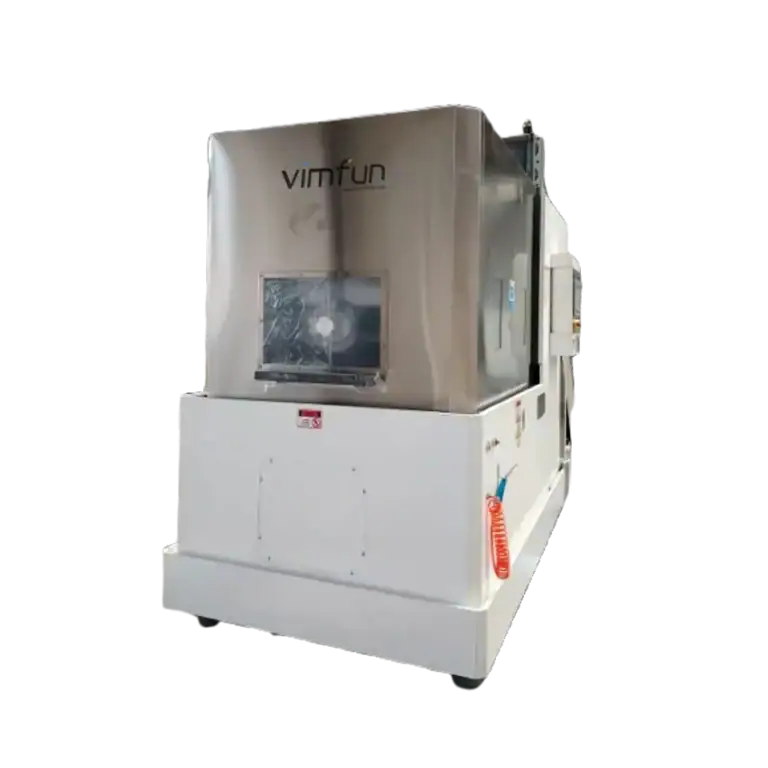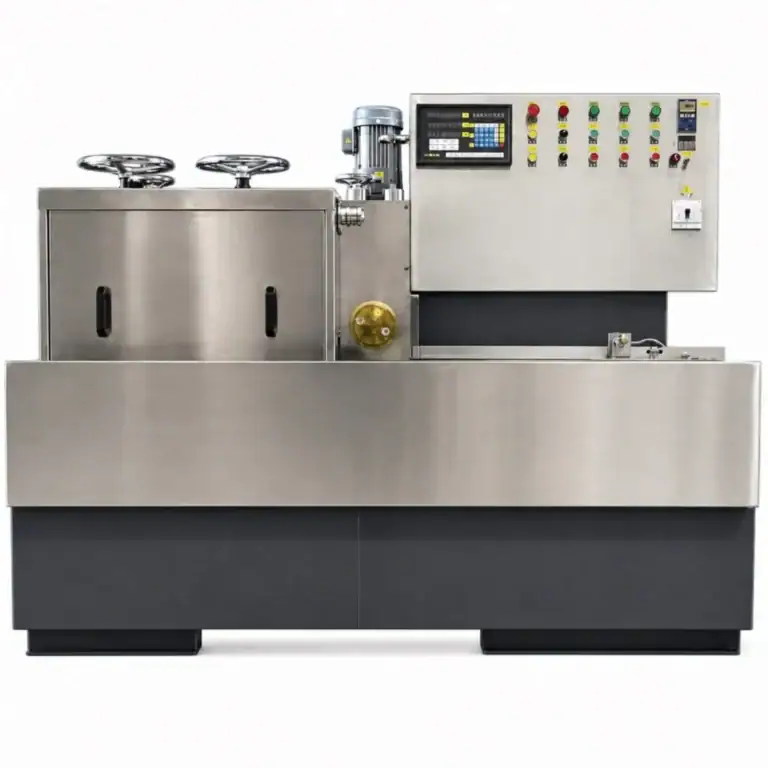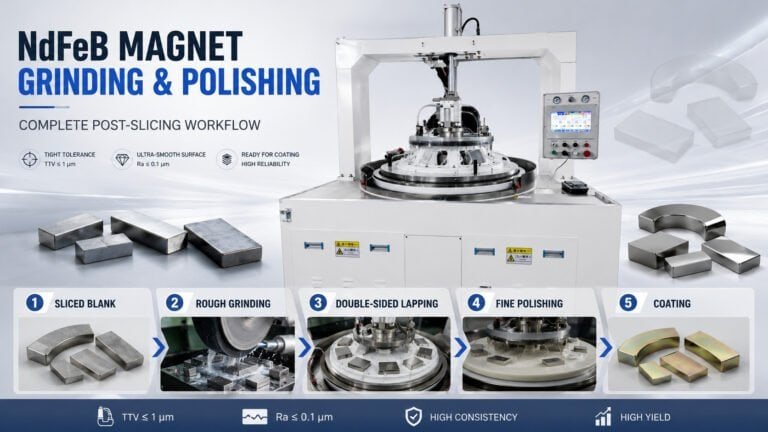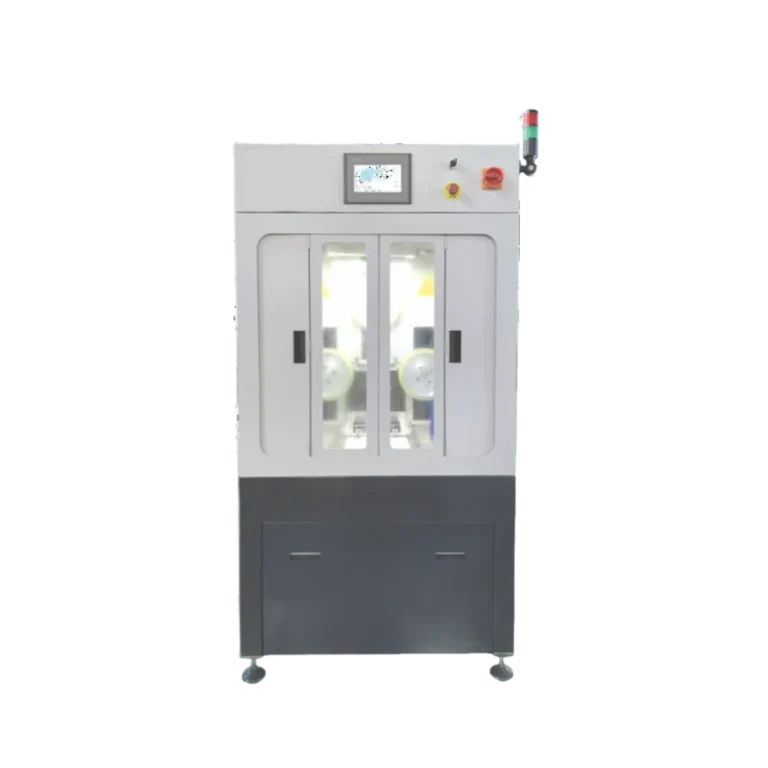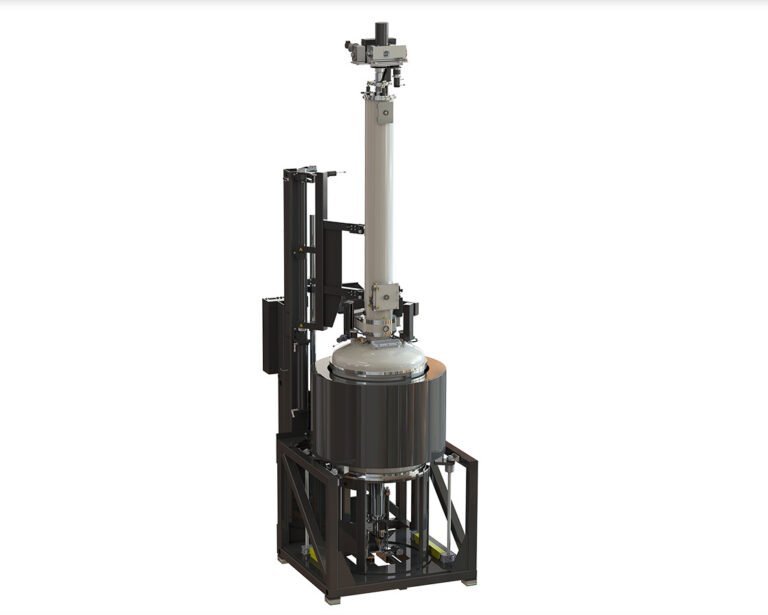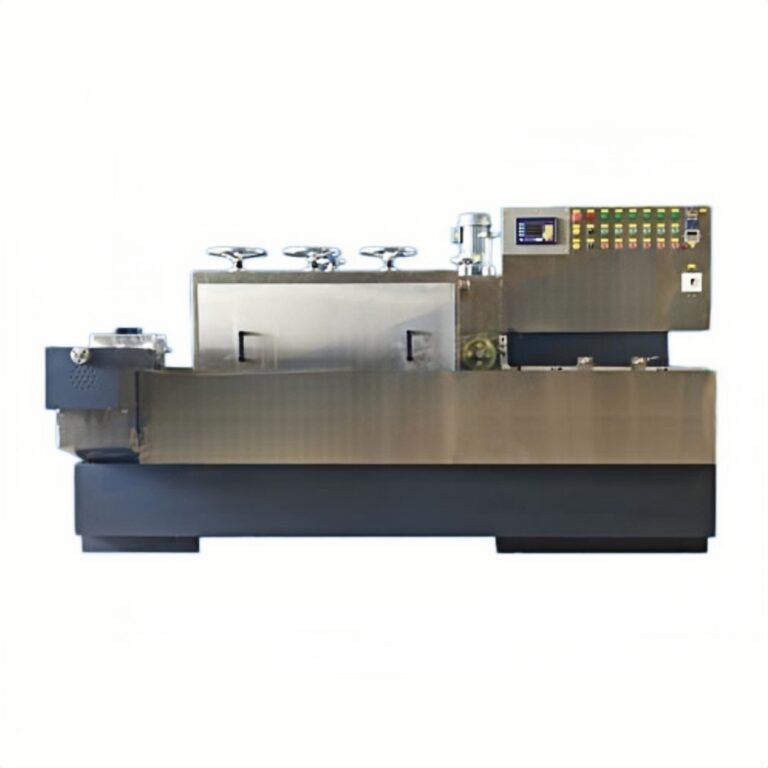
자석 생산 라인 장비는 원료 소결 NdFeB 블록을 조립 준비가 된 완성된 자석 부품으로 전환하는 절단, 연삭, 래핑 및 연마 기계의 통합 세트입니다. 개별 기계를 구매하여 함께 작동하기를 바라는 대신, 제대로 구성된 자석 생산 라인 장비 패키지는 모든 가공 단계에서 처리량 용량, 공차 핸드오프 및 재료 흐름을 일치시켜 분리된 장비로 운영되는 대부분의 자석 공장의 병목 현상을 제거합니다.
처음부터 새로운 희토류 자석 제조 라인을 구축하든 기존 시설을 더 높은 생산량으로 업그레이드하든, 계획 단계에서 내리는 구성 결정은 향후 5-10년 동안의 개당 비용을 결정합니다.
자석 생산 라인 장비란 무엇인가요?
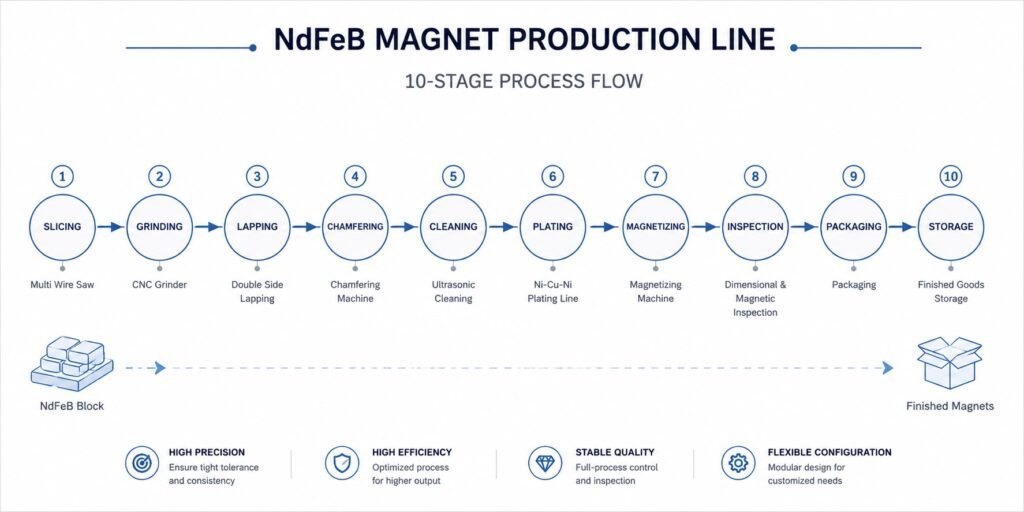
자석 생산 라인 장비는 소결된 NdFeB 블록을 소결 후 모든 단계(절단, 모서리 연삭, 표면 래핑 및 최종 연마)를 통해 처리하는 데 필요한 완전한 기계 시스템을 의미합니다. 완전한 라인에는 재료 처리 시스템, 냉각수/여과 장치, 공정 중 측정 스테이션 및 중앙 집중식 공정 제어 소프트웨어도 포함됩니다.
개별 장비와의 차이점은 중요합니다. 개별 기계는 자체 작동에 최적화되어 있지만 자석 생산 라인 장비는 시스템으로 최적화됩니다. 각 스테이션의 출력 속도, 치수 공차 및 표면 상태는 다음 스테이션에서 요구하는 것과 일치해야 합니다. 스테이션이 일치하지 않으면(예: 시간당 500개를 생산하는 절단 기계가 시간당 200개만 처리하는 래핑 기계에 공급되는 경우) 재공품 누적, 사이클 시간 연장 및 취급 손상 증가로 이어집니다.
에 따르면 국제 자기 협회(IMA), 글로벌 NdFeB 자석 수요는 EV 트랙션 모터, 풍력 터빈 발전기 및 산업 자동화에 의해 주로 주도되어 2030년까지 연간 8-10% 성장할 것으로 예상됩니다. 이러한 성장은 자석 제조업체들이 배치 공정 작업장에서 모든 단계에서 처리량이 일치하는 연속 흐름 생산 라인으로 전환하도록 추진하고 있습니다.
자석 생산 라인 장비: 핵심 스테이션 구성
표준 자석 생산 라인 장비 설정은 네 가지 주요 처리 스테이션으로 구성됩니다. 각 스테이션의 특정 기계 선택은 목표 자석 형상, 재료 등급 및 연간 생산량에 따라 달라집니다.
| 스테이션 | 기능 | 주요 장비 | 출력 피드 |
|---|---|---|---|
| 1. 절단 | 소결된 블록을 개별 세그먼트로 자르기 | 다중 와이어 다이아몬드 톱, 단일 와이어 CNC 톱 | 연삭 |
| 2. 연삭 | 세그먼트 프로파일 모양 만들기, 모서리 챔퍼링 | CNC 표면 연삭기, 원통 연삭기 | 래핑 |
| 3. 양면 래핑 | 두께 균일성(TTV) 달성 | 다이아몬드 펠릿이 있는 양면 래핑기 | 연마 또는 코팅 |
| 4. 연마 / 최종 마무리 | 코팅 접착을 위한 표면 품질 | 단면 연마기, 초음파 세척기 | 코팅 / 조립 |
지원 시스템 that connect these stations:
- Coolant management: Centralized coolant supply with magnetic particle separation and temperature control. NdFeB cutting generates fine magnetic debris that contaminates coolant rapidly — a shared filtration system with automatic backwash is more cost-effective than individual machine filters.
- Material handling: Automated transfer trays or conveyor links between stations. Manual handling between machines is the #1 source of edge chipping on finished magnets.
- In-process measurement: Dimensional gauging between stations catches drift before it compounds. A thickness check after slicing prevents an entire batch from failing at the lapping stage.
For the slicing station specifically, multi-wire diamond wire saws dominate high-volume magnet production because they cut multiple slices simultaneously from a single block. For a detailed comparison of cutting technologies, see our guide on NdFeB cutting machines.
How to Size Magnet Production Line Equipment for Your Output
Sizing magnet production line equipment correctly means matching throughput capacity across all stations so no single machine becomes a bottleneck. The following framework covers three common production scales.
Tier 1: 10,000 Pieces/Month (Laboratory to Small Production)
This volume suits new product development, prototype supply, or niche magnet applications where geometry changes frequently.
Recommended configuration:
- 1× single-wire diamond wire saw (handles varied block sizes, quick changeover)
- 1× manual or semi-auto surface grinder
- 1× 편면 래핑기
- 스테이션 간 수동 이송
이 규모에서는 속도보다 유연성이 더 중요합니다. CNC 경로 제어가 가능한 단일 와이어 톱은 각 모양에 대한 전용 공구 없이도 직사각형, 호, 사다리꼴 형상을 처리할 수 있습니다. 이것은 공급업체에게 일반적인 시작점입니다. EV 모터 자석 부품 인증 수량으로.
Tier 2: 월 100,000개 (중간 규모 생산)
이 물량은 자동차 Tier-2, 풍력 에너지 및 산업용 모터 시장에 서비스를 제공하는 대부분의 산업용 자석 공급업체를 포함합니다.
Recommended configuration:
- 2× 다중 와이어 다이아몬드 와이어 톱 (처리량 증대를 위한 병렬 작동)
- 1× CNC 이중 스핀들 표면 연삭기
- 1× 양면 래핑기 (배치 처리)
- 스테이션 간 반자동 트레이 이송
- 자기 분리기가 있는 중앙 냉각수 시스템
월 100K개에서는 슬라이싱 스테이션에 일반적으로 두 대의 기계가 병렬로 작동해야 합니다. 다중 와이어 톱은 절단당 효율적이지만 블록 로드 간 설정 시간이 필요하기 때문입니다. 두 대의 기계는 지속적인 작동을 가능하게 합니다. 한 대가 절단하는 동안 다른 한 대는 로드됩니다. 이것은 다음의 물량 범위입니다. 풍력 터빈 자석 제조업체 일반적으로 운영되며, 지속적인 물량으로 대형 호 세그먼트를 생산합니다.
Tier 3: 월 1,000,000개 이상 (대량 생산)
This volume targets automotive OEM direct supply, consumer electronics (VCM actuators, smartphone haptics), and high-volume sensor magnet production.
Recommended configuration:
- 4-6× multi-wire diamond wire saws (dedicated lines by geometry)
- 2× CNC grinders (roughing + finishing separation)
- 2× double-sided lapping machines (continuous batch rotation)
- 1× automated polishing line
- Fully automated material handling with robot loading
- MES (Manufacturing Execution System) integration
- SPC (Statistical Process Control) at every station
At this scale, magnet production line equipment operates as a connected system rather than individual machines. Each piece is tracked from raw block to finished part, and process parameters are adjusted automatically based on upstream measurement data.
Magnet Production Line Equipment Automation Levels
Not every facility needs — or can afford — full automation from day one. Most successful magnet production line equipment deployments follow a staged automation path:
| Level | Material Handling | Process Control | Measurement | Typical Volume |
|---|---|---|---|---|
| 설명서 | 휴대용 트레이 | 작업자 설정 매개변수 | 캘리퍼스로 현장 확인 | <월 30,000개 |
| 반자동 | 롤러 컨베이어 + 수동 적재 | 레시피 기반 매개변수, 작업자 재정의 | N개마다 샘플 측정 | 월 30,000개 - 200,000개 |
| 완전 자동 | 로봇 적재, 자동 컨베이어 | MES 기반 매개변수 조정 | 100% 인라인 치수 측정 | 월 200,000개 이상 |
| 스마트 라인 | AGV 운송, 자동 창고 | AI 기반 공정 최적화, 디지털 트윈 | 100% 측정 + SPC + 자동 보정 | >500K/월 |
결정적인 통찰력: 자석 생산에서 자동화 ROI는 주로 취급 손상 감소에서 비롯되며,, 노동력 절감에서 비롯되지 않습니다. NdFeB 자석은 부서지기 쉬우므로 수동으로 집어서 놓을 때마다 모서리 칩핑의 위험이 있습니다. 월 10만 개 이상의 생산량에서는 취급 손상이 일반적으로 2-5%의 스크랩을 차지합니다. 자동 이송만으로도 이를 0.5% 미만으로 줄일 수 있으며, 이는 희토류 자석 재료 현재 가격으로 상당한 비용 회수를 나타냅니다.
전체 자석 생산 라인 대 개별 기계: 주요 차이점
| 요인 | 개별 기계 | 전체 자석 생산 라인 장비 |
|---|---|---|
| 처리량 일치 | 구매자의 책임 | 스테이션 간 균형을 위해 사전 설계됨 |
| 바닥 배치 | 임시 배열 | 최적화된 재료 흐름, 최소 WIP 거리 |
| Coolant system | Individual machine tanks | Centralized supply + filtration |
| Quality handoff | Manual inspection between steps | Automated tolerance cascade |
| Changeover | Each machine set independently | Recipe-based changeover across all stations |
| Lead time to production | Faster (buy individual machines) | Longer (system design + integration) |
| Total cost of ownership | Lower upfront, higher operating | Higher upfront, lower operating per piece |
When standalone machines make sense: You are producing fewer than 30,000 pieces/month, running multiple magnet types with frequent changeover, or adding a single processing capability (e.g., adding lapping to an existing cutting shop).
When a complete line makes sense: You have a committed volume above 100,000 pieces/month for a defined geometry family, your scrap rate from handling damage exceeds 2%, or your customer requires full traceability from block to finished part (automotive PPAP, medical device MDR).
Magnet Production Line Equipment: Planning Checklist Before You Invest
Before requesting quotes for magnet production line equipment, prepare answers to these questions — they determine 80% of your configuration:
1. Define your part family
- How many distinct magnet geometries will the line produce?
- Dimensional range: length (mm), width (mm), thickness (mm)
- NdFeB grade range (N35-N52, SH/UH/EH variants)
2. Set your volume target
- Monthly volume per geometry
- Growth projection: will volume double in 2-3 years? (Size equipment for 1.5× current target)
3. Specify your tolerance requirements
- Dimensional tolerance: typical ±0.05mm for motor magnet applications, ±0.02mm for precision sensors
- TTV (Total Thickness Variation): determines whether you need lapping
- Surface roughness Ra: determines whether you need polishing
4. Assess your facility constraints
- Available floor space (a mid-volume line requires approximately 200-400 m²)
- Power supply capacity (multi-wire saws draw 15-30 kW each)
- Compressed air availability
- Wastewater treatment for cutting coolant
5. Define your automation roadmap
- Start manual and automate later? Or invest in automation from day one?
- Do you need MES integration for customer traceability requirements?
에 따르면 Allied Market Research, the permanent magnet market is expected to reach $45 billion by 2030. Manufacturers investing in properly configured production lines now will be positioned to capture this growth without the quality issues that plague facilities running mismatched equipment.
The difference between a profitable magnet operation and one struggling with scrap, bottlenecks, and customer complaints usually comes down to how well the production line was planned at the beginning. Get the configuration right, and everything downstream — yield, cost, delivery — falls into place.