Block to wafer
A sintered NdFeB block can require a connected sequence of slicing, rough grinding, lapping, polishing, cleaning, and coating preparation. Each step needs its own acceptance point.

VIMFUN / RARE EARTH MAGNET CUTTING CASES
Rare earth magnet manufacturing depends on stable cutting, controlled material loss, and a finishing route that matches the part drawing. This page brings together Vimfun's documented NdFeB cutting experience and the engineering questions buyers should resolve before scaling a process.
NdFeB and SmCo are hard, brittle, and valuable materials. A production result depends on more than whether a machine can make contact with the blank. Wire selection, workholding, feed, coolant, edge support, cleaning, inspection, and downstream finishing all affect the usable part.
A supplier's country or product name does not prove that a particular setup fits every plant. The useful question is whether the proposed cutting route can be connected to the buyer's material, blank size, target thickness, tolerance, and output plan. A technical trial should therefore sit beside the equipment discussion.
Vimfun's permanent magnet equipment portfolio includes diamond wire cutting, magnet slicing, and grinding and polishing routes. Start with the permanent magnet cutting and machining guide to see how these stages connect.
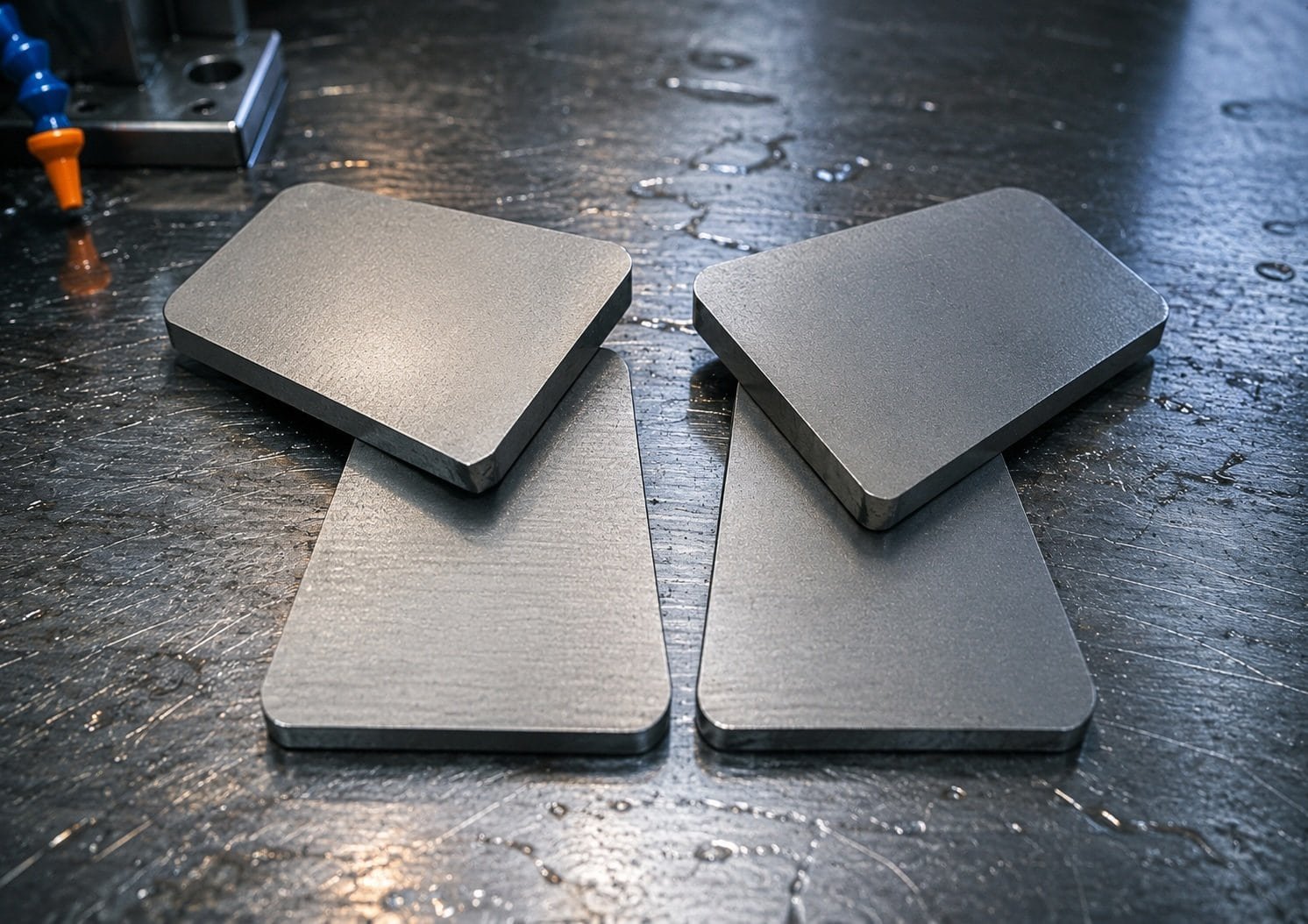
Vimfun's documented magnet-processing work is useful as an engineering reference. It shows how a rare earth magnet cutting machine fits into a block-to-wafer route; it does not promise that every material, model, or factory will produce identical results.
A sintered NdFeB block can require a connected sequence of slicing, rough grinding, lapping, polishing, cleaning, and coating preparation. Each step needs its own acceptance point.
Diamond wire cutting is evaluated for kerf, edge chipping, thickness variation, and the allowance needed by the finishing stage. These are measured against the actual drawing.
Loading, fixturing, coolant handling, inspection, and operator routines matter when a sample route becomes a repeated production process.
One documented Vimfun magnet-processing route starts with a sintered NdFeB block of roughly 170 × 120 × 40 mm and converts it toward motor-magnet dimensions around 40 × 6 × 4 mm. The block-to-wafer stage uses a SOM4-630D permanent magnet cutting machine before downstream grinding and lapping.
The result is a process chain, not one isolated cut. Slicing must be evaluated together with kerf control, edge condition, thickness variation, cleaning, and the allowance needed by finishing. The published case is a reference for process discussion; it does not guarantee identical results for a different grade or drawing.
A manufacturer is planning a more repeatable route for magnet parts that need both controlled thickness and a defined surface condition. The decision is therefore larger than selecting a cutting machine alone.
Documented cutting experience gives the buyer a concrete starting point for discussing workflow, operator training, maintenance access, and future capacity. The final proposal still depends on the actual drawing and acceptance test.
The outcome should be a documented route with machine configuration, fixture scope, utility requirements, test criteria, installation responsibilities, and service contacts. Any warranty term should be confirmed in the written commercial agreement.
Reference calls are most useful when they answer a defined buyer question. Prepare the same information for a supplier, a customer reference, and an internal production review so that the answers can be compared.
Share the grade, blank dimensions, orientation, finished drawing, and target output.
Agree the sample quantity, machine setup, inspection method, and reporting format.
Compare measured results with the same criteria used in the purchase agreement.
Review loading, handling, staffing, maintenance, consumables, and downstream capacity.
| Need to evaluate | Relevant route | Information to prepare |
|---|---|---|
| Block-to-slice conversion | Diamond wire cutting or magnet slicing | Blank dimensions, target slice thickness, kerf priority, batch size |
| Thickness and flatness | Grinding, lapping, and polishing after slicing | Finished tolerance, flatness, parallelism, surface requirement |
| Stable repeated output | Connected magnet production-line equipment | Monthly output, shift pattern, loading plan, inspection and handling flow |
For a direct look at the slicing stage, visit the magnet slicing machine page. The equipment choice should follow the part and route definition rather than the reference installation alone.
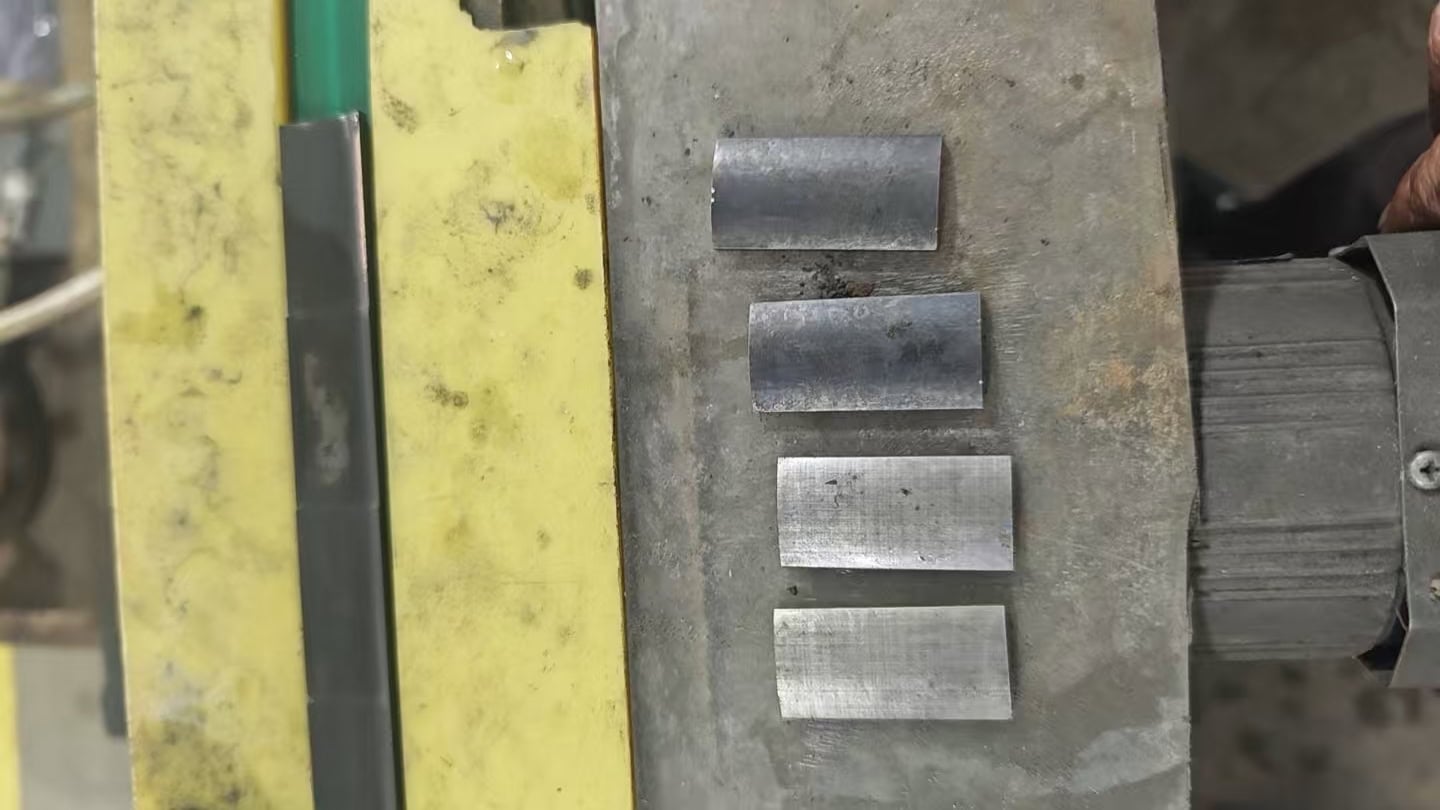
A useful case description identifies the approved material, machine route, application, inspection scope, and review date. It separates measured results from general process observations and states which details are specific to the original factory.
Until customer authorization is available, generalized descriptions are the appropriate public format. Buyers can still use them to prepare a sample test and to identify the questions that need written answers in a quotation.
| Question to prepare | Why it matters |
|---|---|
| What rare earth material, grade, and blank geometry will be processed? | Confirms whether the proposed cutting method fits the workpiece rather than a generic sample. |
| What slice thickness, finished size, tolerance, and edge condition are required? | Connects the cutting stage with the later grinding, lapping, or polishing allowance. |
| Which measurements will define a successful trial? | Creates clear acceptance criteria for thickness variation, kerf, chipping, flatness, and surface condition. |
| What loading, coolant, cleaning, inspection, and handling steps are needed? | Shows the production requirements around the machine, not just the machine itself. |
| Which items must be confirmed in the quotation and acceptance plan? | Clarifies configuration, training, consumables, maintenance, spare parts, service scope, and delivery responsibilities. |
“A useful technical discussion starts with your material, drawing, route, acceptance criteria, and expected output.”
Vimfun engineering discussion principleSend your material grade, blank dimensions, target thickness, finished drawing, and expected output. Vimfun can organize the equipment discussion around your actual production route and identify the information needed for a technical trial.
Discuss Your Cutting Route